- Статьи
- Society
- The case of technology: a Ukrainian with a US passport may be standing behind the iPhone Berry bench store

The case of technology: a Ukrainian with a US passport may be standing behind the iPhone Berry bench store

One of the managers of the iPhone Berry store, whose actions affected more than 700 customers, could be a 30-year-old native of Lviv with an American passport. The store, which was advertised by Russian stars, including Anastasia Volochkova and Prokhor Chaliapin, collected an advance payment for the equipment for several months, and then disappeared along with the customers' money. Izvestia spoke with former employees of Iphonberry and received information from them about the alleged organizers of the scheme. The tracks led, in particular, to a US citizen with Ukrainian roots who has been living in New York for more than 10 years. The editorial staff also had internal documents of the company at their disposal, from which the scale of the likely fraud and the scheme for withdrawing funds through cryptocurrency are clear.
An attraction of unprecedented greed
At least nine criminal cases have been initiated at the moment according to the statements of victims of the operation of the Iphonberry online store, Izvestia found out. Investigations have been initiated, among others, in Nizhny Novgorod, Novosibirsk, Tula and the Leningrad Region. According to the store's customers, they transferred an advance payment for expensive equipment to the company, but they were left without equipment and without money.
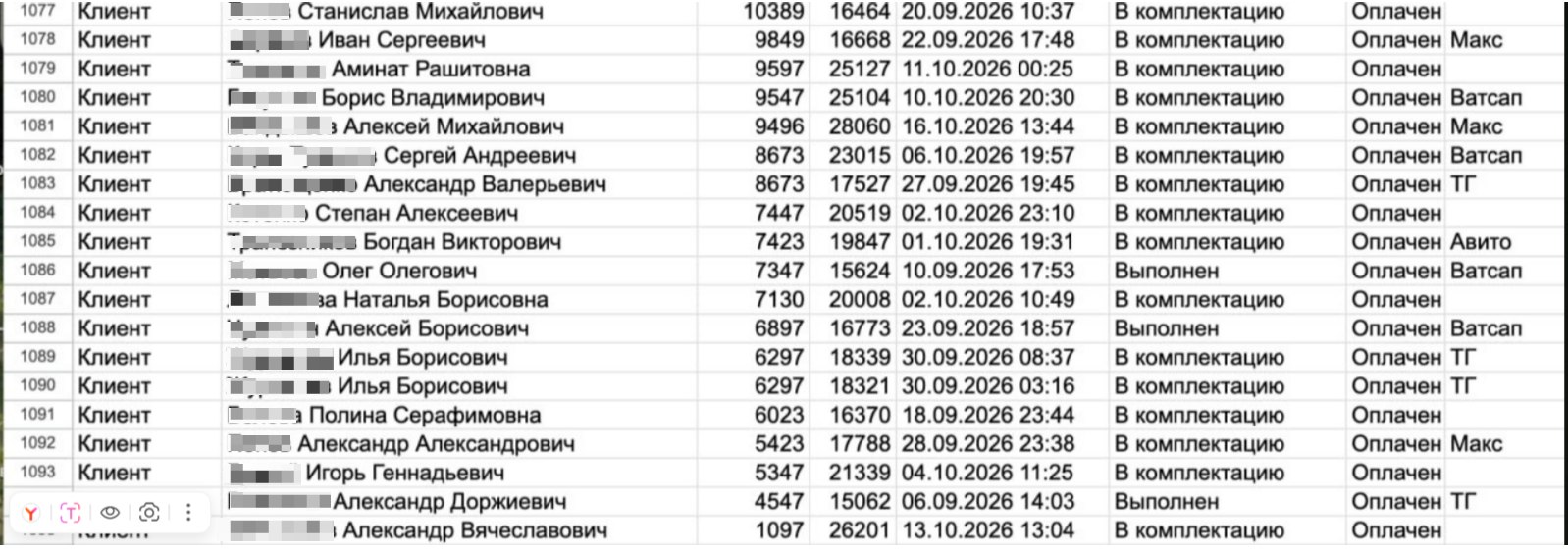
Most likely, there will be more criminal cases. Former employees of the store gave Izvestia a fragment from the customer base, from which it follows that at least 753 customers did not receive their orders. Assuming that everyone transferred an average of 95,000 to 150,000 rubles to the store, the damage could amount to at least 70 million rubles.
The store lured customers with discounts of up to 30% on Apple, Samsung and Dyson equipment, provided they paid 100% in advance and were ready to wait 30 to 45 days for the product. Celebrity advertising added credibility: videos appeared online where "iPhone Berry" was promoted by Larisa Dolina, Anastasia Volochkova, Prokhor Chaliapin and other stars. However, later the director of Larisa Dolina, Sergey Pudovkin, said that the singer did not participate in the advertisement, and the videos with her were deepfakes. Chaliapin and Volochkova confirmed that they filmed the videos, but not as an advertisement, but in gratitude for the donated smartphones and did not know about the possible fraud.
At first, the equipment was actually delivered to ordinary customers. The satisfied first customers worked for the store's reputation, but soon the deadlines began to slip and customers began to suspect something was wrong. When the deception came to light, the store's managers disappeared without a trace, leaving both customers and hired employees without money.
Now the deceived customers and former store employees have joined a group on VKontakte. There they tell each other how to file statements with the police and banks in order to get the money back.
The investigation is still at an early stage, but on condition of anonymity, former employees of Iphonberry handed over the digital identifiers of the alleged business organizers to the editorial office. The staff had never seen these people in person.
We are talking about two Telegram accounts: Evgeniy Protov and Max Sheremetyev, as well as their mailboxes evgeniy.protov78@*****.com and sheremetemax7@*****.com. According to former employees, Protov hired people, and Sheremetyev was responsible for the operation of the site.
The organizers of the scheme wanted to give the impression of a serious organization so much that after the first negative reviews about the store, they sent letters to entertainment venues like Picaboo demanding that critical posts about the iPhone be deleted.

How the store worked
As Izvestia found out, the store did not deliver its first orders from Dubai, as the advertisement promised, but from the Gorbushka market in Moscow. The goods were sent to customers not by the iPhone itself, but by an intermediary store (its name is known to the editorial staff. — Ed.): it was his employees who were listed as senders in the documents. At the same time, the management of the scam store and the intermediary in the cryptocurrency were calculated among themselves.
The staff for the physical office in Moscow was recruited through regular bulletin boards. So, a man under the pseudonym Evgeniy Protov contacted Alexander, whom he asked to organize the opening of the store's showroom and take over its arrangement.
— Evgeny Protov explained that he is currently abroad and cannot open an office himself. The lease was signed on behalf of St. Petersburg businessman Denis Lykov, and I was registered as his representative. In addition, Evgeny also planned to open showrooms in St. Petersburg," Alexander explained to Izvestia.

One of the employees of Iphonberry named Ksenia told how she got a job at the company and how the work was organized from the inside.
— I found out about the vacancy from an advertisement on one of the websites — I needed a sales manager. I was invited for an interview, then Evgeny contacted me on Telegram, we talked, and after a couple of days he approved my candidacy. I came in early July. At the initial stage, there were only two employees in the office, then the team was recruited gradually, depending on the workload. By October, the company already had several departments, only 19 people worked in the sales department," said Ksenia.
Employees were registered under fictitious GPH contracts, which were concluded on behalf of the businessman Denis Lykov. He himself did not even suspect this: the organizers of the scheme simply used his stolen personal data. The salaries of the employees were paid in transfers, and each time from different unknown people. According to the documents, Lykov was also listed as the owner of the store.

Communication with the management in the person of Protov and Sheremetyevo was carried out remotely. No one has ever seen them in their eyes.
The understanding that something was wrong came to the store's employees only at the end of October, when the real Denis Lykov began writing on the social network "Iphonberry" and asking why his data was being used. If the entrepreneur hadn't paid attention, the scheme would have worked much longer.
— Until recently, we were told that Denis would come to the office himself, and I was even called to communicate with him. But in the end, no communication took place, and all the chats were deleted," Ksenia recalls.
Denis Lykov himself learned about the existence of the store from police officers on October 19, 2026. He assumes that the likely scammers chose him according to the OKVED codes: he also deals with mobile phones, albeit second-hand, and has been working in this field for five years.
As a result, customers and employees checked the sole proprietor on the Internet, made sure that such an entrepreneur really exists, works in this field, and did not see any deception.
According to Izvestia, the buyers' payments actually went to foreign recipient companies from Bulgaria, Kyrgyzstan and the United States. At the same time, the receipts that the store sent to customers were fictitious. This follows from the receipts for the payment of "iPhone Berry" products available to the editorial office. In addition, some of the store's customers transferred money directly to the store owners' crypto wallet, from which about $27,000 was withdrawn after the exposure, that is, 2.2 million rubles at the current exchange rate.
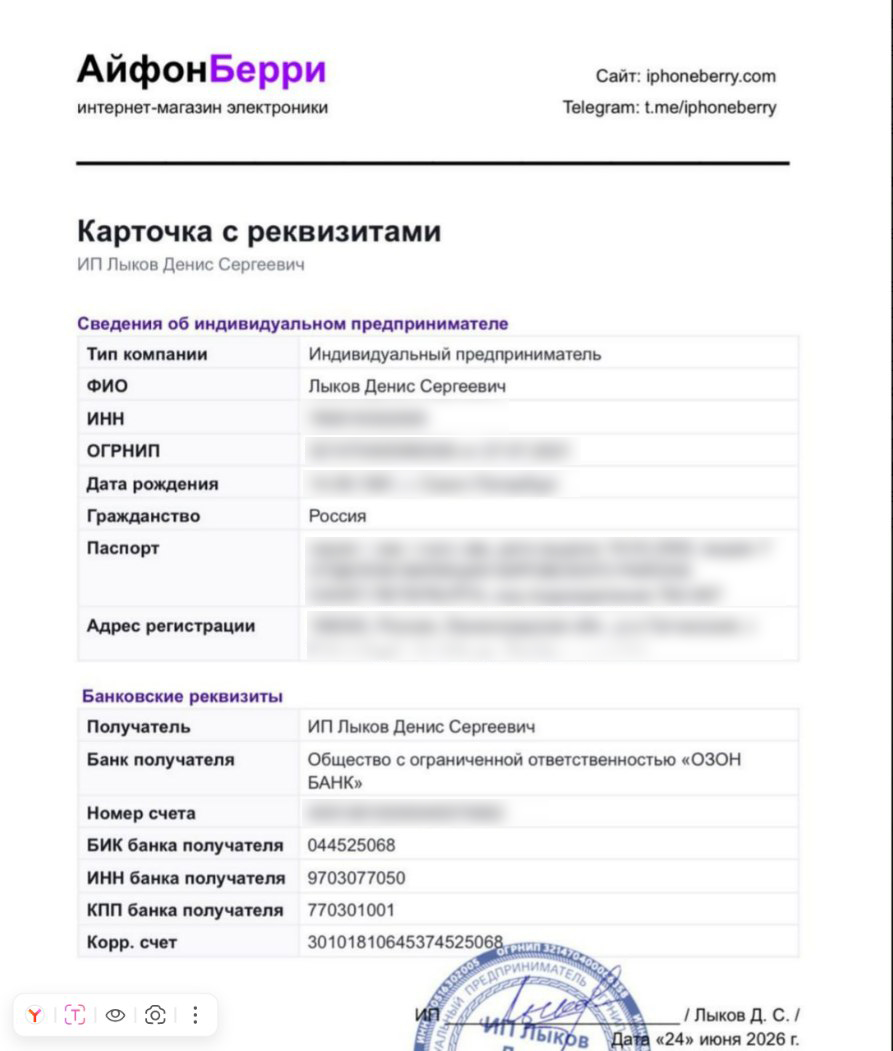
— At least someone would contact me and ask if I am related to this online store. At least someone would check that all the checks are fake and do not go through the tax service," says Lykov. — I have my own checking accounts in banks, and the money of the clients of "iPhone Berry" did not pass through them. In fact, the scammers simply attributed my INN to the forged checks, and that's it," Lykov told Izvestia.
The businessman contacted the police with a statement about the illegal use of his personal data for fraudulent purposes.
The American footprint
In a conversation with Izvestia, the store's employees note one common feature in the behavior of Protov and Sheremetyevo. They usually got in touch after lunch, Moscow time.
— Evgeny Protov usually went out around 2:00 p.m. and could be online until two or four in the morning. He was never in touch this morning. We thought he lived somewhere abroad and worked remotely," recalls Ksenia, a former employee of the store.
Another employee named Ekaterina (name changed. — Ed.), who communicated with Sheremetyev, said that he also wrote to her when it was evening or night in Russia. At the same time, in correspondence, Sheremetyev explicitly said that he had been living in the United States for a long time.
"Sheremetyevo even told me that he had received citizenship a long time ago, like 10 years ago, and lives in New York," Ekaterina told Izvestia.
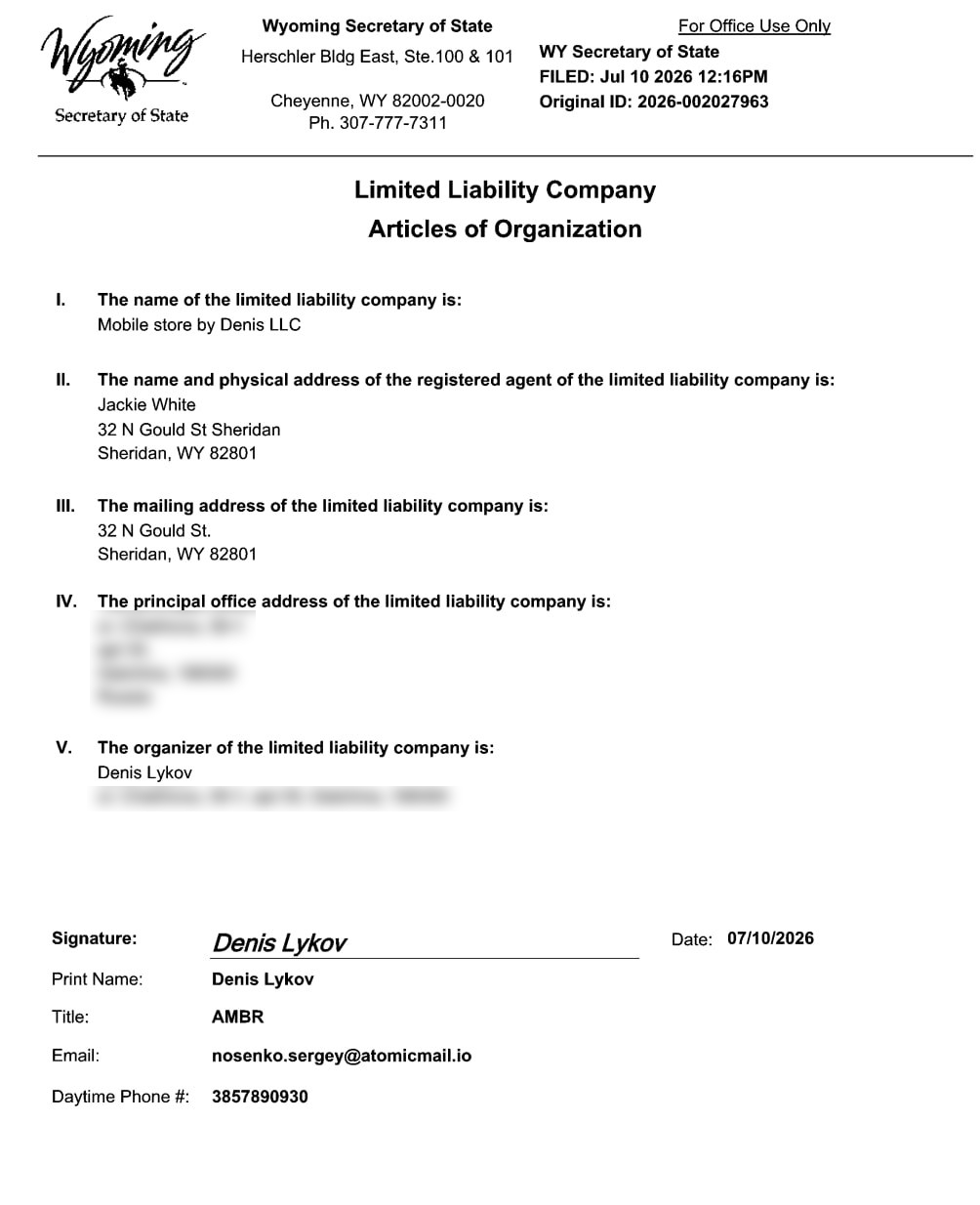
Another detail indicates that the organizers of the scheme may be located in the USA. To accept payments, they registered Mobile Store by Denis LLC in Wyoming, also registering it with Denis Lykov, an entrepreneur from Gatchina.
Who are Sheremetyev and Protov?
According to the details that Sheremetyev told the store staff about himself, Izvestia managed to find a person whose details match this description.
In American databases, even with different transliteration of the name and surname Maxim Sheremetyev, there was only one person with such data. He is registered in the register of voters of the state of New York, that is, in the same place where the alleged head of "iPhone Berry" lives.
As Izvestia found out, we are talking about a 30-year-old native of Lviv, who moved with his family to the United States no later than 2011 and settled in Brooklyn. This coincides with the words of the store manager that he received American citizenship "about 10 years ago."
Sheremetyev studied at New York University. He had a nurse's license until 2025, but he did not renew it. Izvestia has not been able to establish what he is doing now. His Linkedin page lists the Weill Cornell Medicine Medical Center.
In addition, Sheremetyevo's email address in the gmail mail service is similar in spelling to the mail address used by the manager of the iPhone. In both cases, the number "7" was present at the end (sheremetiemax7@gmail.com and maxsher07@gmail.com ), which may indicate the month of birth. Maxim Sheremetyev, who lives in the USA, was born in July.
Thus, the words of the head of "iPhone Berry" under the nickname "Max Sheremetyev" agree with the biography of the real Maxim Sheremetyev in the name, place of residence, time of citizenship and partially in the mail address.

Izvestia wrote to Maxim Sheremetyev by e-mail with questions about whether he was connected with the iPhone and whether the creators of the store could use his personal data without his knowledge, but at the time of publication he did not respond.
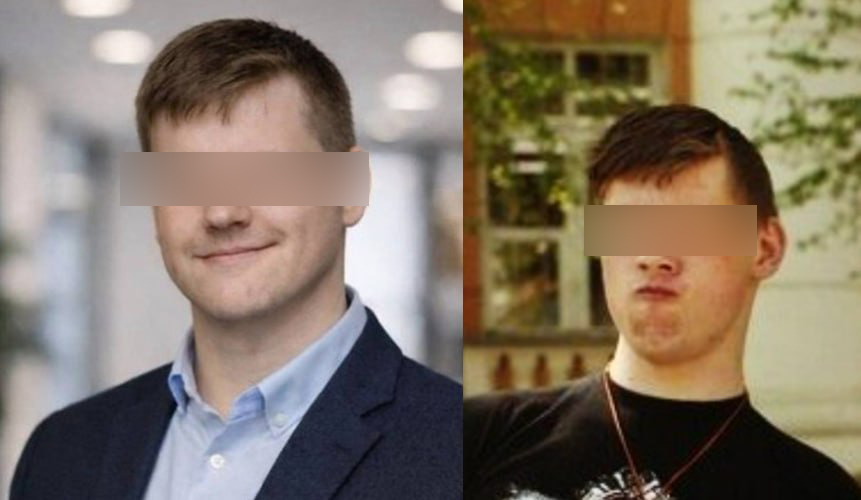
When the scandal resonated, Sheremetyev deleted his Telegram account, and the second manager of iPhone, who introduced himself as Evgeny Protov, simply changed his name and removed his avatar. It showed a portrait of a young man in a jacket, which, judging by indirect signs, had been processed by a neural network.
A page with the name Evgeny Protov was also found on VKontakte, it has existed since 2009. As Izvestia found out, it is led by 33-year-old Dmitry Perov from the Sverdlovsk region, a graduate of the Ural Institute of the State Fire Service of the Ministry of Emergency Situations of Russia. At the same time, on the page's avatar there is a photo of a person who looks like Protov from Telegram, but adjusted for age.
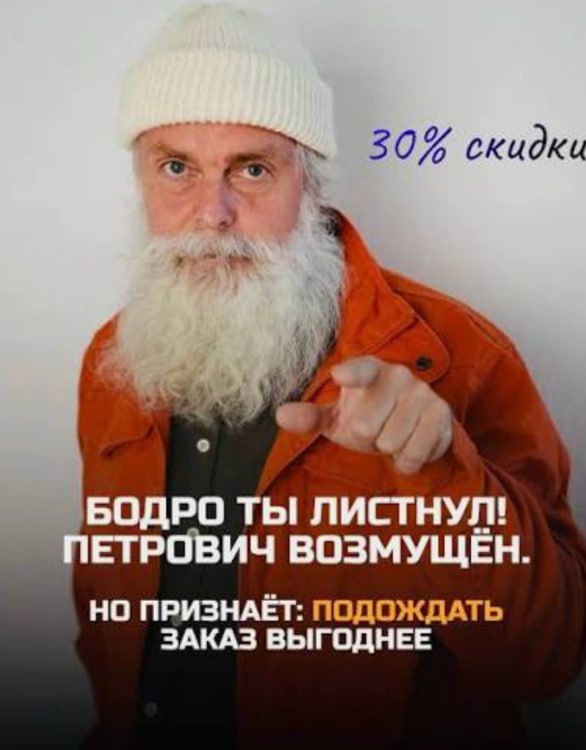
Dmitry Perov also used the pseudonym Petrovich in one of his social networks. And a character with the same name appeared in iPhone commercials. In addition, the store's advertising publication was posted by one of the Yekaterinburg media outlets, that is, in the same region where Perov lived in recent years.
However, Perov himself, when a correspondent of Izvestia called him, was very surprised that his data was used in a possible fraudulent scheme.
— I do not even know what kind of store it is. Who could have used a pseudonym? I don't know, I made it up out of my head about 10 years ago. I don't know who could have used it," he told Izvestia.
Possible accomplices in Russia
Perhaps the store owners had assistants in Russia. Izvestia managed to find out that the contract for telephony for the iPhone in St. Petersburg was issued to Dmitry S., a 25-year-old local resident (name changed). In a conversation with a reporter, he admitted that his friend, 20-year-old Sergey A. (name changed) from Voronezh, had asked him to do this. He promised a reward, but Dmitry never saw the money.
"They asked me to sign a contract through a friend and promised to pay, but they never paid," Dmitry told Izvestia.
Izvestia correspondents also contacted Sergey A. He stated that he had not asked for anything of the kind. According to him, he only wanted Dmitry to help sell his phone because he needed the money.

Izvestia was unable to confirm or deny the words of the young people, however, we note that Sergey A. has an individual entrepreneur with 10 accounts, which has been in liquidation since the end of October. According to some reports, he offered withdrawal services via individual entrepreneur in Telegram chats.
Even if the investigation proves that this is fraud, and the information that US citizens are behind it is confirmed, they are unlikely to be extradited to Russia.
— A US citizen will not be extradited to a foreign country upon an extradition request, even if he has committed a crime abroad. However, if a criminal case is opened against him in Russia, the American authorities can conduct their own investigation and trial, even without extradition proceedings, lawyer Sharbatullo Sodikov told Izvestia.
Another expert, on condition of anonymity, explained that, in theory, there is a chance of a fraud case in the United States, but in the context of the current geopolitical situation, it is small, especially if only Russian citizens have become victims of fraud.
Переведено сервисом «Яндекс Переводчик»
