
The Soprano Treasure: how Galina Vishnevskaya ascended to the opera Olympus

A fragile Leningrad orphan girl who survived the blockade and lost her child; an overbearing Moscow prima donna, People's Artist of the USSR; a royal Parisian aristocrat who has collected a unique collection of paintings. All this is about Galina Vishnevskaya, whose long life path was full of sharp turns, ups and downs. But the main thing is that she knew how to "melt" her experience, her tragedies and triumphs into art like no one else, creating the ideal embodiment of a strong woman on the Soviet and then European opera stage. On the occasion of the 100th anniversary of the birth of the great singer, Izvestia reflects on her phenomenon.
Become a Vishnevskaya
In 1984, already in exile, Vishnevskaya released her memoirs "Galina. A life story." This book was criticized by the singer's colleagues and witnesses of the events described for bias, inaccuracy, sarcasm, and unfairness of judgments and assessments. But one must admit that it is read in one breath and impresses with its burning sincerity. We have a confession before us. And it's a literary self—portrait, which probably shouldn't be unbiased and objective.
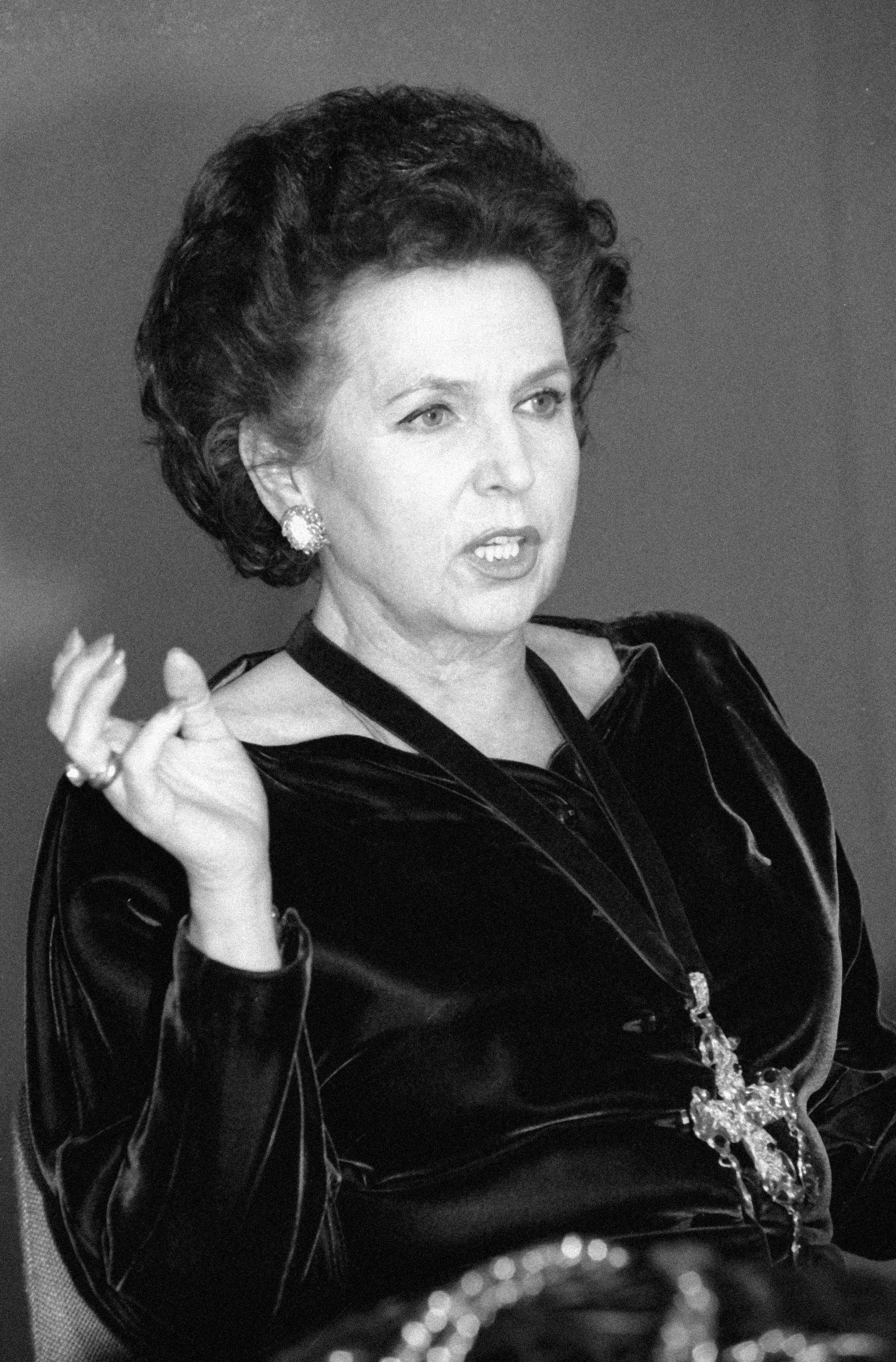
However, what is most impressive in this passionate monologue is not the description of dissident confrontations with the Soviet government or even the intricacies of intrigue at the Bolshoi Theater, but the memories of childhood and youth. Vishnevskaya (then Galya Ivanova) grew up an orphan; both her father and mother abandoned her. As a teenager, she miraculously survived the siege of Leningrad, losing her only loved one, her grandmother. Then there was the death of her first lover, a short unsuccessful marriage with a sailor (from whom, however, Galina had a sonorous surname — Vishnevskaya), the beginning of a professional singing career — with a grueling "chase" through the rural clubs of the Leningrad region and a primitive variety repertoire.
The culmination of the disasters that befell a very young girl was the death of her two-month-old firstborn, born in her second marriage (with the director of the Leningrad Regional Operetta), and tuberculosis, which almost brought down Vishnevskaya's dreams of the big stage. Reading all this, you ask yourself over and over again: why was fate so cruel to Galina from the very beginning?
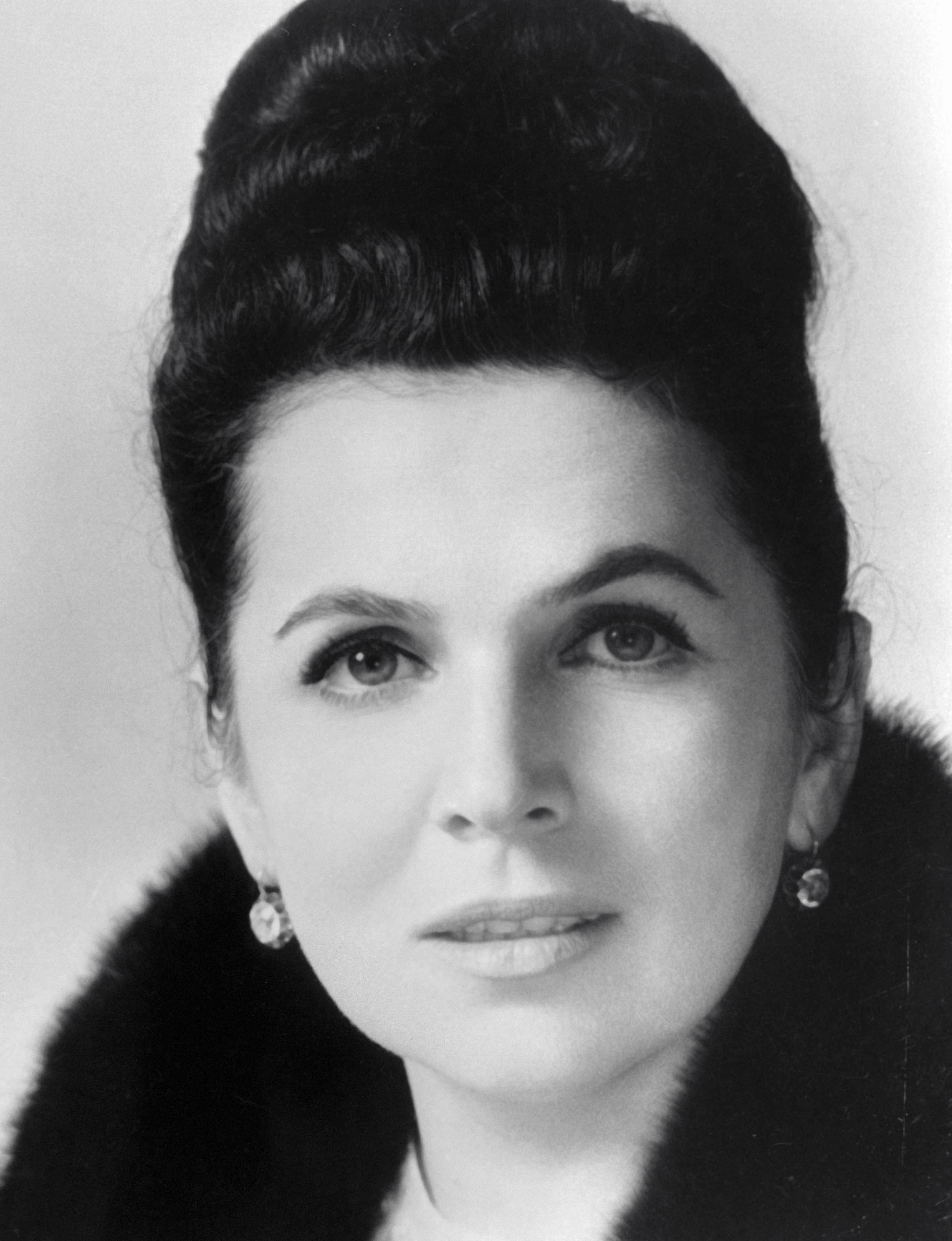
But then we have to admit that her concentration of lucky luck is also exceptional. During the blockade, she was rescued literally on the verge of death. Pneumonia was cured with the help of a recently discovered antibiotic. Finally, Vishnevskaya auditioned for the Bolshoi Theater's youth troupe almost by accident — and almost immediately became a leading soloist.
A strong woman
This is, of course, the result of exceptional endurance, desperate determination to achieve the maximum, but most importantly — a rare talent. Her voice was naturally delivered (although classes with the right teacher proved invaluable); her appearance, despite the most difficult living conditions, was not inferior to Hollywood movie stars. Unfortunately, there are practically no video recordings of young Vishnevskaya's performances, but even from the concert footage from the Great Hall of the Conservatory in 1964, where she is already 37 or 38 years old (the exact date of the event is unknown), it is clear how beautiful she is.

Her beauty is Greek, antique. And statuesque restraint suits her so well. But there are abysses of feelings behind it. Vishnevskaya performs Tchaikovsky's romances, and she not only sings each number, but lives it with her voice, face, and body.
Here is the "Lullaby": "Sleep, my child, sleep, sleep! Go to sleep, go to sleep! / Sweet dream to yourself mani: / I took you as a babysitter / The wind, the sun and the eagle." And we understand that tenderness here is mixed with the inescapable pain of losing a child. And the angelic, crystal vocals don't sound idyllic coming from her mouth at all. Perhaps that's why any performance by Vishnevskaya makes such an impression: behind her every sound, sigh, there is an experience.

But you can feel no less in everything that Vishnevskaya sang at this evening and on later recordings, an indomitable will, a huge inner strength, and a willingness to move forward despite all the blows of fate. Perhaps that's why her signature opera roles were those where the heroines possessed qualities that are traditionally called "unfeminine." Vishnevskaya's first triumph is Leonora from Beethoven's Fidelio: disguised as a man, she rescues her husband from prison. Then — Tosca, Aida from the operas of the same name by Puccini and Verdi. Selfless women who are ready to do anything for love.
In Rimsky-Korsakov's The Snow Maiden, Vishnevskaya did not sing the main role, although her silvery timbre would have been ideal for her, but her unhappy rival Kupava, who, unlike the distant, cold Snow Maiden, was full of passion and desperate determination to fight for her happiness (in her memoirs, Galina Pavlovna recalled that many in the theater pointed out the improbability of the production it was hard to believe that Mizgir could leave such a Cup).
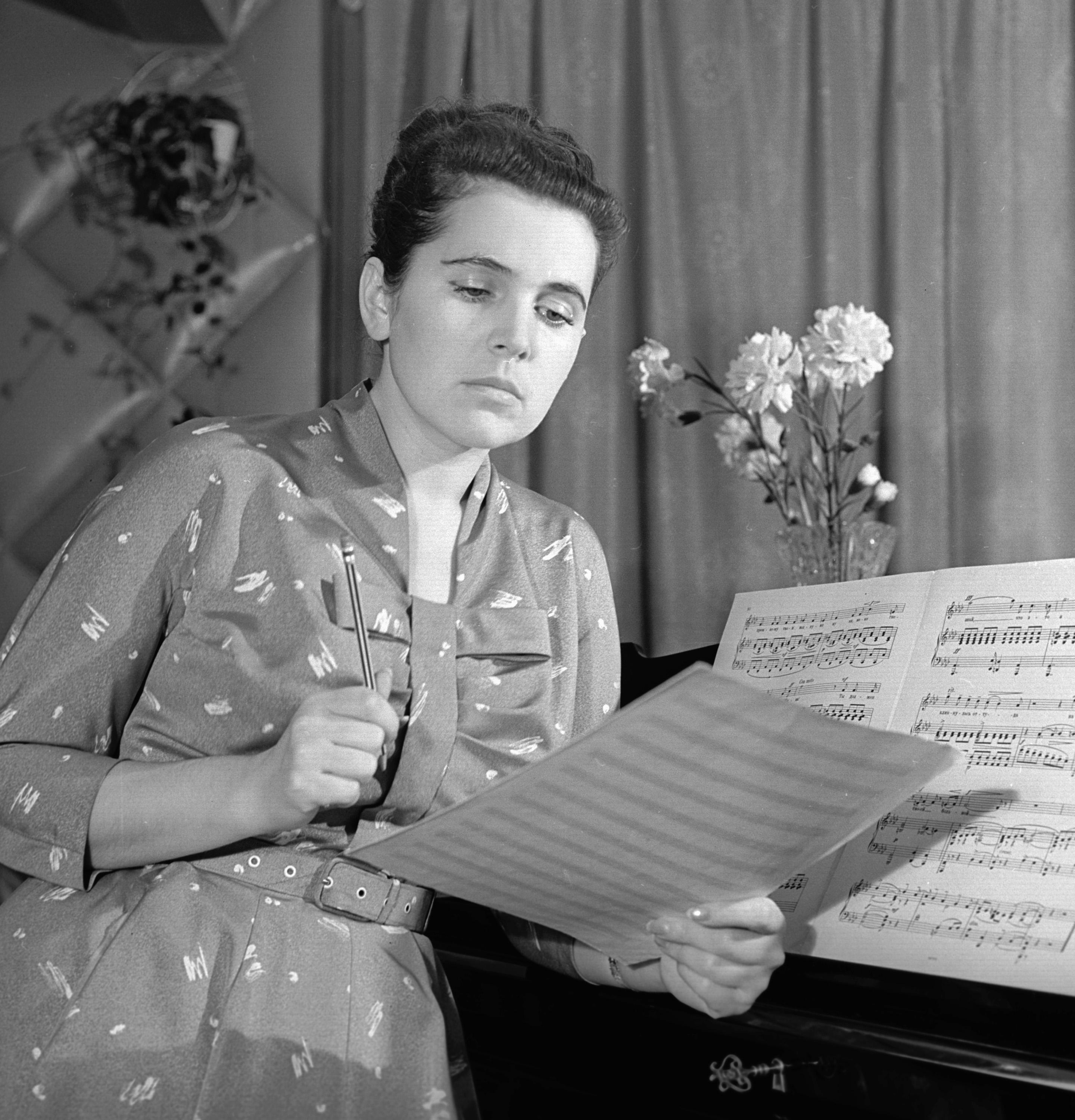
Finally, Tatiana from Tchaikovsky's Eugene Onegin: it was this role that Vishnevskaya considered the main one in her life. She has repeatedly sung it on the Bolshoi stage. It is Galina Pavlovna's voice that sounds in the 1958 Soviet film adaptation (although she is not in the frame; at that time it was believed that professional actors should play in film operas). After emigrating, Vishnevskaya appeared as Tatiana on the stage of major Western theaters, even at a very mature age, remaining convincing in the role of a Pushkin girl.
And it's probably not just about vocal harmony (Vishnevskaya's voice always sounded very young and fresh). The singer saw Tatiana as herself. Like Larina, who wrote to Onegin "Let me die, but first...", she could decide on the unthinkable, plunge headlong into the pool. Being on the verge of life and death, he refused surgical treatment for tuberculosis, which was incompatible with his profession; quit his career on the stage and went to Moscow to conquer the opera Olympus; accept Mstislav Rostropovich's proposal just four days after they met, although she had been married for many years at that time.
Defying fate
In a sense, Tatiana Larina's metamorphosis also occurred with Vishnevskaya: she came to Moscow as a timid, defenseless provincial, but very soon she became the royal "mistress of the ball." People who knew her said that in the second half of the 1950s and in the 1960s, Galina Pavlovna was a real prima donna, considered her Great patrimony and often showed a cool temper. Her colleagues and even the management of the theater were afraid of her: in addition to worldwide fame, Vishnevskaya had patrons at the very top — it was not for nothing that by the age of 40 she had become a People's Artist of the USSR.

It is all the more surprising that, having everything, she and Rostropovich decided to publicly challenge the Soviet government by settling the disgraced Solzhenitsyn in their country. The confrontation ended with emigration, and from that moment a new stage of her life and work begins. However, she did not perform abroad for so long — the couple left in 1974, and in 1982 Vishnevskaya appeared on the opera stage for the last time: of course, in the role of Tatiana. But those were exceptionally eventful, fruitful years, especially valuable for us with the recordings she made on the world's leading labels (by the way, she continued to work in the studio even after her theatrical career ended).

Alas, audio is not able to convey the power of influence on the viewer, which Vishnevskaya, the actress, undoubtedly had. Here, the main monument to her talent is the film opera Katerina Izmailova (1966). In Mikhail Shapiro's film based on the opera of the same name by Dmitry Shostakovich, Vishnevskaya plays herself in the frame, unlike Eugene Onegin in 1958. And her skills are fully revealed: the singer has created a frighteningly realistic, contradictory image of a merchant who rebelled against female disenfranchisement, lost her head with passion and decided to commit a crime.

In this role is all her pain, all her thirst for love, which has been missing since childhood, all her desperate courage, bordering on recklessness. It seems that even the dark sides of her personality, for which Galina Pavlovna was disliked by her colleagues — short temper, arrogance, and sometimes rudeness — Vishnevskaya put into action, sculpting her heroine like a sculpture. Her Katerina, of course, is a victim. But the victim is not submissive, but came out with an open visor, defying fate and the whole world.
The legacy of the Tsarina
One can only complain that Vishnevskaya did not have a long-term affair with the camera. After "Katerina Izmailova", she was able to open up in cinema as an actress — but now without the help of vocals — only in her declining years, in Alexander Sokurov's "Alexandra". This is another adventure that even her husband did not expect from Galina Pavlovna, who was very old at that time (Rostropovich was against her filming; she did not obey).
"Alexandra" was filmed in Chechnya, in 2006. The hot phase of the counter-terrorism operation ended then, but isolated clashes with militants and terrorist attacks occurred. The region was still very turbulent. And, of course, no one could provide Vishnevskaya with the domestic comfort to which she was accustomed while living in Paris. Nevertheless, Galina Pavlovna bravely endured all the difficulties and was able to create a deep, truthful image of a Russian grandmother on the screen.

Galina Pavlovna Vishnevskaya and her husband Mstislav Leopoldovich Rostropovich
It was her last great transformation, perhaps the most radical in her entire life. And if poor Alexandra Nikolaevna had anything in common with the "empress" Vishnevskaya, the Vishnevskaya who communicated with kings and presidents in her own way, shone at social receptions, and ran her own opera studio in Moscow, it was only the spiritual core that she had in everything. And in roles, and in singing, and in life itself.
When Galina Vishnevskaya died in 2012, Sokurov told Izvestia: "Many times I caught myself looking at her and seeing the Russian empress. If we had a monarchical system of government, she would be a better queen. And because she knew how to get angry, and because she knew how to forgive, and because she was piercingly smart."
But her real kingdom was the stage; and the main legacy of her "reign" is not castles and jewelry (although the art collection she and Rostropovich collected is now considered a national treasure and is kept in the Konstantinovsky Palace), but the approach to opera itself, which presupposes the integrity and truthfulness of the image; external conformity to the character and uncompromising acting. Modern stars, from Anna Netrebko to Elina Garancha, are largely following in her footsteps. Unless they don't have as much hard experience behind them as Vishnevskaya. The times are not the same. It's also lucky.
Переведено сервисом «Яндекс Переводчик»
