
Carmen and her entourage: Family history and Carden outfits

The lightness of her movements, musicality, expressive plasticity of her hands and the boldness of her creative experiments made Maya Plisetskaya one of the brightest ballerinas of her time. She changed the way we think about Russian ballet, and her art has not lost its power today. You can see this at the exhibition "The Century of Maya Plisetskaya", which opened on October 15 at the Jewish Museum and Tolerance Center. Izvestia was among the first to appreciate the unique exhibit.
The image is cute and lively
The era of Plisetskaya is not over: her personality and work are still of great interest. To reveal the different facets of Prima, the curators divided the exhibition into seven halls.
— We have been creating the exhibition for about a year. We looked through thousands of photographs, studied many exhibits and works of fine art, choosing authors whose works would be worthy of Maya Mikhailovna's scale," Maria Gadas, chief curator of the Jewish Museum and Tolerance Center, told Izvestia.
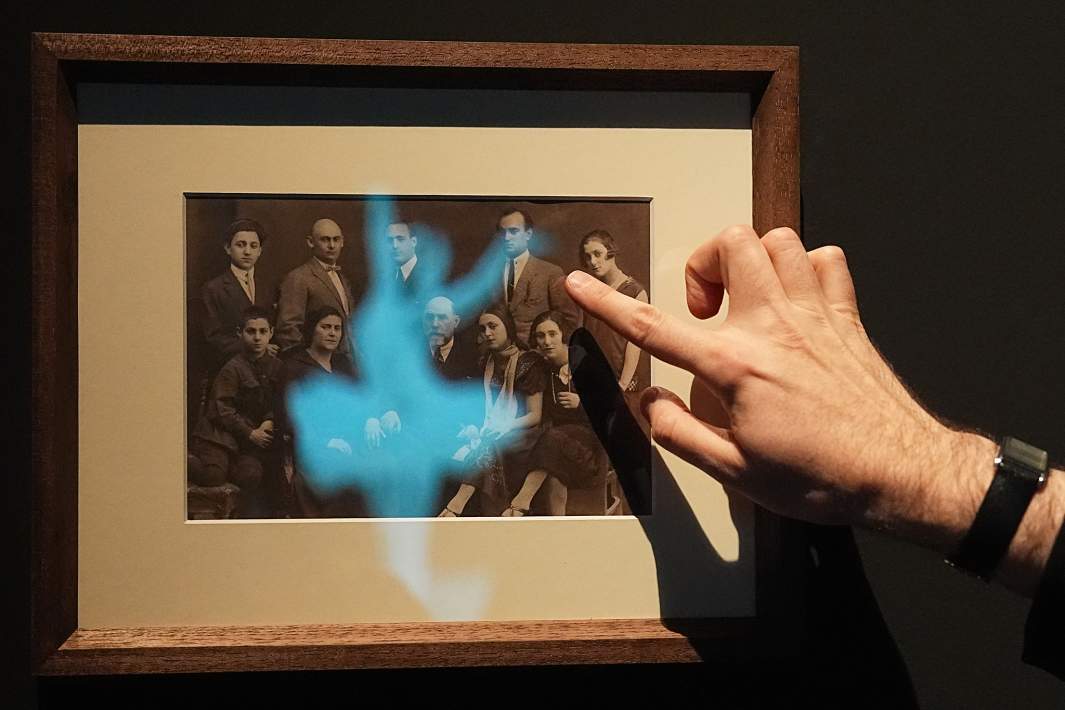
There were memories of the Bolshoi Theater. Nevertheless, the ballerina served his stage for more than 40 years. However, they decided to focus on Plisetskaya's family history. Her brother Azari helped reveal this side of Prima's life: he provided personal photographs and videos, commented on them, and participated in the creation of the first section of the exhibition, The Messerer Dynasty.
When the father of the future star of the world stage was arrested in 1937, and her mother was later repressed, the girl was raised by Aunt Sulamith Messerer, already a prima ballerina of the Bolshoi Theater. It was she who largely determined Plisetskaya's professional path.

In the first hall, visitors are greeted by a curious interactive element: a door with many bells. When you click on each bell, a photo of one of the Messerer dynasty members appears. This seemingly simple detail complements the documents behind the glass, enlivens the exhibition and helps to see specific people behind the historical facts.

— The uniqueness of the exhibition is that we wanted to "mirror" Maya Mikhailovna in the works of great great masters. The real gem of our exhibition is a watercolor portrait by Arthur Fonvizin. I call it the "Green Portrait," said Alexey Isaichev, the co—curator of the exhibition, the leading editor of the literary and publishing department of the Bolshoi Theater.

The struggle of talent and the victory of style
In 1994, in the book "I, Maya Plisetskaya..." the ballerina wrote: "I've been fighting all my life." The second hall of the exhibition best reveals the meaning of this statement. Behind the Messerer Dynasty, visitors are greeted by an abundance of light and floor-length mirrors. This visual solution instantly transfers you to a ballet class, and a forge of mastery opens up in front of the audience — the "Rehearsal Hall". Pointe shoes are in the center of attention — new and obsolete ones. The holes and scuffs perfectly demonstrate the struggle with themselves that ballerinas, including Plisetskaya, went through every day. There are also chronicle shots that allow you to watch Prima at the machine.
In addition to Maya Mikhailovna's pointe shoes and ballet costumes, the museum presents outfits from her personal wardrobe. Nothing in the straight, restrained silhouettes betrays the era. They would look quite organically on modern streets. In one of the showcases is a rich yellow dress with black accents on the pockets, next to it is an elongated tunic, which the ballerina combined with trousers in everyday looks. All these are things that Pierre Cardin personally created for Plisetskaya. The acquaintance with the famous fashion designer took place at the Avignon Theater Festival in 1971.
— The personality of Maya Mikhailovna Plisetskaya is incredibly beautifully represented at the exhibition. Her work is shown very tenderly, at some point dramatically. Everything reflects her life. She was very punchy, bright, radiant. You watch an exhibition and you get a stream of energy. You move to another room and you are filled with tenderness, something airy. Such a difference of emotions," one of the visitors of the exhibition shared her admiration with Izvestia.

Next to the outfits is a bottle of the ballerina's favorite perfume: Robert Piguet Bandit fragrance. There are also pictures of Plisetskaya for Russian Vogue and Elle in the hall. Surprisingly, in some of the shots, the ballerina is already over 70, but nothing in her appearance indicates her age.
— Look at how she talks, what passion there is in every turn. Maya Mikhailovna will be remembered alive. The person has achieved a lot, but there is absolutely no indifferent attitude in her," Gadas told Izvestia. — She is an informal person. There was nothing Soviet about her in the bad sense of the word. Plisetskaya is bright, and she's the only one. The era and the dreary time had no effect on her.
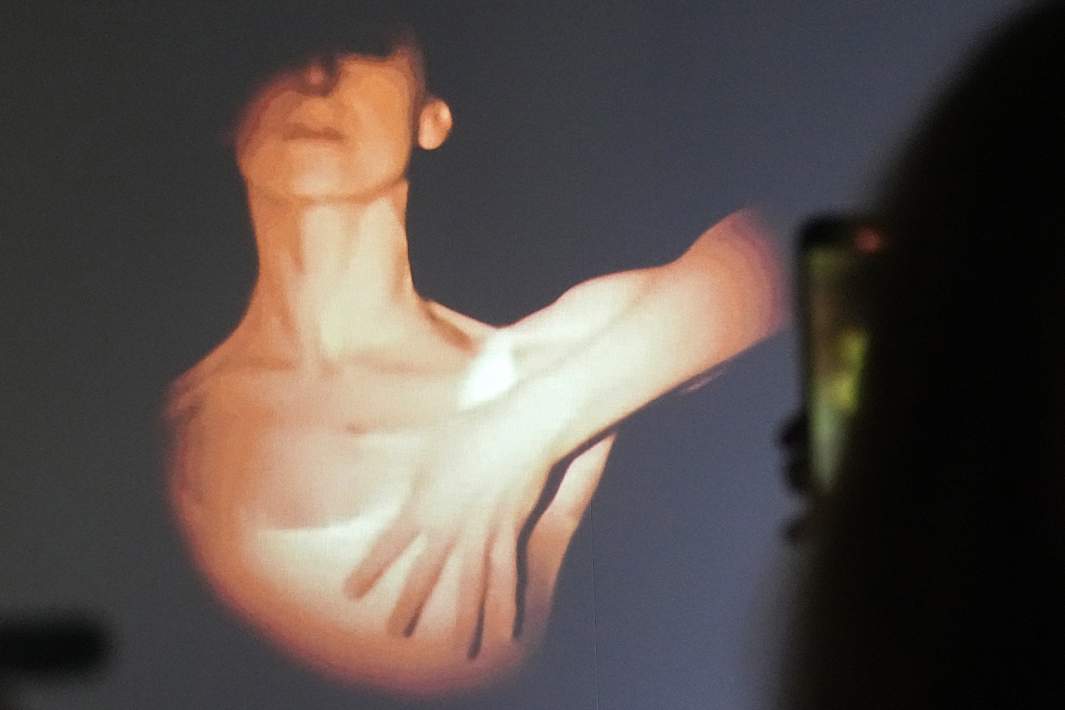
The last hall of the "Theater in the Theater" introduces ballets that were once written specifically for Plisetskaya. Among them, of course, are the famous works of composer Rodion Shchedrin, the wife of Prima: "Carmen Suite", "Anna Karenina", "The Seagull", "The Lady with the Dog", but not only.

A special place is occupied by "Bolero" in the choreography of Maurice Bejar. Plisetskaya first saw this ballet in the summer of 1974 and was smitten by it. She later performed it herself during the filming of a French-Belgian TV movie. These shots excite and delight. This is probably why the opening night ended with a screening of the dance performance "Bolero" by choreographer Olga Tsvetkova. However, the dance performance has only musical accompaniment in common with the ballet of the same name to the music of Maurice Ravel.

At first, young men appeared on the stage, moving in time with rhythmic breathing. Then a girl joined them, and a familiar musical theme finally sounded with her. Rhythm has become a key focus in modern choreography. However, an inexperienced viewer who did not know that Tsvetkova was referring to Isis, the ancient Egyptian female archetype, could easily mistake what was happening for Strelnikova's gymnastics, albeit performed with great zeal. And although not everyone liked the modern interpretation of the dance, by the end of the evening there were definitely no people indifferent to Maya Plisetskaya.
Переведено сервисом «Яндекс Переводчик»
