Put on pointe shoes: ballet based on the novel "The Gambler" explores the nature of obsession
- Статьи
- Culture
- Put on pointe shoes: ballet based on the novel "The Gambler" explores the nature of obsession


The Sevastopol Opera and Ballet Theater, under the direction of Ildar Abdrazakov, brought to the GABT a unique ballet performance based on Fyodor Dostoevsky's novel The Gambler. British choreographer and performer of the role of John's stickman Paul Cook explores excitement as a state of mind. The main roles are played by Dmitry Sobolevsky, Ksenia Ryzhkova, Vyacheslav Lantratov, and Maria Alexandrova. The costumes were created by the Fashion House of Alena Akhmadullina. Since the "Player" was first embodied in dance, instead of the original score, works by Bach, Rameau, Scarlatti, Purcell, Albinoni and Vivaldi are played here. Izvestia visited the premiere and appreciated the scale of the scenic action.
Dance, Dostoevsky!
The classic's works have long attracted choreographers. Boris Eifman staged ballets based on The Idiot, The Brothers Karamazov, and Crime and Punishment. At the same time, the plot of the "Gambler" was not embodied on the ballet stage by John Paul Cook before the British. It turned out to be not just an adaptation, but an attempt to convey in the language of movement searing prose about passion, risk and self-destruction.
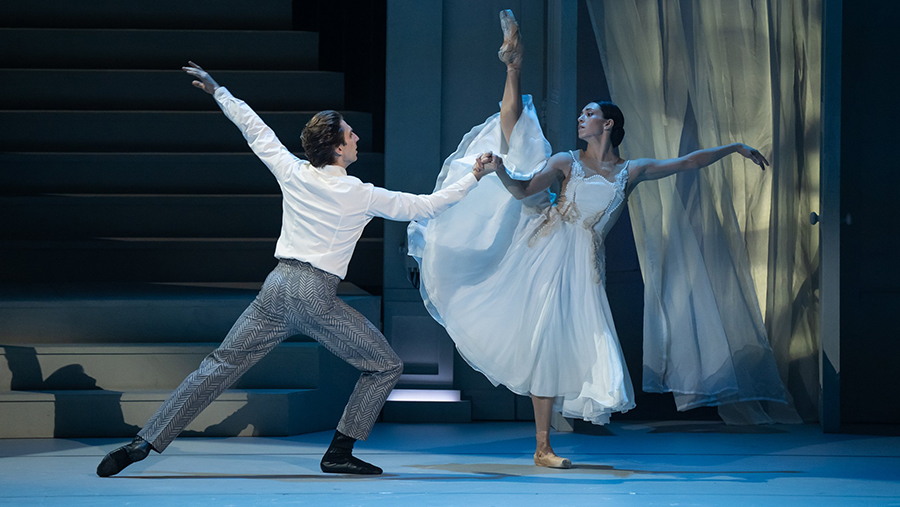
This is the second premiere of the Sevastopol Troupe on the Bolshoi stage. The theater received the Golden Mask for the ballet "Wuthering Heights". The successful start of the team has fueled public interest in the new work. An already prepared spectator came to the "Player". There were many colleagues from the capital's theaters in the hall.
John's choreographer Paul Cook does not smooth out the sharp corners of the plot. In his reading, excitement is not only a game for money, but an addiction that subordinates everyone around. The dance conveys a loss of control — sharp lines, sudden stops and breakdowns in rapid motion become Alexey's inner monologue, reflecting his fluctuations between hope and despair.
"I tried not to change anything about Dostoevsky, I didn't want to do anything new," Cook admits. "Ballet explores the novel. All the answers to the artists' questions were in the text, you just need to read it.
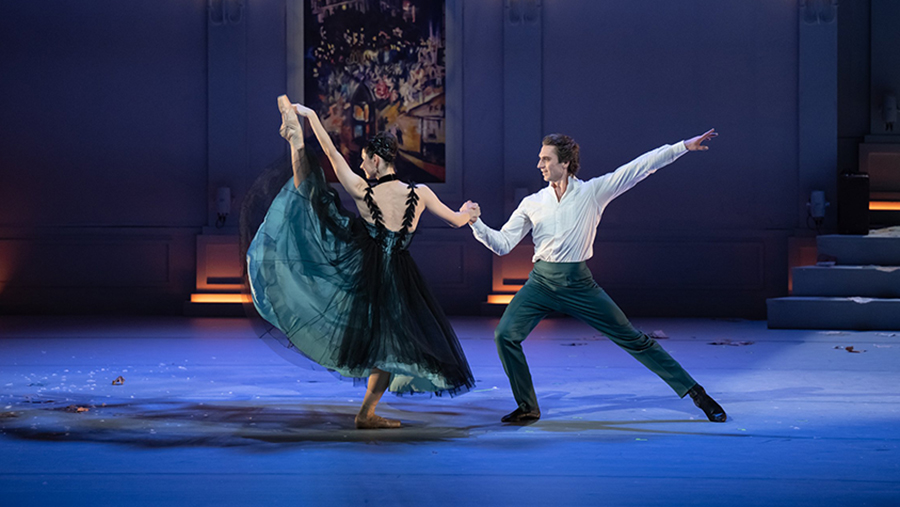
In the center of the production is Alexey, who is entangled in a painful relationship with Polina and is increasingly succumbing to the attraction of roulette. For heroes, risk is a way to test themselves and others, an attempt to escape from circumstances and gain freedom or lose it completely.
A year ago, Cook turned to Dostoevsky's prose for the first time — this is how the one-act ballet "The Meek" appeared. The choreographer was interested in the psychological depth of the material, and the fusion of artists from different theaters gave the performance a special energy. The libretto was created by Olga Kuznetsova, the set design by Olga Skurikhina.
On the stage there is a manor space with huge doors and a high staircase, down which the characters descend. On the left is a chandelier lying on the floor, under the dome of which Polina is hidden.
The role of Polina is played by Ksenia Ryzhkova, the choreographer's wife. On the day of the premiere, the prima ballerina of the Sevastopol Ballet celebrated her birthday. The image of the heroine in the novel "The Gambler" is copied from Apollinaria Suslova, a woman with whom Dostoevsky had a dramatic relationship.
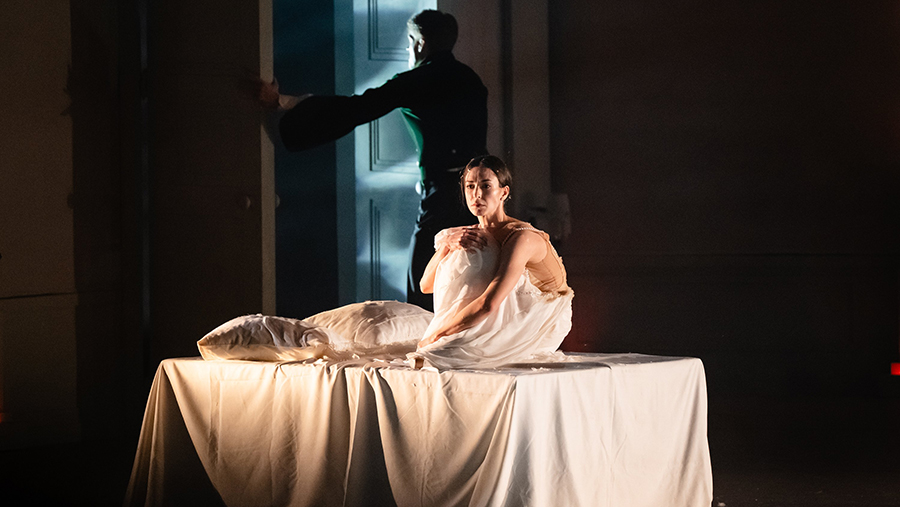
— I read Suslova's biography, diaries, letters — that's how I got an idea of who this woman was and what guided her, — said Ksenia Ryzhkova. — Jonah is a very gifted dancer and director. He is able to combine classical and modern choreography, which allows him to reveal deep, rich texts. The characters acquire a special plasticity. This is good ground for experimentation. I can dance classics even at night, and modern choreography makes it possible to read the director's language, appropriate it and remain a dramatic artist at the same time, so that the audience is interested in following the action, like in a movie.
The role of Alexei, Polina's lover, is played by Dmitry Sobolevsky, whose performance is a continuous internal tension, a balance between coldness and hidden pain. The Frenchman's role is played by Vladislav Lantratov, Honored Artist of the Russian Federation, Premier of the Bolshoi Theater. His presence gives the performance a recognizable dynamic. The General's tunic was tried on by Alexei Lyubimov, Honored Artist of the Russian Federation, leading soloist of the MAMT ballet, who is also known for his collaboration with Sergei Polunin.

Granny is a thunderstorm
The choreographer was faced with the task of revealing the image of the Grandmother in the dance. Maria Alexandrova, People's Artist of Russia, was invited to play the role. Her appearance through the torn portrait sets the scale. Plastic carries the weight of years and a destructive force: a proud gait, a step from the hip, a cane as an attribute of status. The domineering heroine, unexpectedly arriving in her native place, denies her nephew, the general, money, but she is fond of roulette. Having won a large sum first, she rapidly loses almost her entire fortune. Money keeps flying off the stage.
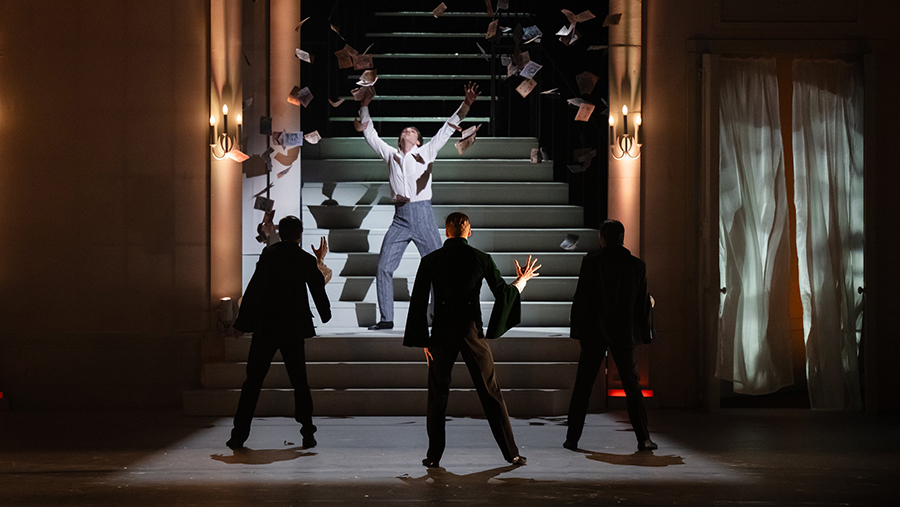
The directors showed the card game in a non-standard way. Instead of the usual table, there is a circle of suitcases, which sets the atmosphere of the production and immerses the artists and the audience in the action. Cook reserved the Croupier's game for himself. His character becomes the semantic center that decides the fate of the characters.
Costumes from the Fashion House of Alena Akhmadullina combined choreography with the aesthetics of high fashion. The outfits are hand-embroidered with lace. The characters walk in silks and velvets, skirts easily fly up in motion.
The musical basis is Baroque (Bach, Rameau, Scarlatti, Purcell, Albinoni, Vivaldi). Strict forms serve as a cold backdrop for boiling passions, highlighting the inner fracture of the characters more vividly. The musical director and conductor is Artem Abashev. The Moscow Youth Chamber Orchestra participates in the performance. Individual musicians perform dramatic roles: trumpeter Ilyas Nevretdinov appears as a losing player, soprano Dilara Idrisova embodies Maria Dmitrievna Isaeva, and countertenor Vadim Volkov — Apollona Maikov.
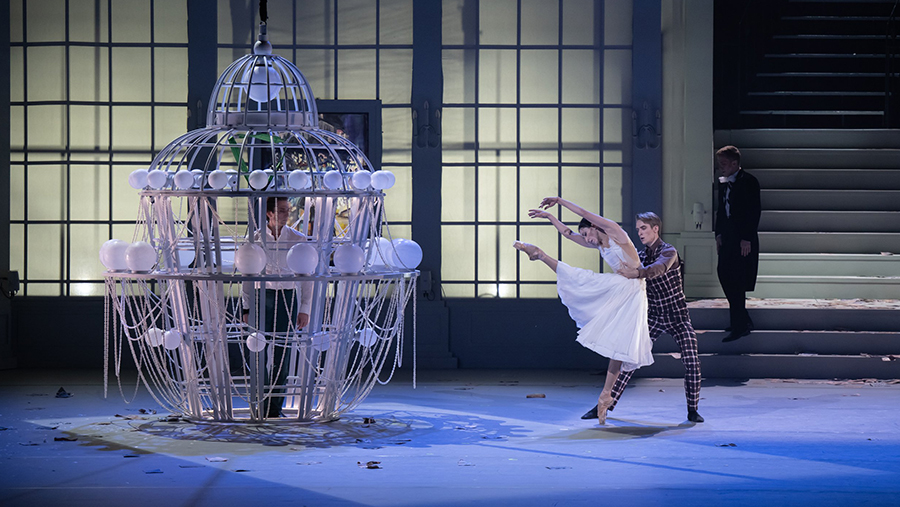
The orchestra is a full—fledged participant in the action. Baroque rhythms sometimes push the characters forward, then make them freeze. The second act opens with a drum solo. Part of the performance is accompanied by a drum roll. Casino players appear to the sound of timpani. Fast-paced events unfold under the "Thunderstorm" from Vivaldi's The Four Seasons. It seemed that the orchestra was not playing in the rhythm of Presto (fast), but Prestissimo (maximum possible tempo). The stormy and impetuous melody whirls the whirlwind of passions even more.
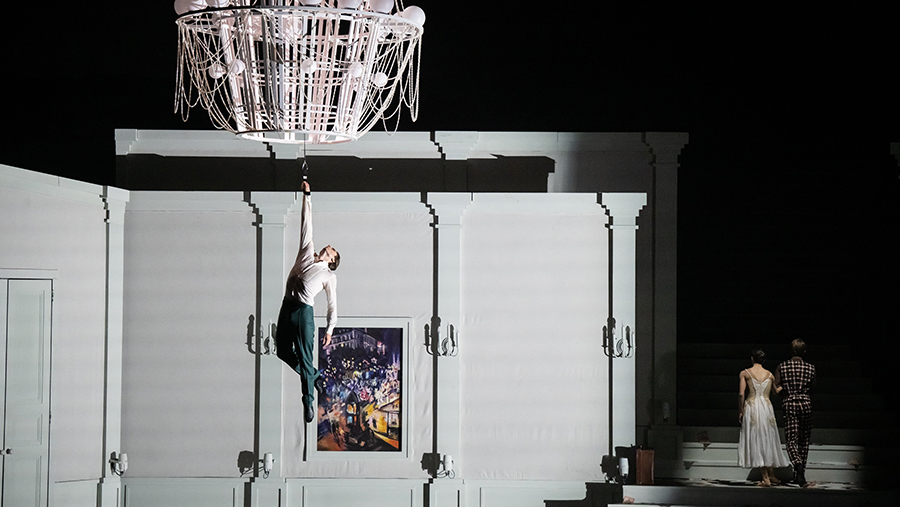
The finale is built by the artist. A chandelier descends onto the stage, and under its dome Alexey is hiding — a victim of gambling, a man who has lost everything. Together with the chandelier, it soars into the sky, and the curtain closes.
"The Gambler" is not just a story about roulette, but a study of how an idea can completely capture a person, depriving him of his will. And dance here becomes the exact language for Dostoevsky's prose.
Переведено сервисом «Яндекс Переводчик»
