The devil wears a tailcoat: how "Mephistopheles" turned the underworld into a circus


Maestro Valery Gergiev presented a musical reading of Arrigo Boito's monumental masterpiece "Mephistopheles" at the Bolshoi Theatre. The stage version was created by the famous Italian director Giancarlo Del Monaco. The team's collaboration turned the return of a rare opera into one of the main events of the theatrical season. The underworld on stage has turned into a circus: where tragedy used to be seen, now a spectacular, almost hypnotic attraction has reigned. "Izvestia" visited the premiere and appreciated the idea.
A dream for a bass and an anniversary gift
The last time "Mephistopheles" was staged at the Bolshoi Theatre was in 1902. As Ildar Abdrazakov admitted, he had been contacting Valery Gergiev for several years with the initiative to return this rare opera to the Russian stage, reminding him that it had not been performed in our country for more than a century — since the time of Fyodor Chaliapin. The maestro supported the idea and timed the large-scale production to coincide with the 50th anniversary of the People's Artist. "Mephistopheles" is one of the few operas written specifically for the bass, and a cherished goal for anyone with such a voice.
"It was a fantastic gift from the maestro and the Bolshoi Theater for me,— Ildar Abdrazakov shared his emotions. — Every artist dreams of such a role. And, to be honest, I didn't even dare to dream, but it happened.
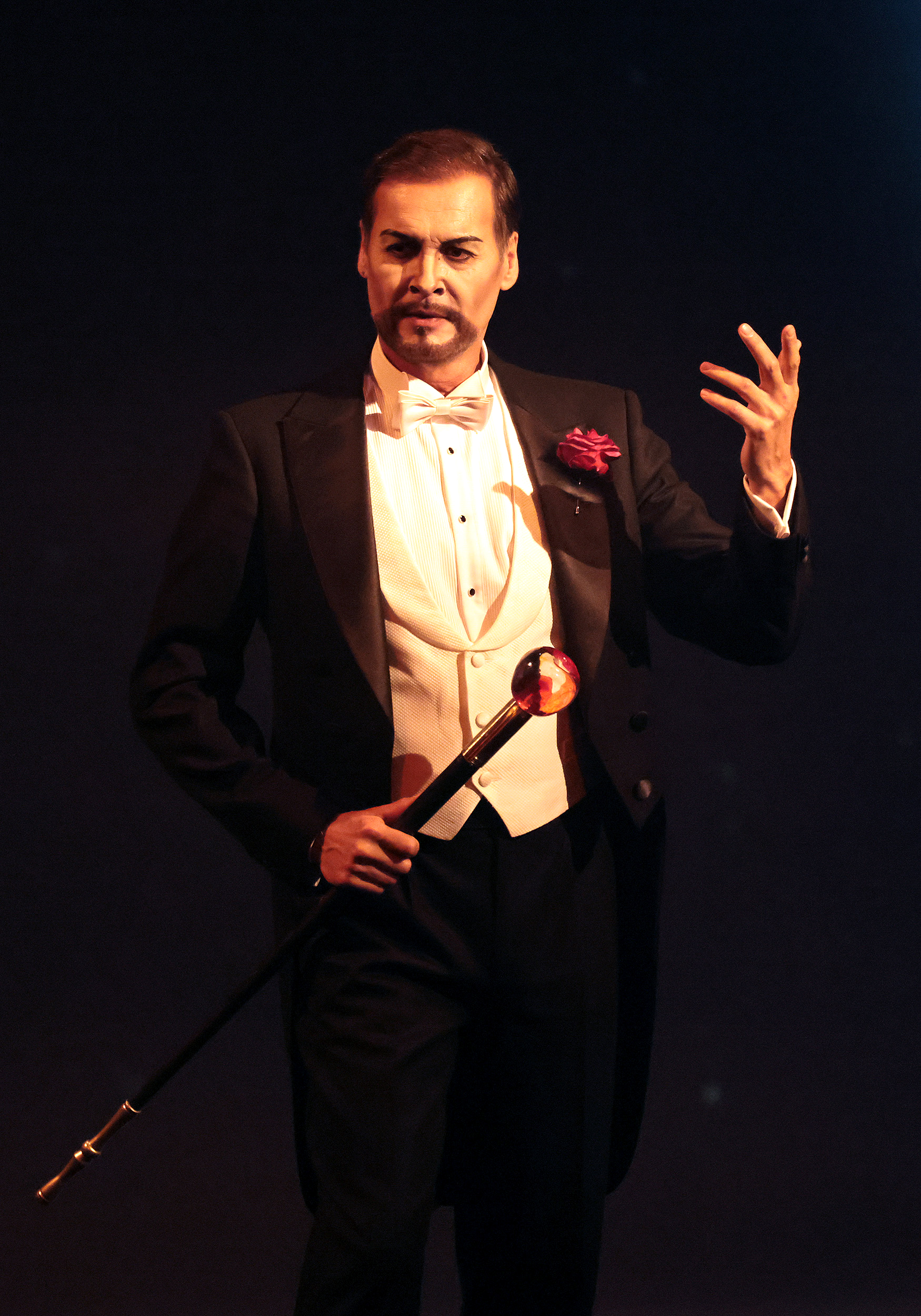
For Giancarlo Del Monaco, this job at the GABT has also become a personal story. If the director collaborated with his younger brother, Ildar, for the first time, then with the elder, Askar Abdrazakov (who plays Mephistopheles in the second line-up), he worked 15 years ago in Palermo, where the singer performed the main role in the opera by Arrigo Boito. Askar himself, who served at the Bolshoi until 2000, admitted that returning to the famous stage after a quarter of a century brings him great happiness. According to him, the director has set the most difficult tasks for the troupe, requiring maximum immersion: on stage it is necessary not just to sing, but to literally live your image.
In terms of vocal and dramatic load, the part of Faust is in no way inferior to the part of Mephistopheles. While the bass reigns supreme on stage due to its powerful charisma, the tenor keeps the tension in the maximum range. In the premiere screenings, the image of Faust was embodied by Sergei Skorokhodov. His character goes from an ordinary man in a raincoat to a mirror image of the devil in a tailcoat. In the epilogue of the opera, the characters converge in the strongest dramatic duet — a vocal duel, where the exhausted Faust tries to escape from the clutches of evil through repentance, and Mephistopheles tries to hold his soul to the last.
The female parts in Boito's masterpiece are not large in volume, so the soprano performs two roles at once — Margarita and Elena Troyanskaya. Ramil Minikhanov, Anastasia Shchegoleva and Dinara Aliyeva embodied double images in the premiere screenings. This requires the soloists to instantly switch between two completely different characters — an earthy, dramatic girl and a majestic antique queen. The climax of the female line is the death scene of Margarita, which gives the singer great scope for acting and makes the death of the heroine especially emotional.

The infernal tent
Giancarlo Del Monaco's stage concept completely abandons the usual Christian dogmas, devils and red-hot frying pans. The director notes that he started from the ideas of Goethe and the composer Boito, whose prologue unfolds in the theater, and the plot begins with a bet between God and the devil for the soul of Faust. The directors are wondering: What does hell look like? Everyone imagines the underworld in their own way.
—In our vision, hell is a giant circus, and Mephistopheles is the director of it,— explains Giancarlo Del Monaco. — That's why all the permutations in the second act take place with the curtain open, and the audience watches as the scenery is set. All those who misbehave are doomed to be eternal clowns in this circus and laugh at themselves. We must never forget that "Mephistopheles" is an opera, not the Bible or the Koran. And it does not pretend to be dogmatic in any way.
In this diabolical circus, everything that people were proud of in their earthly lives — power, wealth, beauty or intelligence — is devalued and reduced to absurdity. Powerful kings become buffoons, and formidable tyrants cause only ridicule. The most sophisticated cruelty of this Hell is that no one takes sinners seriously. No matter how sincerely they cry and suffer, for Mephistopheles and the audience, their pain remains just a funny element of the show.
It is impossible to escape from the infernal tent, and masks and absurd costumes are firmly attached to the actors. All the inhabitants of the underworld resemble worn-out circus performers, who have rot from their former bright outfits, and their makeup has turned into hellish grimaces.

Cherubs from the fourth tier
The set design of the devil's carnival was created by the Spanish set designer Antonio Romero. The artist deliberately deprived the scenery of the usual logic, geometry and aesthetics, filling the stage with disparate objects of "earthly" shades.
— There is no point in our set design, geometry and aesthetics are just different subjects. Perhaps the audience will wonder what this or that thing is doing here, but that's the way it's meant to be," Romero says. — This is the world that Mephistopheles presents to us. We will see its different facets.
Light and media technology became the most important part of the performance. Large-scale video projections serve as guides to the underworld, unfolding the entire universe on the screen, and the light score gathers chaotic space and gives it mystery.
The Bolshoi Theatre Choir creates a three-dimensional acoustic effect in the performance. The artists are behind the scenes almost all the time. The original move of the director was the decision to send the vocalists to the very ceiling — to the fourth tier. From there, their magical voices, playing the part of cherubs, literally recreated Paradise in the hall.

The premiere screening ended with ovations and congratulations from Ildar Abdrazakov on his anniversary — the audience did not let the artists go for 15 minutes. Despite the high cost of tickets (up to 45 thousand rubles in the stalls), the entire series was sold out. As Valery Gergiev notes, expanding the repertoire at the expense of rare monumental works is the principled position of the leadership: soon "Condemnation of Faust" by Hector Berlioz will appear on the posters of the GABT.
Переведено сервисом «Яндекс Переводчик»
