From film to cover: what to go for at the 39th Moscow Book Fair


Hundreds of thousands of books, about 300 publishers, foreign participants from India, Iran, Qatar, the United Arab Emirates, Oman, Saudi Arabia, Turkey and China, more than 500 events, including meetings with writers and tea ceremonies — this is how the Moscow International Book Fair welcomes guests for the 39th time. Izvestia visited the opening and found out what is in the top readership today, what tricks publishers are using to increase sales and where it is more profitable to buy books.
The Silk Road
The main guest of the fair is China. This year marks the 30th anniversary of the establishment of the strategic partnership between China and Russia. As Sergey Stepashin, President of the Russian Book Union, noted at the official opening, today the two countries are strategic partners not only in economics and politics, but also in the humanitarian sphere. If in 2026 China became an honorary guest of the Moscow International Book Fair, then in 2028 Russia will occupy a similar status at the Beijing International Book Fair.
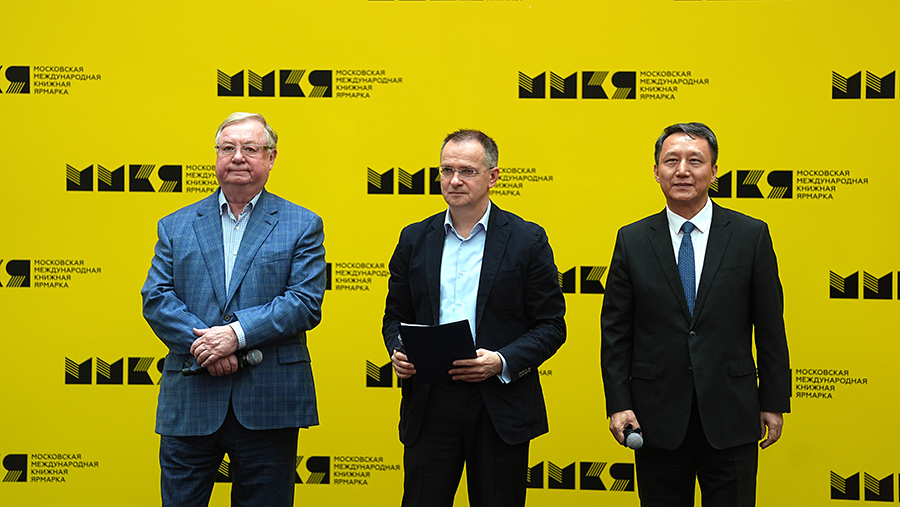
According to Mao Yuansheng, CEO of the Chinese Publishing Group, interest in Chinese books in Russia has grown by 140%. Especially for the trip to Moscow, the Chinese delegation selected publications designed to comprehensively present the modern literature of the country. 10 famous writers came to the capital, including poets Xi Chuan and Zhao Lihong, science fiction writers Qi Yue and Tianrui Shofu, writer Liu Zhenyun, children's literature researcher Xue Tao and writer Tang Tang.

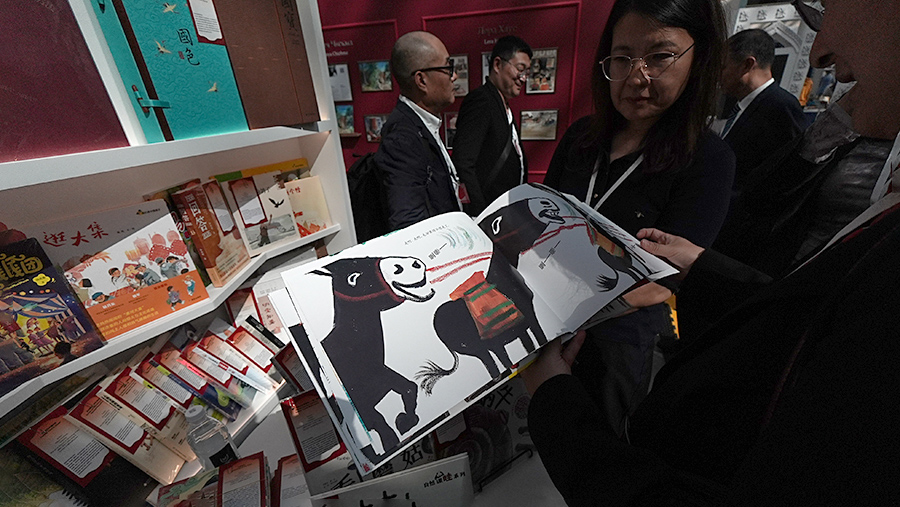
The Chinese stand, designed based on the architecture of the Imperial Library in the Forbidden City, became one of the centers of the fair. Russian readers were introduced to Chinese literature as an integral cultural layer — from the works of Chinese President Xi Jinping to modern prose, nonfiction and children's fiction. In total, the Chinese side brought almost 5,000 copies, selecting more than 2,000 items for the exhibition. A significant part of the publications is presented in two languages.
The interest turned out to be mutual: the Chinese delegation also purchased Russian books, not only fiction, but also non-fiction.
— Today, I saw in the hands of the Chinese not modern authors, but our Russian folk tales, our epics. They take it because they are interested in learning the essence, the salt, the soul of the Russian people," writer Oleg Roy told Izvestia.
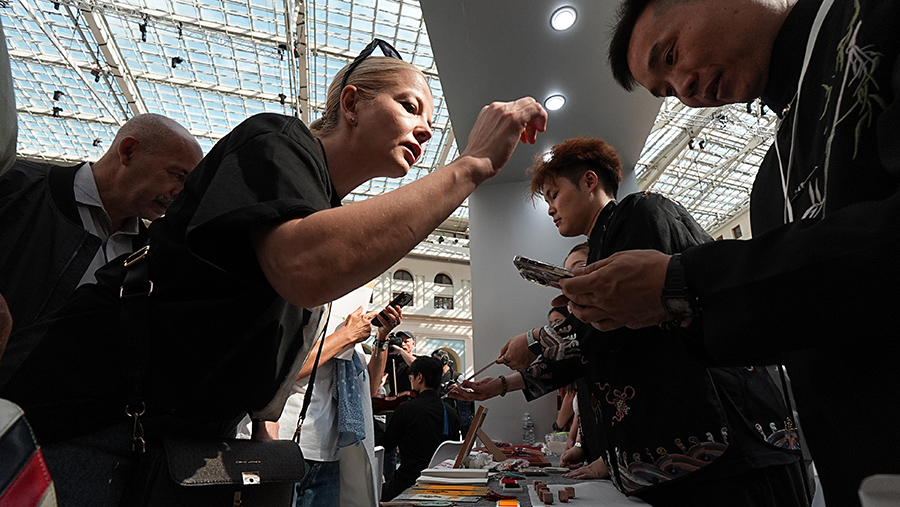
For a deeper acquaintance with the culture of China, guests are invited to take part in a tea ceremony, independently print the character "happiness" on rice paper and listen to the playing of the national instrument guzheng.
You don't have to read a beautiful book.
Russian publishers, in turn, rely on Asian literature. Interest in it has been maintained for several years, but genre preferences are changing: the reader is gradually moving from fantasy to sentimental prose, drama and action-packed thrillers.
But one of the main trends is not the genre, but the aesthetics of the book. According to a survey conducted by Chitai Goroda, about 60% of purchased books remain unread. Therefore, publishers are increasingly selling not only the content, but also the media itself — a beautiful cover, high-quality paper, and additional materials.
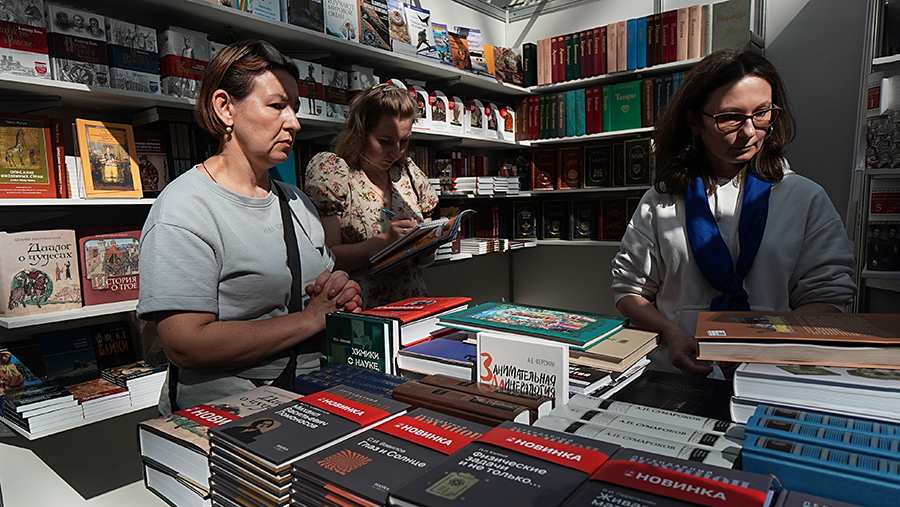
The book becomes a collector's item. Bookmarks, postcards, and other merch items are added to the editions.: According to industry representatives, such additions boost sales.
Another important engine of the market is film adaptations.

— In November, the film "Dawn of the Harvest" based on the novel by Susan Collins will be released in Russia, which will significantly increase sales. Homer's Odyssey had a good shot in the summer. And two weeks later, the Twilight saga is being re-released. And, of course, books are starting to be in demand again, although it would seem that everyone has long known how it ended," Alexey Ionov, head of author brand promotion projects at AST publishing house, told Izvestia.
Publishers are also trying to compete for the audience's attention with the help of printing technologies. ABC is preparing an edition of the Chinese classic novel "Journey to the West" using a new technology of vario-cutting. When the book block is shifted, individual image elements on adjacent pages add up to a single picture. To do this, the publisher had to develop its own program that splits the image into page-by-page segments.

For now, the technology remains niche and expensive. The cost of the two-volume book in a gift package, the circulation of which will arrive in Russia from China, will amount to almost 10 thousand rubles. Mikhail Bulgakov's "The Master and Margarita" may become the next project using technology that has already been adapted for production in Russia. At the same time, the high price is primarily due to color printing: the black-and-white version will be much cheaper.

Circulations are falling, inspections are increasing
There are much less festive statistics behind the festive atmosphere of the fair. According to the Russian State Library, the number of new books increased by only 0.9% in the first half of 2026, while an increase of 6.6% is expected by the end of the year. At the same time, the circulation, according to experts, is noticeably decreasing: in the first half of the year — by 12.6%, and by the end of the year, the industry expects a drop of 19.1% — from 372.7 million to 301.6 million copies.
There may be more books, but it's getting harder to make money from them. At the same time, the costs of production and maintenance are increasing. To cope with the volume of checks, publishers actively use artificial intelligence. According to Dmitry Yaronov, marketing director of the ABC publishing house, editors send about 1.5 thousand books per month through neural networks. However, the technology designed to speed up work simultaneously creates a new problem: different systems may evaluate the same text differently.
For a publishing house that lives off new products, additional checks become especially sensitive.
— We are a book business. We live on novelty. 60% of our money is selling new products. If it used to take an editor a month to proofread, now it takes two. And he suffers, he is responsible for this in rubles, because he does not have time to release books due to additional verification," Yaronov explains.
Where is it more profitable to buy books today
However, the reader is interested not only in new items, design and merch, but also in the price. Publishers offer discounts and promotions at the fair, but many still prefer to purchase books on marketplaces. At the same time, it is most profitable, as a rule, to check prices directly on the official websites of publishers. For example, Anthony Hopkins' autobiography costs 817 rubles on Wildberries, and 809 rubles on the Alpina website.
The fourth Children's Book Fair is taking place simultaneously with the 39th Moscow International Book Fair. One of the notable participants is Swallowtail. July marked the 100th anniversary of four fairy tales by Korney Chukovsky — "The Telephone", "Fedorin's Grief", "Confusion" and "The Miracle Tree". For the anniversary, Makhaon has prepared a new edition with illustrations by Oleg Oleinikov, an Honored Artist of Russia and winner of the H.K. Andersen Prize.
— Great children's writers speak the language of children. Kids, they're not very modern. When they're born, they're just kids. And they have quite understandable interests, quite understandable needs. They want it to be fun, interesting, and funny," Oksana Fesenko, editor—in-chief of Makhaon, told Izvestia.
But the world around the child is changing. Even the phone from Chukovsky's famous fairy tale looks different today: a modern child may simply not imagine the device that once stood in every apartment. Therefore, in the new edition, artist Oleg Oleynikov will draw a modern smartphone for the characters.
It will be possible to visit the fair in Gostiny Dvor until September 6.
Переведено сервисом «Яндекс Переводчик»
