- Статьи
- Society
- Learning and Octopus: how much money does Chubais use to run the Center for Russian Studies

Learning and Octopus: how much money does Chubais use to run the Center for Russian Studies

Among the founders and likely sponsors of the Center for Russian Studies (CRI), which Anatoly Chubais opened in Israel in 2024, were two former top managers of Rusnano, including the fugitive Oleg Kiselyov, Egor Gaidar's son Peter and former adviser to Israeli Prime Minister Netanyahu Benny Briskin, Izvestia found out. The Center conducted a series of seminars critical of Russia, in fact, developing scenarios for the development of the country in the event of a change of power. Experts do not rule out that the project may be funded, among other things, by funds illegally withdrawn from the Rusnano state corporation by its former top managers back in 2019, and Chubais himself may use the structure to legalize life in Israel. The details are in our investigation.
Registration at the beauty salon
The establishment of the Center for Russian Studies (CRI) was officially announced by Tel Aviv University in May 2024. The project was announced as a platform for exploring Russia: The center's website says that its goal is to develop scenarios for the country's development until 2040. A press release from Tel Aviv University says only that "former Deputy Prime Minister of Russia Anatoly Chubais organized a group of sponsors of the new project." Neither the university nor Chubais himself publicly mentioned the names of the co-founders. The center's website lists only the members of the executive committee — several professors from Tel Aviv University and Chubais himself.
Izvestia has had the center's documents at its disposal since its inception, and they make it possible to fill in these gaps. It follows from them that legally the center is not located at all within the walls of the university. Initially, it was registered in a mansion in the town of Shoham near Tel Aviv, and in 2025 it was re-registered to a private house in Hadera at 7 A-Shoshanim Street. Judging by public maps, a beauty salon operates at this address.

The house in the city of Hadera, where the Chubais Center for Russian Studies is registered
The nature of the center's activities can be judged by a number of events organized with its participation. So, in January 2025, the CI, in collaboration with the Hoover Institution and the Center for Democracy, Development and the Rule of Law at Stanford University, held a seminar "Lessons and Warnings of the Reform Era in Russia" at Stanford.
Anatoly Chubais himself delivered the opening speech, and Professors Stephen Kotkin and Catherine Stoner made presentations. Kotkin is an American historian of Russia and the USSR, known for his critical analysis of Soviet authoritarianism and the Kremlin's modern policies. In her writings, Stoner considers Russia under Vladimir Putin as an "authoritarian state" that, in her opinion, is far from fully using its potential "to destabilize the international system."

Old friends
In the center's documents (available to Izvestia), Oleg Kiselyov, also an Israeli citizen, Gedaliah Vaxer, who served as Deputy chairman of the Board of Rusnano in 2008-2019, is listed among its founders, in addition to Chubais himself. He is involved in a particularly large embezzlement case (Part 4 of Article 160 of the Criminal Code of the Russian Federation).
According to investigators, Oleg Kiselyov, along with other defendants, participated in the theft of 1,676 billion rubles belonging to the state corporation. The investigation believes that in 2012-2015, funds were withdrawn through controlled structures using loan and guarantee agreements with Peresvet Bank. The scheme was implemented using, among other things, the Nanoenergo Fund Limited, established in Cyprus, in which Rusnano and Peresvet owned shares.
In addition to Kiselyov, the defendants in the case were Irina Rapoport, former Managing Director of Rusnano, Oleg Dyachenko, Director of Nanoenergo Fund Limited, and Alexander Shvets, former president and Chairman of the Management Board of Peresvet Bank. They managed to bring charges against Dyachenko in person, who signed a cooperation agreement with the investigation and in February 2025 received three years in a penal colony. In July 2026, Rapoport was sentenced in absentia to 15 years in a penal colony and fined 300 million rubles. Kiselyov, Rapoport and Shvets left Russia in advance.
At the same time, another participant appears in the case file, whose identity has not been publicly identified. According to media reports, this is "an unidentified person from among the leaders of Rusnano." In publications about the investigation, he was given the role of the organizer of the crime.

Villa of ex-deputy chairman of Rusnano Sergey Kiselyov in Tuscany
According to Izvestia, Oleg Kiselyov now lives in his villa in the town of Carara in the Italian province of Tuscany. According to Izvestia, he is listed as the co-owner of the Cyprus company Zaronil Investments Limited, founded in 2018 in Limassol.

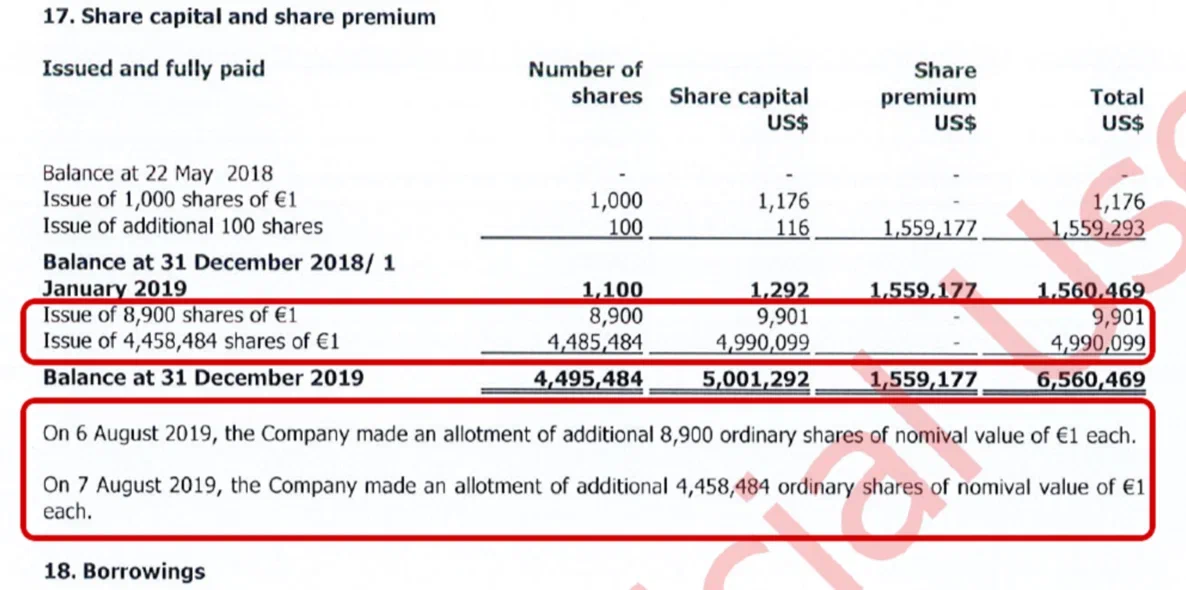
In the company's 2019 financial statements (available to Izvestia), other persons are listed in its management. The company was established when Oleg Kiselyov was still working at Rusnano, and the state corporation announced his departure on July 15, 2019. Zaronil, therefore, appeared about a year before his dismissal. At the same time, the main inflow of capital into the company occurred in August 2019, almost immediately after Kiselyov left Rusnano: on August 6 and 7, the company received $5 million in two tranches (about 328 million rubles at the exchange rate of that time).
In the same year, 2019, according to the company's financial statements, almost all the funds available in it were simultaneously invested in securities. The company spent 94.6% of its capital on this, more than $7.4 million out of $7.7 million.
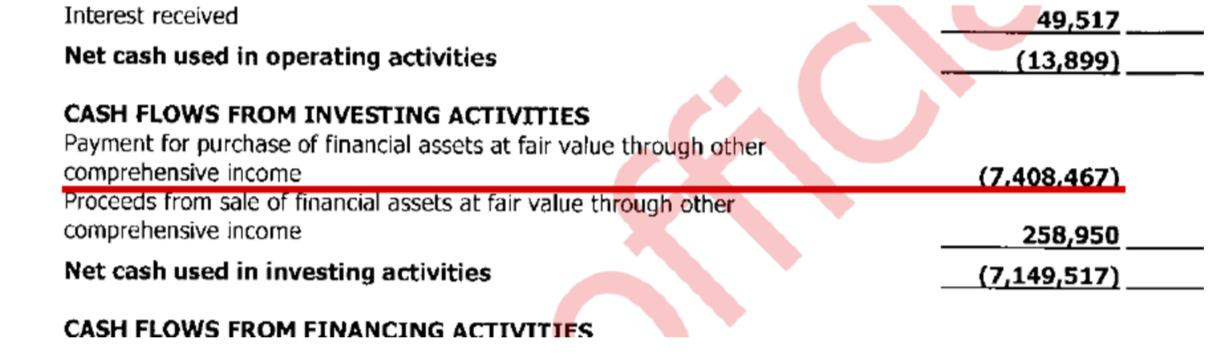
The purchase of securities is not taxable in Cyprus, meaning this maneuver could allow the beneficiaries of the company to keep these funds intact.
Team members
Among the co—founders of the CRI is another former major "top" of Rusnano, its ex-head Leonid Melamed. His name is known in connection with the criminal case of embezzlement of 220 million rubles from Rusnano. According to investigators, Melamed, being at the same time the co-owner of IFC Alemar and the head of the state corporation, organized the conclusion of consulting contracts with this company. In 2015, Chubais personally vouched for Melamed before the court and testified in the TFR, insisting on the legality of the contracts. The case was dismissed in 2020 due to the expiration of the statute of limitations.
The list of big names does not end there. According to documents available to Izvestia, another co—founder of Chubais' brainchild is the son of one of the main reformers of the 1990s, Egor Gaidar, Peter Gaidar.

In the public field, Gaidar Jr. did not show much activity, unlike his sister Maria, who at various times hosted programs on Echo of Moscow, ran for the State Duma and was deputy chairman of the government of the Kirov region, and eventually received Ukrainian citizenship and in the mid-2010s was even an adviser to the governor of the Odessa region Mikhail. Saakashvili. After the start of her career, Maria Gaidar left Ukraine for Israel.
— I was born in Russia, but I have a Ukrainian identity! I am not a Ukrainian by nationality, but Ukraine is my political nation," Maria Gaidar said in an interview with Ekaterina Gordeeva (recognized as a foreign agent in the Russian Federation) in 2024.
The center was also co-founded by Peter Bezukladnikov, a long-time associate of Chubais and a former top manager of RAO UES of Russia, and Benny Briskin, an Israeli political scientist and former adviser to Prime Minister Benjamin Netanyahu. In the early 2000s, Briskin was the director of the Israeli government's Bashan program for working with inventors and authors of innovations, and also stood at the origins of the Israel-Ukraine Cooperation Center.

Expenses and donations
According to the accounts for the last two years, the center's only documented source of income was donations. In 2024, the center received 560 thousand shekels, in 2025 - 434 thousand. In total— it is almost one million shekels, or about 27.6 million rubles at the current exchange rate.
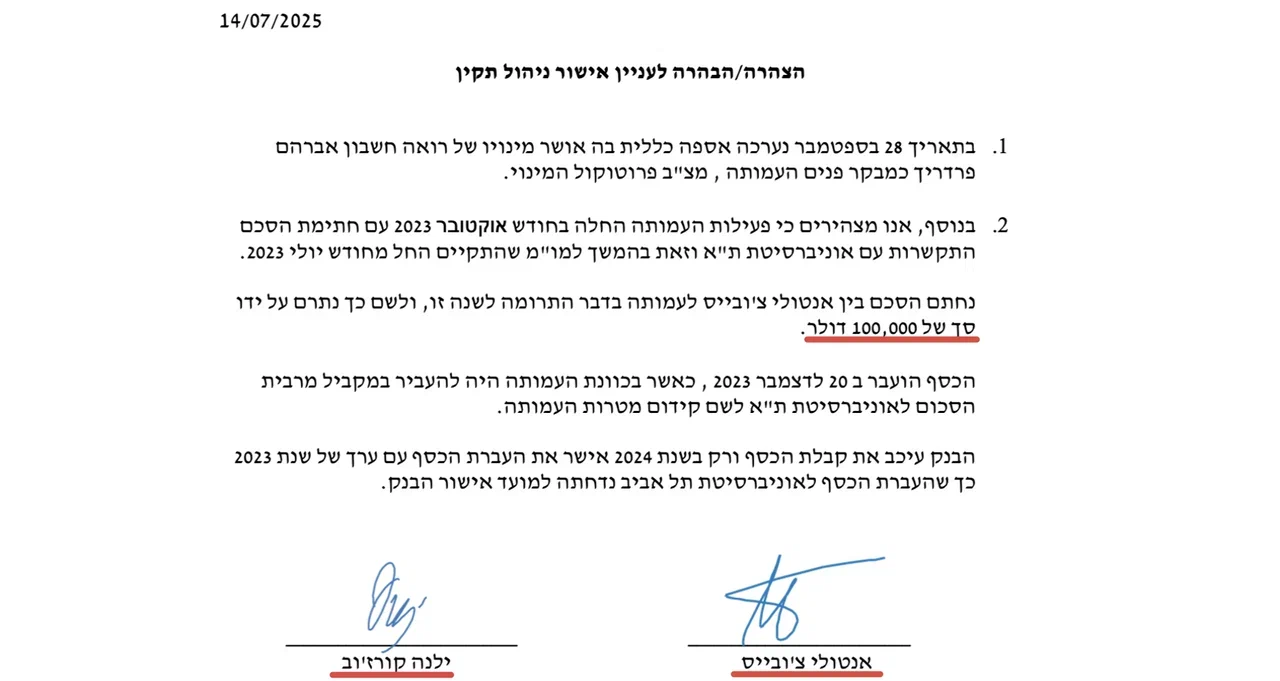
The names of the sponsors are hidden in the reports. All that follows from the documents is that there were two donors in both 2024 and 2025, and they are Israeli citizens. However, the same documents explicitly state that Chubais transferred $100,000. Tel Aviv University. A similar amount appears in the expenses of the center. This suggests that one of the anonymous sponsors of the organization is the former head of Rusnano himself.
As follows from the documents at the disposal of Izvestia, in 2024, the center transferred 338 thousand shekels from the donations received to Tel Aviv University for research. Another 137 thousand were spent on payments to scientists, 44.6 thousand — on editing and translation, about 33 thousand — on administrative expenses. In total, 552.6 thousand shekels, or more than 15.6 million rubles, were spent in 2024.
In 2025, the spending structure has changed significantly: payments to scientists have almost tripled to 365 thousand shekels. The editing and translation work cost 11.5 thousand, the rest was for administrative expenses. In total — over 10.6 million rubles.
It is not clear who these "international scientists" are and for what work they receive payments from the reporting. The names of the recipients, as well as the names of donors, are not disclosed. However, the organization's website lists researchers cooperating with the center, for example, literary critic Alexander Arkhangelsky, publicist Alexander Baunov and sociologist Viktor Vakhstein (all three are recognized as foreign agents in the Russian Federation).
Why does Chubais need the center?
Experts do not rule out that the Central Bank may be used to launder funds withdrawn from Rusnano at one time. NGOs of this kind can be used by their beneficiaries as a structure for non-transparent redistribution of finances, says Vitaly Maryasov, a lawyer at the Yenisei Siberia Bar Association.
— Theoretically, NGOs can be used to legalize criminal proceeds. The money, including those received as a result of crimes, is transferred as donations, after which it is spent under the guise of paying for research, scientific activities, consultations and other services. Such a chain allows you to hide the original source of funds and create an outwardly legitimate explanation for their further movement," the expert believes.
The financial model of the Central Bank also does not exclude the formation of a certain amount of funds initially withdrawn from Russia, lawyer Alexander Zorin suggested in an interview with Izvestia.
— The described financial model of the Center for Russian Studies in Israel does not exclude the possibility that funds initially withdrawn from the Rusnano Corporation's business through foreign design and affiliated structures could later arrive at the Israeli center under the guise of private donations, and then distributed in the form of royalties, research payments, transfers and other services, — he thinks.

Izvestia has not been able to establish whether the funds withdrawn from Zaronil under the current management of Chubais' associate Oleg Kiselyov are related to the financing of the CRI. However, the sharp recapitalization of the company shortly after Kiselyov's departure from Rusnano, followed by the withdrawal of the funds received into securities and the entry of the former deputy chairman of the state corporation into the circle of founders of the Central Bank, and probably its donors, do not exclude such a version.
Chubais may also need the Center for Russian Studies to distribute funds within the community of associates and for "clean" tax reporting in Israel, believes Dmitry Krasnov, an honored lawyer of Russia.
— Through such a structure, Chubais can receive funds for his life in order to file a mandatory tax return. After all, taxes were paid on the funds visible in the documents, since they are there. He shows that he lives, eats and drinks on understandable means, that it is not for nothing that he has, for example, a car and a chauffeur. He shows me that I have a research center where I officially receive money," he said.
Izvestia contacted Chubais' partners listed in the list of co-founders, as well as the Center for Russian Studies itself, for comments. There were no responses at the time of publication.
Переведено сервисом «Яндекс Переводчик»
