
Gold Fees: The Strait of Hormuz will no longer be free

On July 14, Donald Trump abandoned the idea of charging a 20 percent duty for the passage of ships through the Strait of Hormuz, but in the near future this important trade route will still be paid, experts believe. The expenses of the exporting countries of the Persian Gulf can be either indirect, in the form of investment agreements imposed on them by the US president, or direct, if Iran and Oman introduce a fee for passage. With navigation through the strait virtually stopped, the Arabian monarchies are actively building bypass routes for oil transportation, but they require billions of dollars in investments and time. Who controls the strait now, in what form the fee for passage through it may appear, and what it threatens the oil market is in the Izvestia article.
Who controls Hormuz
The breakdown of the truce between Iran and the United States has brought the escalation in the Middle East to a new level. The day before, US President Donald Trump officially notified Congress of the resumption of the conflict with Tehran. The parties exchange a series of blows. The Americans targeted primarily the Iranian ports. The IRGC has also been attacking American infrastructure in the region for several days, including military bases, air defense systems, early warning facilities, and fuel infrastructure in Jordan, Kuwait, Qatar, and Bahrain.

Iran's goal is to weaken the regional air defense system that Israel relies on, says orientalist Maria Kicha. According to her, Israeli air and missile defense was initially built into a broader regional system, the elements of which were located in the US—friendly Gulf monarchies and Jordan.
At the same time, the opponents are trying to assert their control over the trade routes in Hormuz. In particular, tankers and other commercial vessels that cross the strait without Tehran's approval are being attacked. From July 7 to July 14, six such cases were recorded. Although the IRGC claimed responsibility for the attack on only two UAE—owned tankers Mombasa and Bahi, they were attacked by cruise missiles on the night of July 14, resulting in the death of a crew member, an Indian citizen.

Such a strict policy seems to be working: cargo ship traffic shows that more and more ships prefer the Iranian routes in the Strait over the Omani ones.
On July 14, Donald Trump said that the United States was destroying Iran's entire potential for control of the Strait of Hormuz. On Tuesday night, the US armed forces launched missile strikes against coastal defense facilities for five hours, and unmanned kamikaze boats struck the Bandar Abbas naval base. "The Strait of Hormuz is open to all shipping except Iran," Trump wrote on the Truth Social network on the same day.

However, navigation was minimal the day before. According to data from July 13, only 19 ships passed through the Strait of Hormuz. This is significantly lower than the pre—war level of 125-140 per day. Although some ships turn off transponders, so the actual traffic may be slightly higher.
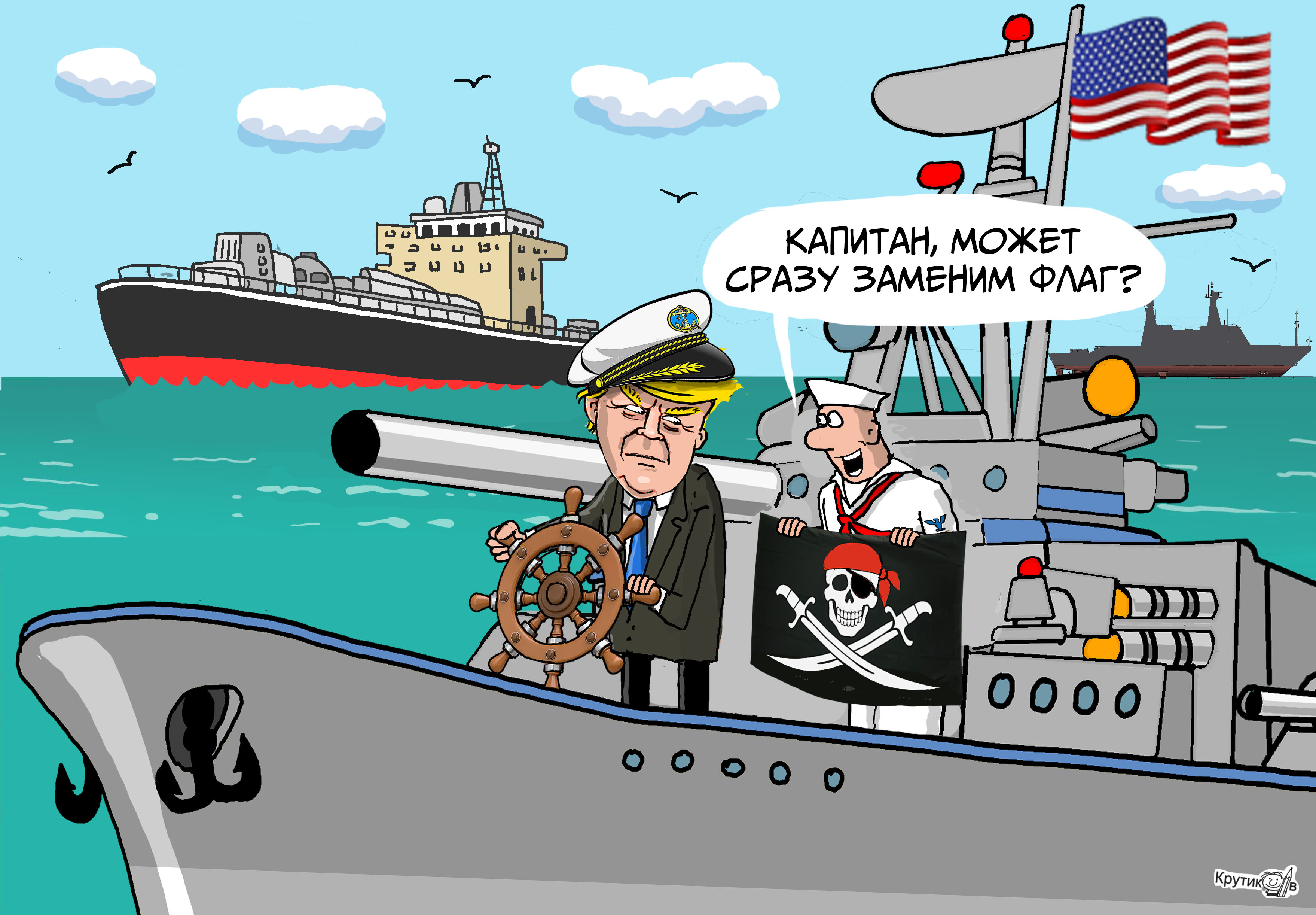
Control of the strait, in fact, will give one of the parties the opportunity to set the rules of passage through it. Both strive for this. So, on July 13, Trump announced that the United States intends to impose a fee of 20% of the cost of all passing cargo for security. However, the next day, he said that he had changed his mind, but in return for the duties, the Gulf countries would have to conclude investment deals with Washington.
It is significant that Iran's desire to charge money for the passage of ships was one of the reasons for the disagreement during the US-Iranian negotiations. At the same time, Tehran has already stated that the price that the Americans initially requested (the same 20% duty) is too high, and promised to offer their own. "The US president is absolutely right. Those who ensure the safe and reliable passage of commercial vessels through the Strait of Hormuz should receive compensation for this service. <...> 20% is, of course, too much. We will be fair," said Iranian Foreign Minister Abbas Araqchi.

Oman, together with British lawyers, prepared a scheme based on the model of the Strait of Malacca and proposed considering it as an alternative to the mandatory duty. We are talking about voluntary contributions for specific services: navigation support, improvement of navigation safety, environmental control and emergency preparedness.
What does this mean for global markets?
The Strait of Hormuz has been moving towards commercialization for a long time, says Farhad Ibragimov, a lecturer at the Rudn University and the Financial University. And Trump's new statements look like an attempt to wishful thinking: Iran will not agree to American control over the strait. The expert believes that fees for passage in one form or another will still be charged by the Iranian side. Tariffs may be revised, but the very idea of control is already being fully implemented by Tehran in practice.
At the same time, the fee for passage through Hormuz is unlikely to be a serious shock to the oil market, said Valery Andrianov, associate professor at the Financial University under the Government of the Russian Federation. He recalled that Iran had previously considered collecting about $2 million from each tanker. For large vessels of the VLCC class, which hold about 2 million barrels of oil, this means about $1 per barrel — an almost imperceptible amount in current conditions.
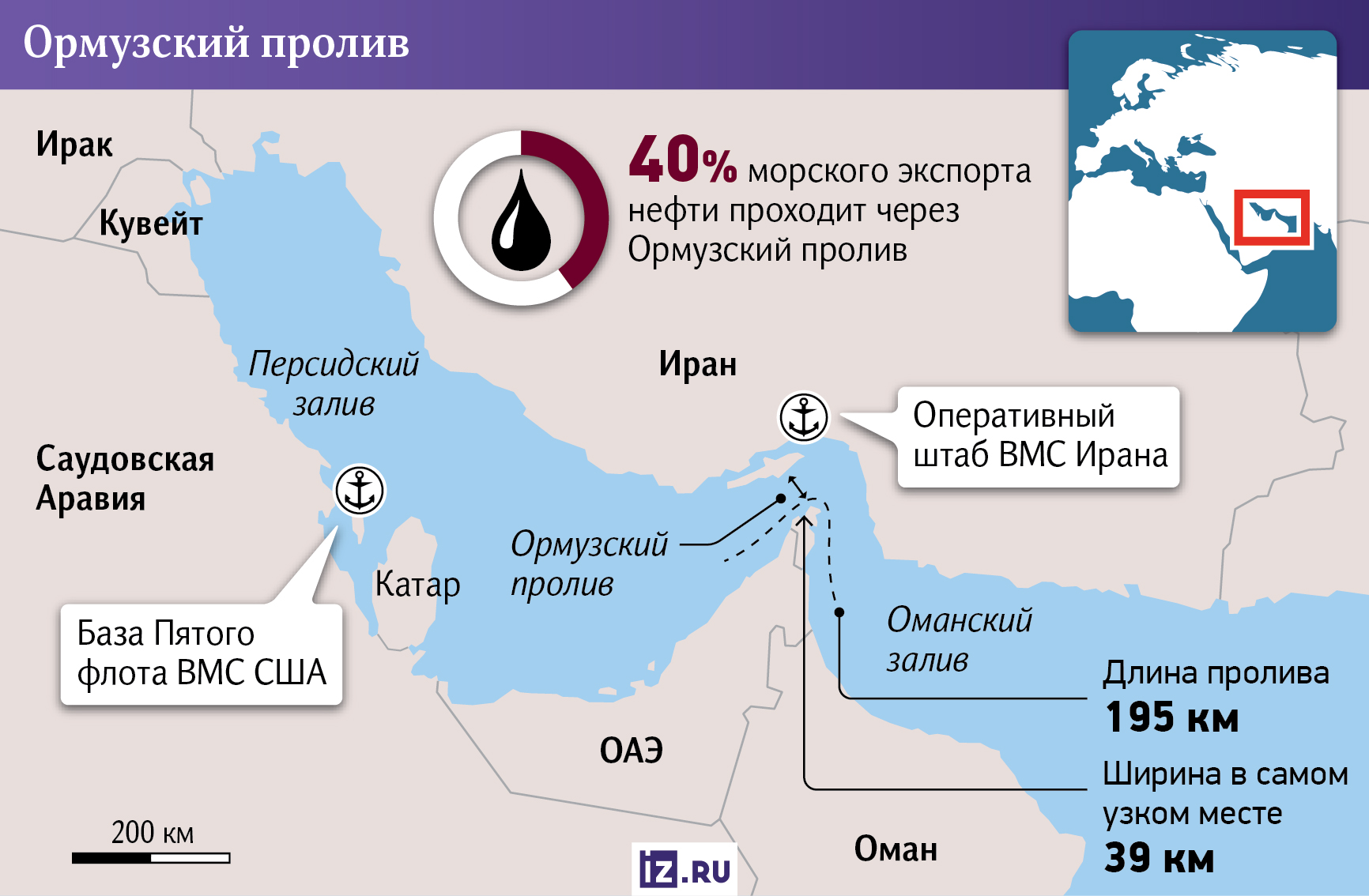
The main problem, according to him, is not the amount of the possible fee, but the fact that this requires a constant monitoring system. In fact, we are talking about a military cordon in one of the key "necks" of world trade. Whoever will provide such control will, in fact, manage the route along which, until recently, a fifth of the world's oil transit passed — almost 20 million barrels of oil per day.

Both the oil markets and the producers of the Middle East already assume that Hormuz will not return to the pre-war regime. Media reports say that Saudi Arabia, the United Arab Emirates and Iraq are accelerating plans to develop bypass pipelines. Some of them already exist. The main bypass route of the UAE is the Habshan—Fujairah oil pipeline. It runs from the fields in the Khabshan area to the Fujairah export terminal on the Gulf of Oman and completely bypasses Hormuz. Its capacity is estimated at about 1.5 million barrels per day. For Saudi Arabia, the key remains the East-West Oil Pipeline (or Petroline), which carries raw materials from the east of the country to ports on the Red Sea. Thus, Riyadh can send part of the oil bypassing both the Persian Gulf and Hormuz.

According to Goldman Sachs estimates, the construction of new and expansion of existing pipelines will bypass Hormuz for more than 45% of pre-war oil exports from the Persian Gulf by the end of 2027. And with the accelerated pace of project implementation, by the end of 2028, up to 75% will be able to be transported via bypass routes. However, at least in the coming years, the Strait of Hormuz will still remain one of the key arteries for the functioning of global energy.
Creating a full-fledged alternative pipeline infrastructure requires billions of dollars in investments, political stability in transit territories, and, of course, time. But in the Middle East, no one can guarantee the implementation of such projects, Farhad Ibrahimov stressed. Therefore, the Arab monarchies would be interested in maintaining the status quo ante.
The issue of control over the Strait of Hormuz and all the problems arising from it remains the main one not only for oil sellers and buyers. Ultimately, it concerns all consumers: if Ormuz finally turns into a toll and paramilitary corridor, not only raw materials, but also everything that depends on them will become more expensive.
Переведено сервисом «Яндекс Переводчик»
