- Статьи
- Economy
- Iran should rejoice: against the background of the conflict, the US national debt increased by $ 450 billion

Iran should rejoice: against the background of the conflict, the US national debt increased by $ 450 billion

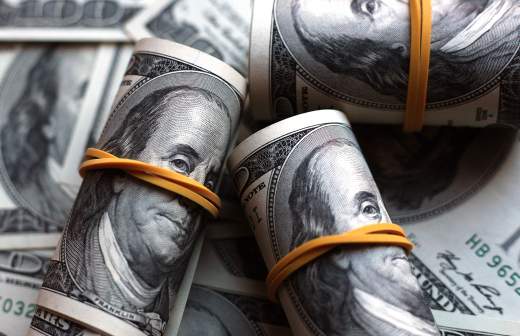
The US national debt increased by almost $450 billion and reached $39.2 trillion amid the escalation of the conflict in the Middle East, according to data from the US Debt Clock (Izvestia studied them). This was influenced by increased defense spending and interest on obligations. For Americans, this threatens more expensive mortgages and business loans, and for the global economy, it risks accelerating inflation and slowing GDP growth. In the future, this may affect Russia through imports and threaten to reduce demand for raw materials and pressure on the ruble. How the conflict can affect the Fed rate and what it means for investors is in the Izvestia article.
The US national debt in 2026
During the 2.5 months of the conflict between the United States and Iran, the US national debt has added about $450 billion, according to data from the US Debt Clock portal. The indicator crossed the $39.2 trillion mark. The editorial board sent a request to the US Treasury.

The escalation of hostilities has added to the burden on the US national debt, says Olga Gogaladze, an expert on financial markets. According to Ekaterina Kosareva, managing partner of the VMT Consult agency, the situation has noticeably worsened due to the financing of Israel's military operations against Iran, including the supply of equipment and ammunition.
In addition, part of the debt growth is related to budget deficits and interest payments, says Mikhail Gordienko, Professor at the Department of Finance for Sustainable Development at Plekhanov Russian University of Economics.
On February 28, Israel and the United States launched strikes against Iran. In response, the Islamic Republic attacked both the territory of the Jewish state and American military installations in the Middle East — in Bahrain, Qatar, the United Arab Emirates, Kuwait, Saudi Arabia, Jordan and Iraq. The Iranian authorities also called the assets of American companies in the region legitimate targets.
The cost of the US operation against Iran has approached $29 billion, Pentagon spokesman Jules Hurst said on May 12. At the same time, the actual cost of a military campaign may be higher. The total expenses of the US treasury for the two spring months of 2026 amounted to almost $ 1.2 trillion, said Yuri Ichkitidze, analyst at Freedom Finance Global. National defense accounted for $146 billion, which is 6% more than a year earlier. In addition, according to the US budget, an additional $24 billion item has appeared in the documents — it is possible that here, too, we may be talking about spending on a military campaign.

In general, the growth of the US national debt is a steady trend. However, in the event of a protracted military conflict and a significant increase in military spending, the national debt will accumulate faster, said Olga Belenkaya, head of the Macroeconomic Analysis Department at Finam.

The conflict over Iran could become a serious trigger in the future. It has already led to higher oil prices and accelerated inflation, said economist Olga Gogaladze. As a result, debt servicing for the United States will become even more burdensome, which can turn it into a virtually bottomless debt pit, she added.
Is it worth investing in American assets
The protracted conflict in the Middle East does not cause a panic flight of investors from US assets, but triggers a "cooling off". In this case, large institutional players are increasingly talking about the need for diversification (when funds are invested in different assets to balance risks), Olga Gogaladze noted.

At the same time, American government bonds are still the main reserve and liquid asset of the global financial system, says Mikhail Gordienko from Plekhanov Russian University of Economics. But the duration of the hostilities is changing attitudes towards them — investors are beginning to demand a higher premium for inflation, fiscal risk and a prolonged increase in the supply of bonds.
American government bonds (Treasuries) actually act as the base price of money in the United States. They are considered a risk-free asset. Therefore, if investors demand higher yields on Treasuries against the background of geopolitical risks and large government debt, banks immediately adopt this approach. This has a particular impact on long—term loan rates, such as mortgages and business loans. In fact, it is unprofitable for financial institutions to give money to customers at a lower yield than they would receive from risk-free bonds.
So far, there are no signs of a mass exit of foreign investors from US government bonds. As of February 2026, Japan owned approximately $1.23 trillion in American bonds, the United Kingdom owned $897 billion, and China owned $693 billion. At the same time, the structure of demand is gradually changing: China continues to reduce purchases, and the market as a whole requires higher yields, the expert added.

According to Olga Gogaladze, investors are gradually starting to reduce the share of American bonds in their portfolios, increasing investments in securities of other countries. In addition, geopolitical tensions, growing trade protectionism, and unpredictable U.S. fiscal policy make investing in U.S. debt risky.
What will happen to the American economy
Today, the American economy is affected by several factors. For example, the clashes in the Middle East are contributing to rising oil and gasoline prices, said Alexander Abramov, head of the Laboratory for the Analysis of Institutions and Financial Markets at the Presidential Academy. This increases inflationary pressures. Price growth in the United States began to accelerate again: in April, the consumer price index jumped to 3.8%, the highest since May 2023. There is no reason to expect a rapid return of inflation to the 2% target, Olga Gogaladze believes.
Nevertheless, the American economy is still showing fairly steady growth rates, Alexander Abramov noted. This is largely due to high domestic demand, the investment boom in the technology sector and the active development of artificial intelligence.

— The main risk is that inflation may gain a foothold at a high level, and geopolitical conflicts may drag on. In this case, the Fed will have to keep rates high for longer or even continue to raise them. Then the American economy may face a stagflation scenario — a combination of weak growth, high inflation and expensive loans," Alexander Abramov emphasized.
According to him, this will already create serious problems for the stock market and the state budget system. On May 13, the U.S. Senate confirmed Kevin Warsh as chairman of the regulator. It is expected that he will actively reduce rates, as required by Donald Trump.
At the June meeting, the Fed is likely to leave the rate in the range of 3.5–3.75%, says Mikhail Gordienko, professor at the Department of Finance for Sustainable Development at Plekhanov Russian University of Economics. Its reduction would be premature and could further increase inflation against the background of the ongoing conflict over Iran and the growth of government debt.

Chairman of the Board of Governors of the Federal Reserve System Kevin Warsh
Kevin Warsh may indeed lean towards a soft monetary policy, especially given the pressure from President Trump, the expert stressed. But the first meeting is not the best moment for sudden movements, he added.
— If the new head of the Federal Reserve begins his term of office with a rate cut at 3.8% inflation, the market may perceive this as a loss of the regulator's independence. This, in turn, will hit the dollar and government bonds. Therefore, the most rational step for him is to pause, keep the bid, increase the focus on statistical data and wait for confirmation of whether the price increase will be temporary or permanent," the expert emphasized.

For Americans, in turn, this threatens more expensive mortgages, car loans and consumer loans, as well as an indirect increase in fuel prices. As long as the truce remains unstable and oil prices are high, the Fed is deprived of room for maneuver, Olga Gogaladze noted.
How will an increase in the US national debt affect Russia
Russia has been under sanctions for a long time, so the direct impact of the growth of the US national debt on our economy is small. Moscow does not invest in American government bonds. In addition, part of the Russian gold and foreign exchange reserves, previously held in foreign assets, is now blocked, which further reduces sensitivity to the dynamics of the national debt of the United States, explained financial adviser and founder of Rodin.Capital Alexey Rodin.

However, rising oil and logistics prices amid the conflict may provoke a new wave of inflation in Russia through imported goods, the expert continued. In such a scenario, the ruble exchange rate will be under pressure. Rising interest rates in the United States can increase the outflow of investors from risky assets, including ruble-denominated ones, which will lead to increased volatility.

As a result, inflation risks will increase, and the key interest rate in the Russian Federation may rise after that, Alexey Rodin explained. This will again lead to an increase in the cost of loans for both the population and businesses, which in such conditions will be limited in their ability to attract financing for development.
In addition, Olga Gogaladze continued, if the American economy does not withstand the load and goes into recession, this will trigger a chain reaction: demand for raw materials in the world will plummet, which will lead to a collapse in oil prices, painful for Russian exports.
Переведено сервисом «Яндекс Переводчик»
