Children's Hell: Izvestia exclusively publishes an excerpt from Roman Polanski's book
- Статьи
- Culture
- Children's Hell: Izvestia exclusively publishes an excerpt from Roman Polanski's book


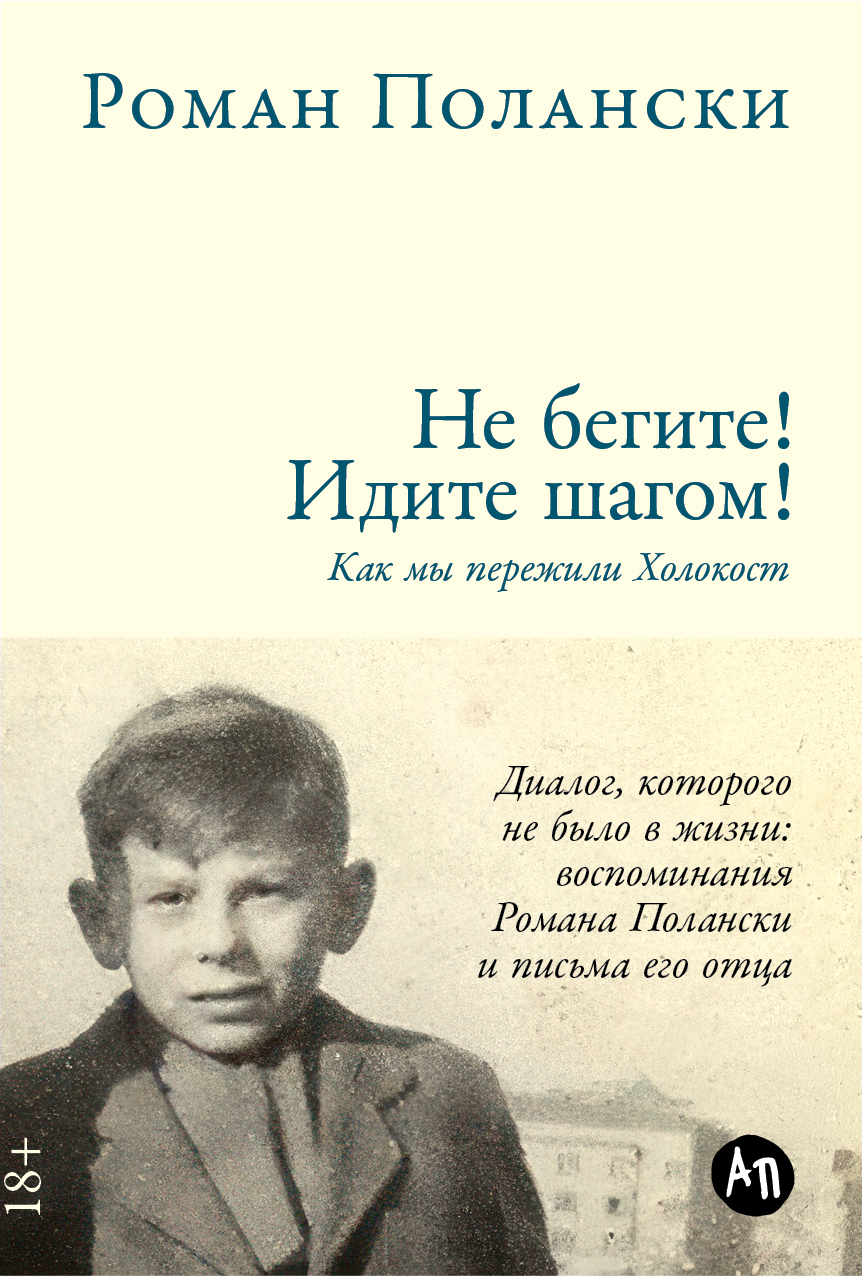
The life of one of the most famous and titled cinematographers of our time, Roman Polanski, itself resembles an action-packed film. Separated from his parents in occupied Poland, a Holocaust survivor who lost his mother in a concentration camp and survived largely due to chance and the help of strangers, he later found his footing in the cinema. The director's new book is based on Polanski's childhood memories of World War II, as well as letters from his father, written at his son's request back in 1973. The book "Don't run! Take a step! How We Survived the Holocaust" is published on May 5 by Alpina Publishing house. On the eve of the premiere, Izvestia exclusively publishes a fragment.
Roman Polanski, "Don't run! Take a step! How we survived the Holocaust" (fragment)
Projector Manufacturing
I had a rather unpleasant episode with Metek's aunt Janka — she took me by train to the village. When I was younger, just before the war, I was obsessed with making a projector. The first time I saw it was when I was in school, it was an epidioscope, where the teacher placed images during the lesson in order to project them on the wall. He just fascinated me. I wasn't really interested in the pictures themselves. I was attracted by a ray of light and a desire to understand how it works.
When we lived in the second apartment, together with little Stefan and his parents, I met a boy who had a small projector with a pen. And a few fragments of films. Strangely enough, it was not a 16mm film, but a 35mm film. Tiny coils with the Lumiere brothers' "Factory Worker Exit."
I didn't know what it was then. In general, he had such a toy. I think I gave him my stamp collection so he could show me a movie in the bathroom on a towel.
I always wanted to project pictures with the Puteks. I had a flashlight, and at that time I believed that using a lens from a flashlight could achieve projection. I also had to cut a square hole in a tin can that I found in a landfill. I must say that in Krakow, the garbage was taken out on a horse-drawn cart. And in order to find a dump, I clung to one such cart. Anyway, I found a tin there, probably a tea can. To cut out the square where to insert the picture, I began to punch the metal with a nail. I was doing it on the porch on the first floor. The noise I was making was pissing Janka off. We had an argument, and she threw me out the door, onto the street. I found myself among my friends, and among them was a boy named Krupa, an outspoken scamp. Since I rang the doorbell and Yanka didn't answer, he advised me to jam the bell with a match. She said she would report me to the Germans. But, of course, she never did. Otherwise, I wouldn't be here.
Getting to know the village
I was not even ten when I arrived in the village —I don't think I was there yet, because the ghetto was liquidated in March 1943. Let's say I was nine and a half. I found myself in a village called Vysoka. There weren't many people living there. The whole village consisted of three or four houses. Our hut stood apart from the others. Houses were scattered along the hillsides. The terrain was very rugged and very beautiful.
This is the first time I've really been out in nature. I spent my first holidays somewhere near the densely forested mountains ‐ my parents took me there just before the war. It was the only time we spent our holidays outside the city. The place where I was sent after my escape is about 56 kilometers from Krakow, not far from Wadowice, the city where the Pope was born. John Paul II.

Aunt Meteka took me by train to Przytkowice, then escorted me to the village where I was to live, more than eight kilometers from the station. I remember how long it took to walk and carry my suitcase. And I remember getting to know this village and the zealous Catholic peasants. There were three children in the Booze family: a girl with a disease like Mongolia — I don't know what exactly she suffered from, she was very sweet, but definitely abnormal, the older brother was angry — I don't know what was wrong with him, but he was very short and looked like a dwarf — and the youngest The name is Ludvik, Lutek, very nice. I was friends with him. I think he was six or seven years old. Their father was very old and completely stupid, a complete idiot. He was a shoemaker in Wadowice. Sometimes he made shoes for his children. No one would ever come to order a pair of shoes from him, but he still knew how to make them. And my mother was a true housewife. She was the one in charge here. Sweet and kind. And hardworking—in fact, she was the only one who did everything.
I didn't go to school. It was impossible to register me, I would need a birth certificate, baptismal documents. I could barely read.
These people were very poor. They were holding a cow. In fact, the cow did not belong to them, but to the neighbors who lived a little lower down the slope, about three or four hundred meters away. I didn't talk to them, but I remember that one day I saw a man who was fixing the roof of their house and banging with a hammer, and I noticed that the sound was delayed. Not synchronously. Suddenly, I had an epiphany that the sound takes time to reach our ears, it does not happen instantly. This neighbor's name was Nicea.
Newsreel
During my life in Krakow, before leaving for the countryside, I went to the cinema. Sometimes with a tag, sometimes alone. I sold newspapers, and when you constantly see the printed word, you still learn to read. Subtitles of German films, despite the fact that I did not go to school, also helped me to master reading. At that time, we were told not to go to the movies because it was unpatriotic. Graffiti appeared on the walls of the cinema: "Only pigs go to the cinema." Pigs didn't bother me personally. I was mesmerized by the film screening. Even in the ghetto. The Germans showed movies in the open air, projecting it onto a screen in a large area outside the ghetto. Sometimes they showed newsreels. And from some corners of the ghetto, you could see the image through the barbed wire. I think the movie was shown once a week, something like that. And we kids clung to the barbed wire and looked at the German propaganda and their main pride, the Tiger tanks.
Propaganda films directed against Jews were also shown. From time to time, the text appeared on the screen: "Jews = Lice = Typhus." There were indeed many cases of typhus in the Warsaw ghetto. And this disease was spread by lice. And so the Germans claimed that Jews were responsible for typhus epidemics because of the sanitary conditions in the Warsaw ghetto. In the German and Polish archives there are just these chronicles, shot by the Germans. You can see absolutely terrible things there. And it becomes clear what was happening then. By the way, the Germans often even shot lice with a macro lens.
When I was studying the materials for The Pianist, I watched the hours of this chronicle. But only from time to time I saw what was called... Kronika Filmowa, "news" in Polish. They were intended for Poles.
Переведено сервисом «Яндекс Переводчик»
