Tutu Ballets


The pulse of theatrical life, invisible to the audience, beats under the roof of the Bolshoi Theater: a real stage factory operates here. About a hundred craftsmen manually take measurements, cut fabrics and painstakingly sew outfits for all performances — from elegant tailcoats and historical camisoles to collettes, "chopin" and ballet tutus. One such skirt takes up to 16 m of tulle and at least 12 hours of continuous operation, and about 200 costumes are required for a full-fledged production. Each of them goes from scratch — from the author's sketch to the last stitch. How this unique theatrical production is organized is shown in the Izvestia report from the sewing workshops.
Behind Apollo's back
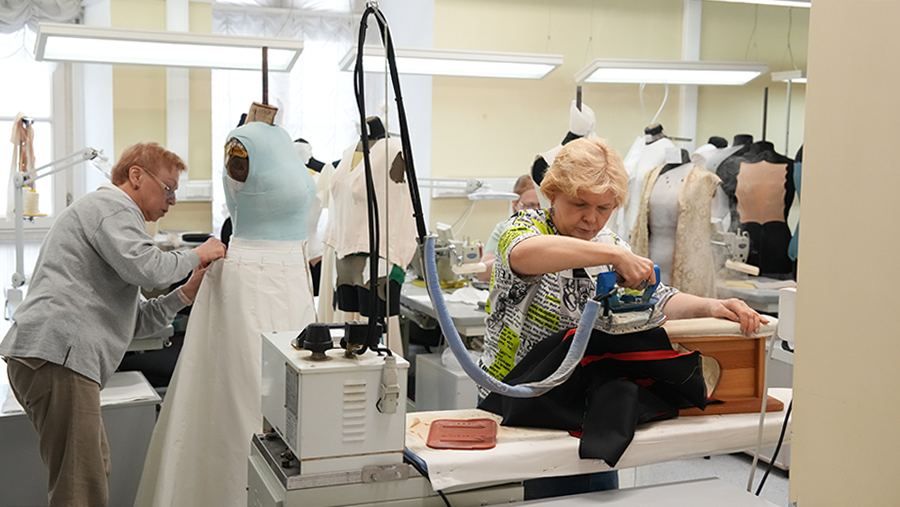
The morning begins quietly in the sewing workshops of the Bolshoi Theater. Instead of voices, there is the steady clatter of sewing machines, the heavy breathing of irons and the hissing of steamers. They don't talk much here. Everyone is busy with their own business. At the same time, the sounds come in a continuous wave, as if an invisible orchestra is warming up before an evening performance.
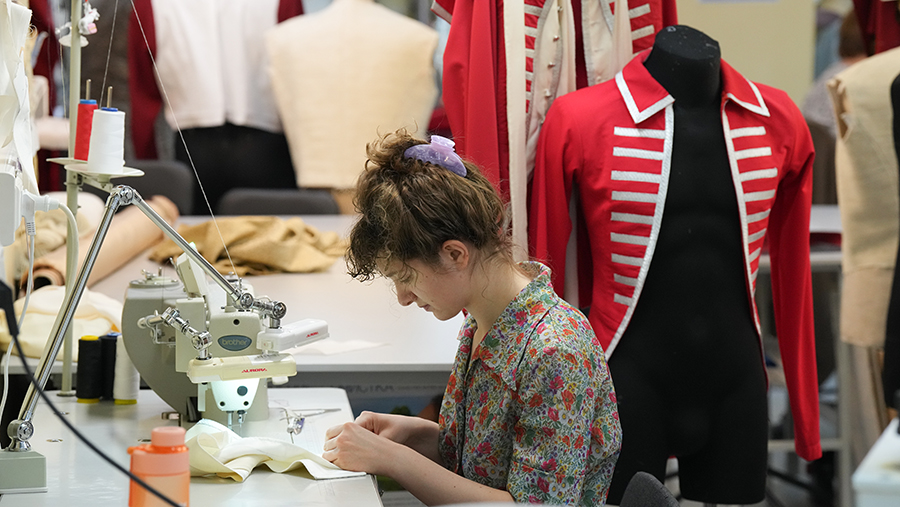
The workshops are located under the roof of the main theater building. Peter Klodt's famous Apollo quadriga is visible from the two-meter windows. Four horses are frozen in an eternal gallop over the Theater Square, and God himself — the patron saint of poetry, singing and dancing — seems to be watching his main weapon being born: a stage miracle.
More than a hundred people work in the workshops. All of them are women. The space is conventionally divided into two parts for the preparation of men's and women's clothing. There is a strict portrait of Leonardo da Vinci at the entrance of the first workshop. Renaissance genius is quite appropriate here: precision of proportions and engineering are important in theatrical costume.
There is a different picture at the exit of the women's workshop. Funny cartoon: a woman with an IV drip, disheveled hair and the caption: "But I fulfilled the plan." The local humor is explained simply: you often have to work late into the night. A hack job won't work in the Bolshoi Theater.
The long tables are laid out with velvet, cambric, silk, tulle and heavy brocade. They create not costumes, but full-fledged stage images: Odette's tutu from Swan Lake, the Nutcracker's uniform, Eugene Onegin's tailcoat, Boris Godunov's royal vestments, embroidered skirts and bodices for La Bayadere. What the audience sees on stage in a few hours, the masters embody over the course of months.
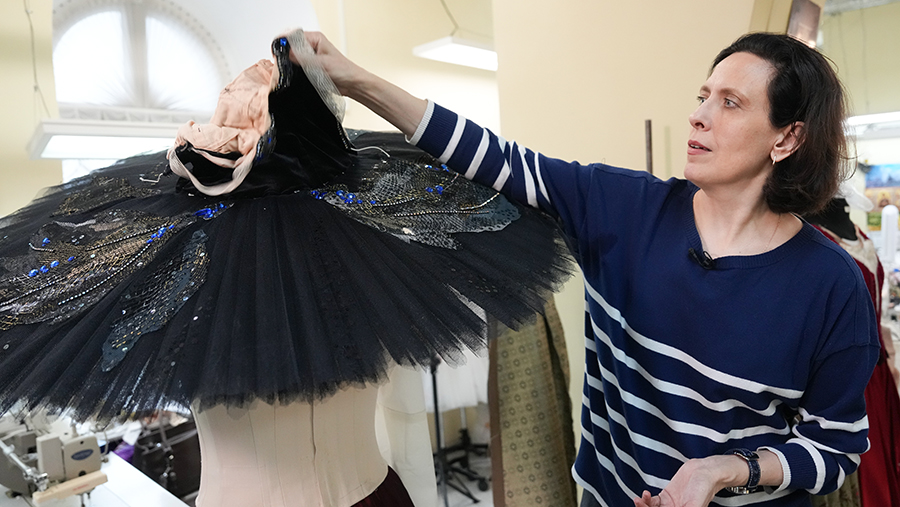
Irina Vyazeva, head of the art and costume department, notes: any performance begins long before the scissors touch the fabric. First, the artist discusses with the director the concept of the future production, then creates sketches and elaborates on color solutions, shapes and textures. At the next stage, technologists are involved in the work. They practically act as co—authors of the artist: they draw up technical documentation, select fabrics, and think over the elements of the image - from shoes and hats to makeup and wigs.
For complex costumes, a mock-up is made first. Then the fashion designers cut the fabric, the details are transferred to the workshop, and the fitting begins. The timing of the production varies: the work can take either six months or just a month and a half. The sewing workshop has hundreds of employees, and the same number of specialists provide costume maintenance, including shoe makers and costumers.

"Wigs require separate preparation: they need to be washed and styled, and all this is done in advance,— Irina Veshcheva told Izvestia. — The hairstyle is not formed on the artist, but first they put a wig on a dummy. This is a huge job that the audience knows almost nothing about, a real invisible front.
She has been working in the theater for more than 25 years. She used to sew costumes herself in theater workshops — for movies, dramatic performances, and the circus. But one day, her husband, an actor of the Maly Theater, accidentally found out that the Bolshoi needed fashion designers, and in simple terms, cutters. That's how it all started.
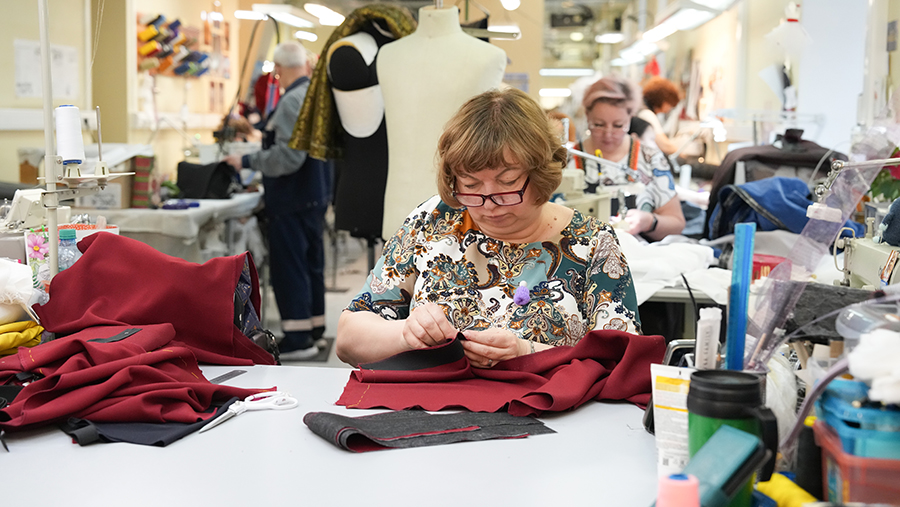
The Bolshoi Theatre has preserved a rare production for today. It has its own dyeing workshop. Fabrics are dyed directly in the workshops, achieving the exact shade that the artist came up with.
— It's very rare now. Many theaters no longer have such productions, and you have to buy what is available. And we can achieve almost any shade. There is also a painting workshop. Girls make batik, applications, stencils — they can do everything. Real artists work there, and they paint in their free time. Each performance is completely different. There are no repetitions," explains the head.
The main skirt of the ballet
In the women's workshop, one of the craftsmen neatly lays out white tulle. In front of her is a future tutu, a symbol of a ballet costume.
The tutu ballet is almost the same age as the Bolshoi Theatre. She is already 194 years old. For the first time, such a costume appeared when ballerina Maria Taglioni appeared on the stage of the Paris Royal Academy of Music and Dance as a Sylph in the ballet of the same name. Since then, the pack has been transformed more than once: its length and shape have changed.
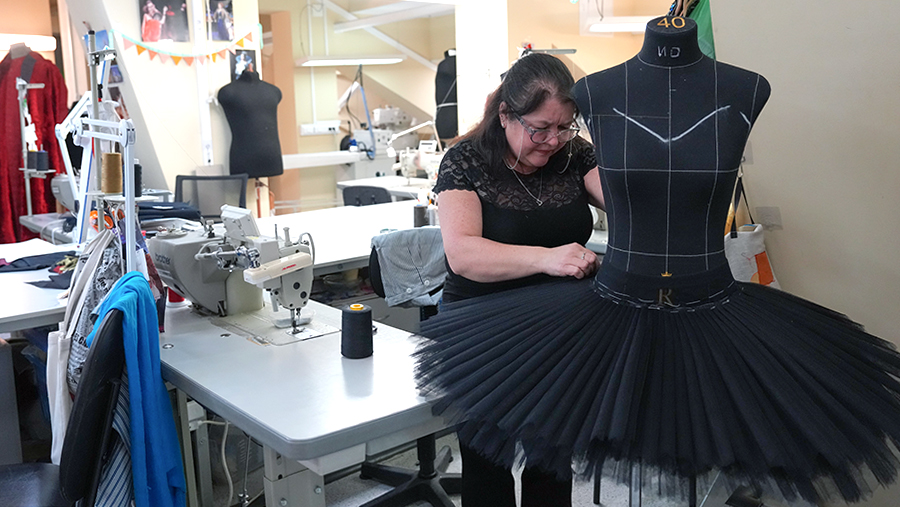
Since the 2000s, the classic tutu has become longer. If in the 90s its length was 37-38 cm, now it is 40-41 cm. Veshcheva explains it simply: now the ballerinas have become taller, and in order to preserve the proportions of the costume, the shape had to be changed.
Each fold on the pack is assembled manually. One such skirt takes about 15-17 m of fabric and about 12 hours of continuous operation.
— A special tulle is used for the tutu: too soft or too hard is not suitable. And in Chopin, there can be three layers, five, or six, and the top one is made of lighter tulle so that the fabric "flies" when jumping, says Irina Veshcheva.
But the secret is not only in the fabric. Tulle is folded in a special way — in tubes. A thin steel wire is inserted into the edge, which is called "steel" in workshops. She keeps her shape. In France and England, very hard tulle is used — tutus are heavier, but more durable. However, Russian ballerinas love lightness.
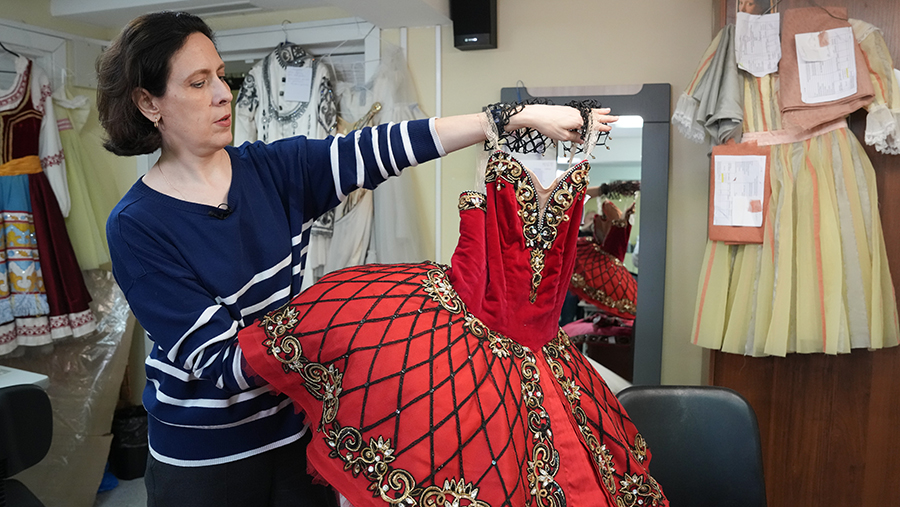
"They need to do a fuete,— says Vesheva. — If a pack weighs 4-5 kg, it's already very heavy.
Life after the "Nutcracker" block
The costume on stage lives an intense life. The tutus deform, the embroidery crumbles, and the shirts tear.
— Imagine: you wear the same thing every day — morning and evening. And don't just wear it, but dance in it. This creates a huge load on the suit," explains Veshcheva. — Over time, any thing becomes unusable. Boys' thin cambric shirts wear out especially quickly. And what do costumes turn into after a block of 40 performances of The Nutcracker? Something flies off, breaks. The lilac chopin girls are also in a deplorable state by this point. We have to restore it.
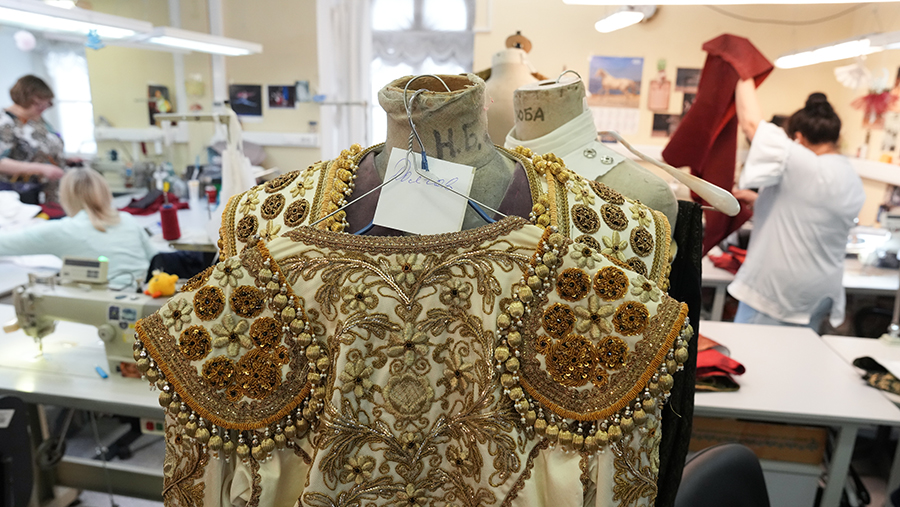
It also happens that the costume changes at the last moment. Ballet dancers should move freely, and opera dancers should sing without discomfort. If a rigid part gets in the way, it is removed. It also happens otherwise: the artist came up with a beautiful collar, and the soloist says, "I can't, he's bothering me."
— Opera singers have their own requirements for costumes. The main thing for them is breathing," Irina notes. — The chest should remain free, many people also ask not to constrain the throat area. At the same time, preferences are individual: for example, some girls, on the contrary, want to stretch themselves. If the costume is historical — as in the play "Don Carlos" — we cannot significantly deviate from the era. In such cases, we are looking for a compromise between the director, the artist and the artist. For example, we suggest not to fasten the top button on the collar.
Sometimes key costume decisions are made days before the premiere. For example, in the recent production of The Hunchback Horse, the ballet dancers had to abandon collars on their collars.
— We had to remove them urgently, — says Irina Veshcheva. — Such nuances are often revealed only on stage — when combined with lighting and decorations. Sometimes we even adjust the color scheme. For example, in "Paquita", a black bodice was originally planned for the final act. But four days before the premiere, we decided that a light version was preferable, and we urgently changed the bodices for all the performers.
The audience, crossing the threshold of the Bolshoi Theater, sees only the result of painstaking work: the shimmer of brocade, the graceful flight of tulle, impeccable silhouettes. There is a team of professionals behind each stage image. Meanwhile, the bronze Apollo is majestically frozen over the Theater Square, work continues in the theater workshops: sewing machines chirp, irons hiss, and fabrics rustle faintly.
Переведено сервисом «Яндекс Переводчик»
