"The most perishable commodity in art is topicality"


Historical cinema is not a journalistic podcast where you need to expose something, but a search for an image and inner truth, says Andrey Kravchuk. The director is releasing a historical drama about Peter the Great, "The Birth of an Empire," starring Alexander Gorbatov and Milos Bikovic as Menshikov. Kravchuk admits that he tried to recreate the world, people and time, rather than wink at the viewer. Vladimir Putin highly appreciated the work. The President called the film a real work of art that immerses in the era. On the eve of the premiere of "The Birth of an Empire," Andrei Kravchuk spoke in an interview with Izvestia about the creation of large—scale battle scenes with extras and horsemen, as well as about his sons' feature directorial debut, the film Kommersant starring Alexander Petrov, and how, in his opinion, the Oscar returns to traditional values.
"The Swedish king is not a trivial villain for me"
— The director of historical cinema in Russia is always the object of harsh criticism. Each such picture is a huge stress and a huge responsibility. What makes you return to the "minefield" of this genre over and over again?
— For me, historical cinema is a look at ourselves. As we look into the past, we become more aware of who we are, where we are from, and where we are going. Without understanding this, it is unlikely that you will be able to move forward. Even a film about our own childhood is already a historical movie: we just go a little deeper into significant, defining events.
Changes are also taking place now, which are turning into turning points, and new living conditions are affecting the destinies of millions of people. There are those who take responsibility for this, and I find it very interesting.
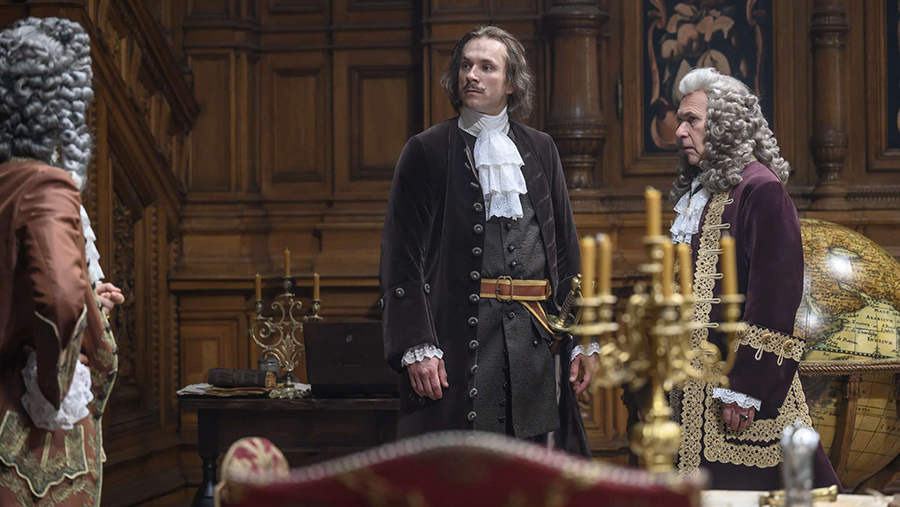
We create fiction films, not documentaries. "The Birth of an Empire" is just such a film: it contains our interpretation and extrapolation of events about which we do not know all the details. The sources often describe the fact rather than the details.
— How did you work on the film in order to remain faithful to the historical material and at the same time not cross the line between fact and fiction?
— Neither a textbook nor an encyclopedia can restore a person's life minute by minute. It consists of key points: someone has few of them (was born, married, worked, died), someone has a huge number. Peter the Great accomplished incredible things in his short life: he changed the country, launched its movement, brought education, science, literature, painting, set up a social elevator, expanded the territory. We don't know exactly how it happened. We reconstruct from literature, indirect data, and try to understand the character of a person: what helped him, what obstacles he overcame, what qualities played a role.

— The film shows the decade of Peter the Great's reign — from the Great Embassy to the Battle of Poltava. How did you manage to fit such a long period of time into two hours?
— If you see the movie, you will understand: it's possible. We tried to keep track of how Peter was moving towards his goal. The main thing is to work on mistakes: I was defeated, analyzed, and moved on. In Orthodoxy, this is repentance — through it consciousness changes, a person develops.
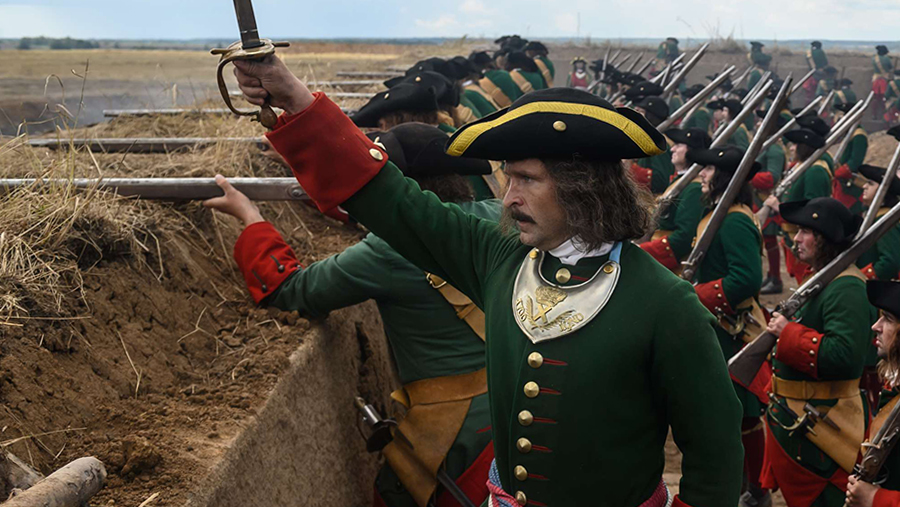
Peter's active activity began with a shameful defeat at Narva: the eight thousandth Swedish army defeated his 45 thousandth army. Peter, hoping to reach the sea quickly, lost his army and artillery, and brought the country to the brink of disaster. And just because it was already a step down for Charles to continue chasing Peter — by the age of 20 he had become a successful commander, a real "world star" — he chose to go against Augustus II (Augustus the Strong, Elector of Saxony and King of Poland) in order to increase his fame. This gave Peter a break to work on his mistakes, a chance to move forward and get closer to his dream.
For me, the Swedish king is not a trivial villain, but a bright and worthy rival, a brilliant commander, and his army is one of the best in the world. But Karl, having defeated Peter in his youth, simply replicated this success. For him, the war remained a search for more trophies and victory medals. Peter was building a country at that time. As a result, the rivals approached the Battle of Poltava with different tasks.: Charles had only another battle at stake, and behind Peter was a strong power and his long—suffering dream - Petersburg. Now he no longer wants to take risks — he wants to win for sure.
"To play such a controversial figure, you need Gorbatov's rage and scale"
— In the minds of several generations, Peter the Great is Nikolai Simonov, Alexei Petrenko or Dmitry Zolotukhin. You yourself have already addressed this era in a documentary and art project with Ivan Kolesnikov. Why did you bet on Alexander Gorbatov in the new film? How did you find your Peter?
— There were auditions, we played out difficult scenes. Alexander showed them his temperament and inner rage. He convinced everyone to take it off. It seemed to me that his character was very similar to Peter's personality.
After all, we judge the tsar only by descriptions, and he combined polar things. On the one hand, there is incredible curiosity and talent. The tsar was a carpenter who, as emperor, built ships himself and received a ruble a day. He strove for a rigid order: he built St. Petersburg "straight-perpendicular", neatly laid out his things and lived in small rooms, hating large spaces. And then — wild revelry, the breadth of nature. If love is real, and it doesn't matter who she is, I love her, it means I'm getting married. To play such a controversial figure, Alexander Gorbatov's rage and scale were needed.
— Why did Bikovich become Menshikov?
— When we were looking for Menshikov, we went through a lot of candidates. Milos came to the audition, and it was a hit. The main thing is that he has a desire to grow and be someone more. It was very consistent with the image of our hero. Milos would also like to be Peter, but he's still Menshikov.
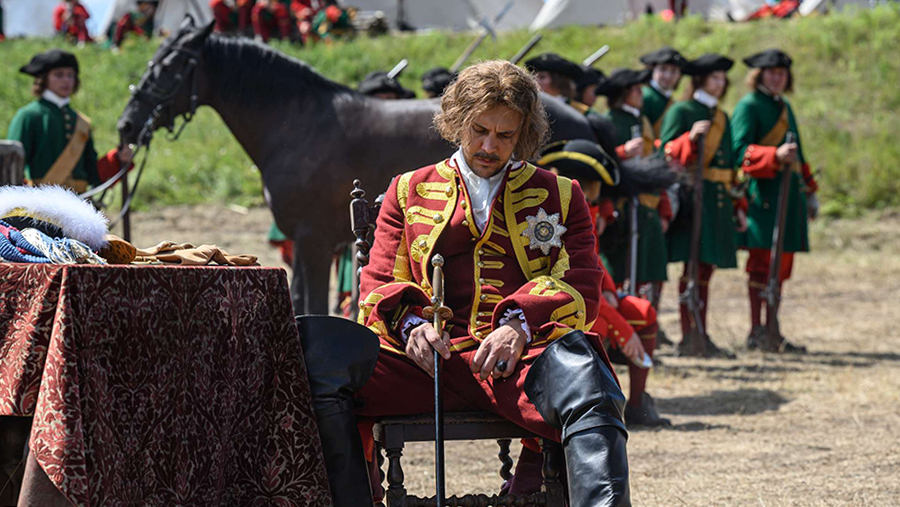
In tandem with Sasha Gorbatov, they created an energetic couple. It has humor, a little rivalry, and even antagonism. At the same time, Menshikov sincerely helps Peter, remains his loyal colleague, but he never forgets about himself (laughs). This energy of young people, their desire to create, change everything around them, and move forward was incredibly contagious to me.
— Peter's figure is covered with myths. Did you set the task for screenwriter Andrey Zolotarev to debunk some of them?
— Cinema is not a journalistic podcast where you need to expose something. In a work of fiction, the director is looking for an image and an inner truth. We didn't destroy myths, but reconstructed history through iconic facts to reveal the characters' characters.
I want the film to evoke emotions and pride in our history and our people. So that he encourages you to achieve meaningful, weighty goals. After all, both Peter and Menshikov were quite young, but in a short period of time they accomplished as much as few people manage in their entire lives. For me, such a movie is more like a mirror reflecting our world, rather than just a journey through historical labyrinths. It is clear that someone will find fault with the details, looking for accuracy or errors, but the general emotion and the message that we put into this film are much more important.
— Do you think Peter is a superman?
— I'm not sure about the superman. This term implies some supernatural abilities, and Peter had a huge number of purely human flaws. He was greatly affected by childhood injuries. Imagine: a ten-year-old boy has been sitting on the throne with his brother for several years, and his paternal sister, Princess Sophia, is sitting behind the chair and whispering what to say. He wants to run and play, but he has to sit for hours among adult bearded men. This forever discouraged him from meeting.
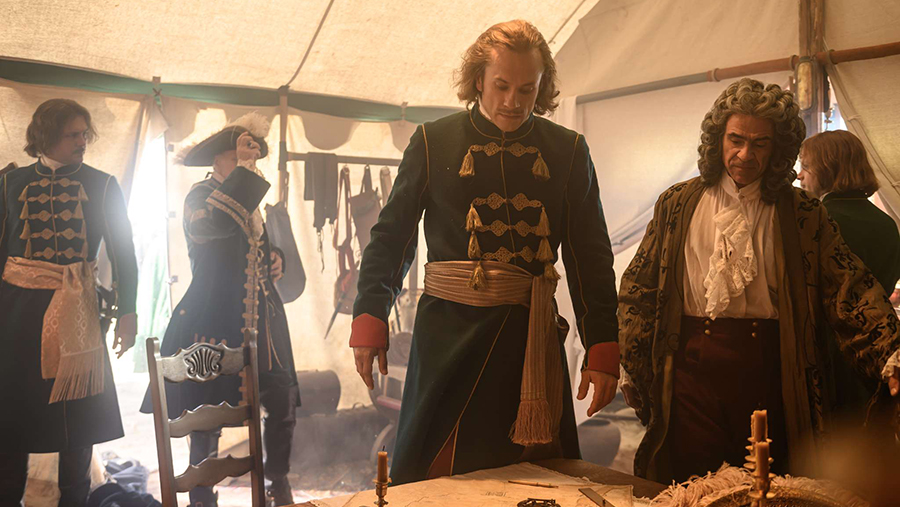
But he was also incredibly curious. Having discovered the German settlement with its science and art, Peter began to greedily absorb knowledge: he wrote down everything he saw. He had amazing imaginative thinking. About the capture of the fortress of Noteburg, he wrote: "This nut was very cruel, but, thank God, it was happily gnawed." He was a professional carpenter, having studied in Holland, thoroughly understood ships, engineering and construction, and shot cannons himself as a bombardier. Peter lived almost seven days a week.
— The Battle of Poltava, the betrayal of Mazepa… Do you think these historical facts are consistent with the current situation?
— The more we worked on the film, the more we were surprised at how relevant this story was becoming. In total, we gave four years of our life to the project: we wrote the script for about a year, then there were preparations, filming and post-production. This is a long period. But neither I nor the screenwriter have ever tried to artificially actualize the plot or make it topical. Perhaps the most perishable commodity in art is topicality. We tried to simply recreate the world, people, and era, rather than wink at the viewer in the frame, like, look how similar it all is.

"The age limit of 18+ for a film about Peter the Great is not quite right"
— Sergey Bondarchuk, filming "War and Peace" or "Waterloo", created large-scale battle scenes with the involvement of a huge crowd and hundreds of horses. What were your decisions on set? Did artificial intelligence help you?
— Of course, there are battle scenes in the film. I wanted to shoot in such a way that the viewer would feel like an eyewitness to the events. On the one hand, to show the scale, and on the other — to tell what price the main characters are given this battle. It's just that the gunfight on the screen quickly gets boring. Pushkin wrote that in battle, the first wounded man exhausts our compassion. To prevent this from happening, the drama of relationships, the clash of characters, heroism and the manifestation of the human essence must continue inside the battle. Only then is it interesting to follow what is happening.
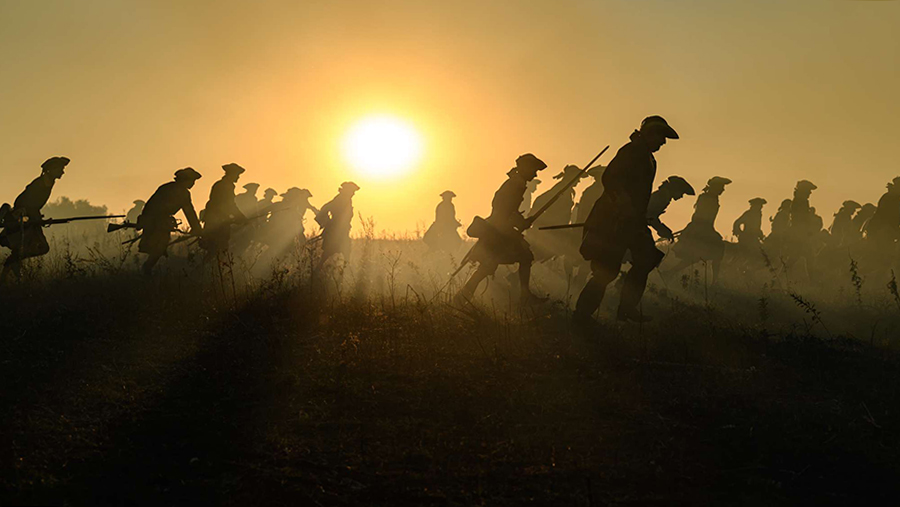
Of course, we had extras, real horsemen — some of the best stuntmen in the world from Kazakhstan participated in the filming. But we also used technology. There is no artificial intelligence in its purest form in film production yet. They are still difficult to fully use due to poor handling. They require specialized software, so we rely on classic computer graphics (CGI). Rare neural network generations occur, but their quality is not yet suitable for large cinema screens.
— At the same time, did you decide to do without cruelty in the frame? Usually there is naturalism and cruelty in battle movies.
— It's not difficult to show it on the screen. But I understood that the age limit of 18+ for a film about Peter the Great was not quite right. Our movie is not about violence after all. Of course, there are brutal moments in the film — for example, the scene where Viktor Dobronravov's character fights with a shovel. But we deliberately tried not to savor the cruelty. And we wanted a family audience to go to the movie.
— In an interview with Izvestia a few years ago, you noted that historical paintings can bring viewers back to cinemas. But time has shown that the halls are also filled with fairy tales. Why don't you change your attachment to history and try to make a film for children?
— Once upon a time there was a dominance of American films on our screens, they occupied the sweet niche of family cinema. It was hard for us to get there. But this is a win-win direction. Now Russian cinema has successfully occupied this niche. Movies can vary in quality, but fairy tales are the perfect way to attract a family audience. If children go to the cinema, then they go with their parents.
But, as Bulat Okudzhava sang, "everyone writes how he breathes." I have a few topics that really concern me and that I want to sort out. As a resident of St. Petersburg — I was born in Leningrad — I am inextricably linked with Peter. Our city is covered with his name. Peter's personality has always been interesting to me. He's incredibly controversial. Leo Tolstoy literally hated him and believed that everything he had done was in vain and in vain. And others sincerely admired him. Because of this clash of opinions, exploring his figure is incredibly difficult, but incredibly exciting.
"In my 'past life' I was a mathematician, a scientist"
— Now the costs of everything are growing: from film production to advertising. How do you deal with financial pressure?
— The budget is clearly calculated "on the shore", even before filming, and no one will give extra money. There is a fixed amount, and you must immediately optimize your processes to fit into it. I worked with the Three Te studio, and it was a great pleasure for me to work with these reliable professionals. When we discussed the project with Leonid Emilievich Vereshchagin and Nikita Sergeevich Mikhalkov, we were all burning with this idea. We need to fight to the last for the result, and this loyalty to the idea is the most important thing. And the fact that everything is getting more expensive — well, it's a given in which we work.
— Recently, the film Kommersant with Sasha Petrov was released, which was directed by your sons Nikita and Fyodor Kravchuk. Have you ever thought that you would have a directing dynasty?
— To be honest, no. It always seemed to me that this was too difficult a profession, although I've never known anything more interesting in my life. Actually, in my "past life" I was a mathematician, a scientist (laughs). I was writing my dissertation, and then I went to the cinema.
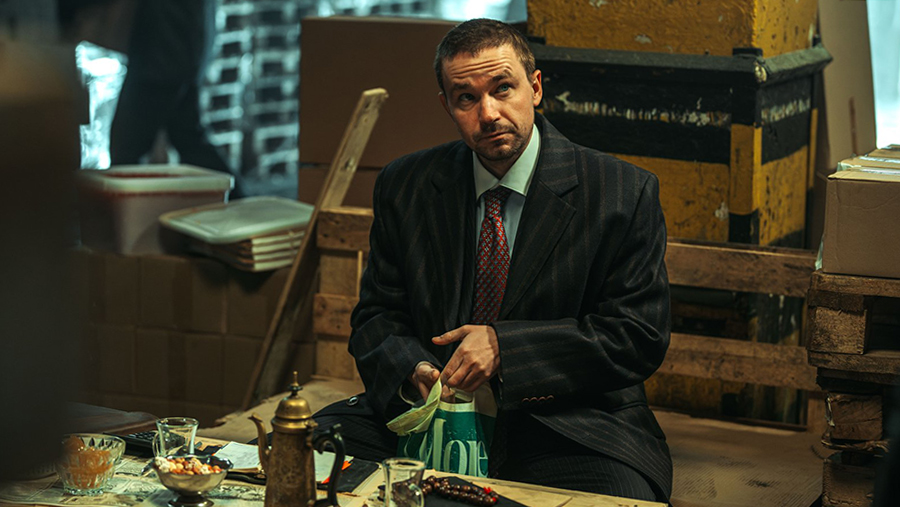
Directing is incredibly vivid, but it has a downside. You're rarely at home, and you miss a lot of family events. I tried to instill in my sons a love of art.: We watched and discussed movies together. They came to my set, saw with their own eyes how entire cities were built for Viking, how the historical world was created. But they made the final decision themselves, I didn't push them. And they have already proved that they are doing well.
— Would you like to work with your sons? Maybe you already have a joint plan?
"Making a threesome movie?" I think it's difficult. The two guys are the perfect tandem. They shot their film "Kommersant" with a small budget, but with very high production. They effectively distribute responsibilities, sometimes even divided into two film crews. Despite all the differences in characters, they always agree on everything and act as one. It would be too much for me in this format. I already had experience working with a co—director - we wrote several scripts together and shot two films. But I quickly realized that I needed my own space on the court.
— Are you a sole proprietor in the work?
- yes.

— In your biography, you have an Oscar nomination from Russia with your debut film The Italian. If our Oscar Committee were working, would a new historical drama qualify for the award?
— To be honest, I don't know, I don't want to guess. When I was shooting The Italian, the outstanding artist Vladimir Svetozarov worked with me. For me, as a debutant, it was a huge responsibility. We talked a lot about cinema, and one day he uttered a phrase that I will always remember: "Andrew, a cinema is a huge hall, there are fifteen hundred seats in October. And if what we do is shown on the screen, and the hall turns out to be empty, then we are wasting our lives and wasting the time of our loved ones and children."
That's why the main thing for me now is for the audience to see the film. We worked so that people would empathize, cry and laugh, so that the picture would ring an inner bell in their souls.
— The recognition of the audience is the main thing. And the recognition of colleagues on the shop floor?
— It worries me too.
— Are the awards important?
— Awards are, of course, vanity, but they are also the official recognition of critics and colleagues, which is also important. Of course, I want them to be. But first of all, it is important that the film awakens vivid feelings and emotions in people. And the rewards — that's how it goes.
— Do you want to go to the Oscar?
— I don't know, I'm not thinking about it right now. Due to the current circumstances, this seems unattainable. Why dream about something that is unlikely to happen?
— Nikita Mikhalkov came up with the Diamond Butterfly Award, which is awarded for films that demonstrate universal human values. And the Oscar went the other way.
— Now they are also changing their rules, gradually returning to traditional values. The fact that we have a "Diamond Butterfly" is wonderful. The Eurasian space is developing its own distinct criteria and cultural guidelines. But I really don't want to politicize art and festivals.
Culture is a bridge between nations, it is a road to the hearts and emotions that unite people. We know ancient Greece from Homer, not from the vases. It is through the Iliad and the Odyssey that we begin to understand the value of that era. Similarly, people of the next generation will learn our history better from works of art than from dry documents.
Переведено сервисом «Яндекс Переводчик»
