- Статьи
- Economy
- They started overclocking: trips abroad, train tickets and studies accelerated inflation

They started overclocking: trips abroad, train tickets and studies accelerated inflation

Trips abroad, train tickets, and studies have accelerated inflation in Russia. In September, prices rose by 0.35% after the August decline, according to Rosstat data. Tours to China and Southeast Asia rose the most - by 24% and 13.5%, respectively, and travel in branded reserved cars — by 18%. Tuition fees at private universities have risen by almost 20%, and at public universities — by 12.3%. What else has increased in price and what factors influenced it is in the Izvestia article.
How much have trips to Southeast Asia become more expensive?
After a summer decline in September, prices in Russia increased by 0.35%, according to Rosstat data. However, the overall dynamics conceal multidirectional processes, according to the Center for Macroeconomic Analysis and Short-term Forecasting (CIACP). In August, goods and services fell by an average of 0.08%, while seasonal growth began in September.
Foreign holidays have become especially more expensive. According to the CIC, in September, the cost of trips to certain countries in Southeast Asia increased by 13.5% compared with August. Prices for tours to China and Egypt increased even more — by 24% and 15%, respectively.
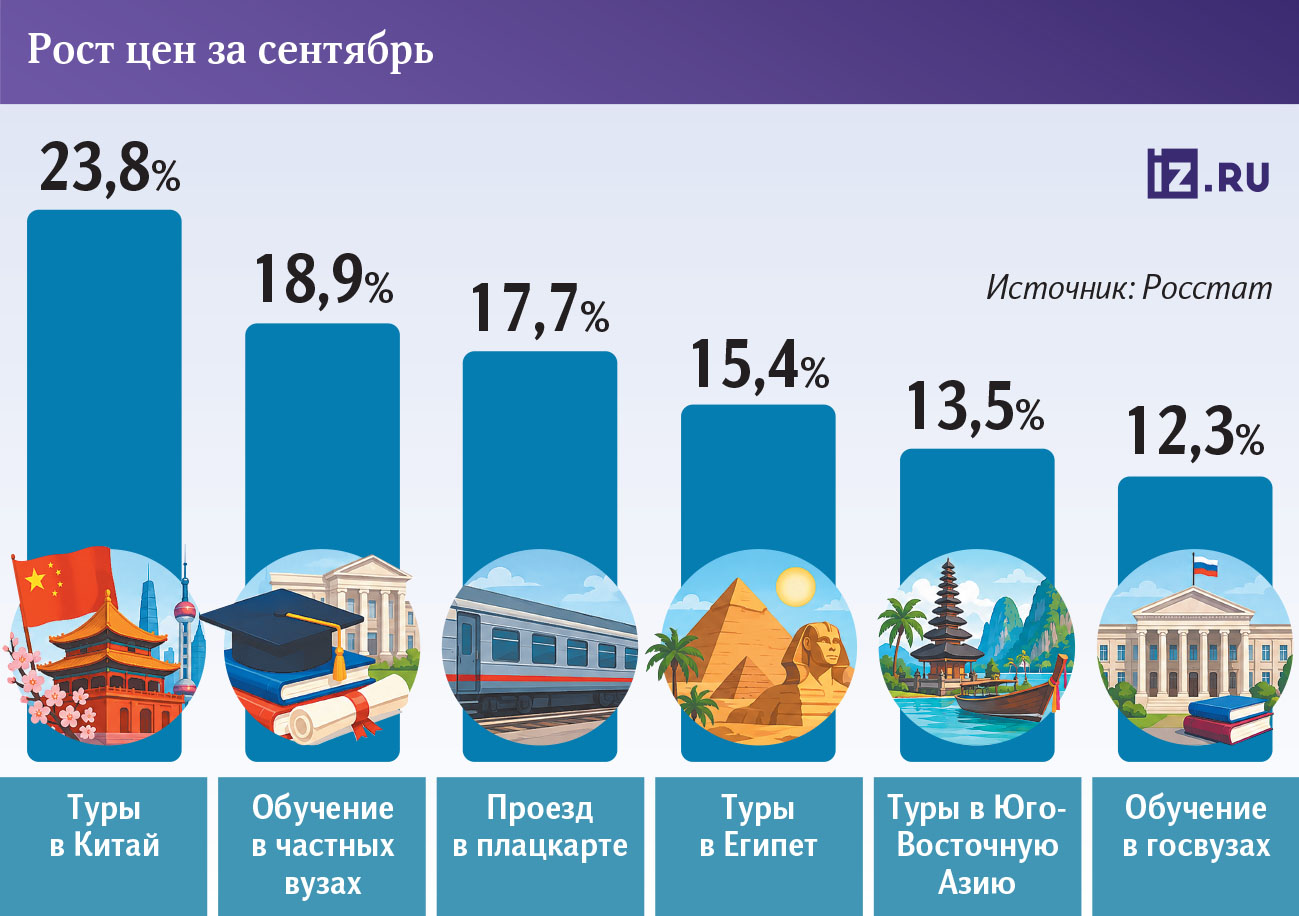
Among the reasons for this growth is pent—up demand: tourists are ready to fly again after the resumption of flights to Asia with connections to the UAE, explained Svetlana Frumina, Head of the Department of Global Financial Markets and Fintech at Plekhanov Russian University of Economics. There were more people who wanted to go on vacation along this route, and traffic volumes did not have time to recover, she noted.
In addition, preparations for the winter holiday season have been added. According to Freedom Global analyst Vladimir Chernov, sales of such tours to Thailand increased by 20-30% compared to 2025. With such demand, it is easier for hotels and tour operators to raise prices and offer fewer discounts, he explained.
Transportation itself is more expensive. Svetlana Frumina cited the increase in the cost of jet fuel and fees due to the crisis in the Persian Gulf as one of the reasons. Additionally, the weakening of the Russian currency puts pressure on ruble prices for foreign holidays, she added. At the same time, not all Russians feel the jump in vacation prices. In her opinion, such tours are mostly bought by customers with above-average incomes.
The direction itself is becoming more and more popular. According to President Vladimir Putin, the number of Russians visiting resorts in Southeast Asia increased by 37% in 2025. And the mutual tourist flow of Russia and the ASEAN countries for the same year amounted to about 2.7–3 million people, said Evgeny Zagainov, Permanent Representative of the Russian Federation to the association.

Railway trips have also become more expensive. Tickets for reserved cars of fast branded trains increased in price by 18%, non—branded - by 15%, according to Rosstat data. Since October, the cost of travel has been increased by the indexation of fares: travel in reserved and shared carriages of long-distance trains has increased in price by 9%.
Izvestia sent a request to the Ministry of Energy, Rosstat and the Central Bank.

What else is pushing prices up
According to Rosstat, in August, tuition fees at private universities increased by 19%, and at state and municipal universities by 12%. In general, according to preliminary data from the Ministry of Education and Science, in 2026, university tuition rose in price by almost 11% compared to the previous year.
In order for families to plan expenses in advance, Kaplan Panes, deputy chairman of the State Duma Committee on Budget and Taxes, proposed fixing the cost of tuition for the entire duration of their studies. It will be possible to change it when adjusting the educational program, on his initiative, only with the written consent of the student.

The general increase in prices is also influenced by the rise in prices of products. In particular, vegetables and fruits may rise in price again after a prolonged period of price declines, admits Alexander Abramov, head of the Laboratory for the Analysis of Institutions and Financial Markets at the Presidential Academy.
With the end of the season of cheap vegetables, their contribution to curbing inflation will decrease, explained Vladimir Chernov from Freedom Global. So far, the price dynamics within this category remains uneven: from October 6 to October 12, vegetables and fruits on average almost did not rise in price. At the same time, tomatoes increased in price by about 5%, while carrots fell by 2% and apples by 1.8%, according to Rosstat data.
Other products are becoming more expensive faster. According to the CMACP, from September 15 to 28, food, excluding vegetables and fruits, rose in price by 0.5% against 0.3% in the previous two weeks. In particular, prices for grain-related goods are rising, according to the monitoring center. At the same time, adjusted for temporary factors, inflation is likely to slow down, analysts say.
Further price dynamics will depend on the cost of fuel, the ruble exchange rate and the situation in key global transport hubs, says Svetlana Frumina from Plekhanov Russian University of Economics. According to her, the weakening of the Russian currency increases the cost of imports, including electronics, as well as foreign vacations.

By the end of 2026, the Bank of Russia forecasts inflation at 6-7%. The regulator confirmed this assessment on September 11. The Ministry of Economic Development later raised its forecast from 5.2% to 6.8%.

To further reduce the key rate, the regulator needs to make sure that the slowdown in inflation is sustainable, said Elvira Nabiullina, Chairman of the Bank of Russia. In September, the Central Bank took a break, keeping the rate at 14%, including amid the effects of rising fuel prices and high inflation expectations. As Izvestia previously reported, at the October 23 meeting, the regulator is likely to leave the rate unchanged again.
Переведено сервисом «Яндекс Переводчик»
