- Статьи
- Culture
- She lost her husband, daughter and all hope: why the fate of poetess Marina Tsvetaeva is called one of the most tragic

She lost her husband, daughter and all hope: why the fate of poetess Marina Tsvetaeva is called one of the most tragic

In the history of Russian literature, there are few fates as tragic as the fate of Marina Tsvetaeva. Separation from her husband, long years of emigration, return to her homeland, where she was expected to arrest her loved ones and the hardest days of evacuation in Yelabuga — all this fell to the lot of the poetess, whose fate became a symbol of the tragedy of the Russian intelligentsia of the 20th century. 2026 marks the 85th anniversary of her death. Read about Marina Tsvetaeva's life, creative pursuits and tragic death in the Izvestia article.
Marina Tsvetaeva: childhood, family, the beginning of a creative career
Marina Tsvetaeva was born on September 26 (October 8, new style), 1892 in Moscow. Her father Ivan Vladimirovich Tsvetaev was a philologist, art historian, professor at Moscow University and founder of the Museum of Fine Arts named after Emperor Alexander III, now the Pushkin State Museum of Fine Arts. Mother Maria Alexandrovna Main is a gifted pianist, whose playing was highly appreciated by the outstanding composer, pianist and conductor Anton Rubinstein.
Unable to pursue a solo career, Maria Alexandrovna put all her energy into raising her children, Marina and her youngest daughter Anastasia, as musicians, and from an early age she paid great attention to their musical education. Later, Tsvetaeva, recalling her mother, said that "I will not hear such piano and guitar playing anymore."
However, Marina's fate, although she played the piano beautifully herself, turned out to be connected not with music, but with literature. The future poetess began writing poetry at the age of seven, and in three languages at once — Russian, German and French. They reveal her special world — fragile, filled with magic and poignant experiences, which were characteristic of her "adult" poetry.
Due to the poor health of her mother, who suffered from tuberculosis, the family lived in Europe for a long time, where Tsvetaeva studied at boarding schools and got acquainted with European culture. After Maria Alexandrovna's death in 1906, when Marina was 14 years old, music lessons completely faded into the background. But the musicality remained in her poems.

Anastasia Ivanovna and Marina Ivanovna Tsvetaeva
In 1909, Tsvetaeva undertook her first independent trip abroad. She went to Paris and took a course in French literature at the Sorbonne. After returning, she began attending poetry meetings at the Musaget publishing house of Moscow symbolists, whose founders included poets Lev Kobylinsky and Andrei Bely.
A year later, Tsvetaeva released her first collection, The Evening Album, at her own expense. It was published in 1910 by A.I. Mamontov's printing house in a circulation of 500 copies and included early poems, including those written during his high school years.
The debut was noticed by the poet Valery Bryusov, mentioning the young talent in an article for the Russian Thought magazine. Other masters of the Silver Age, Maximilian Voloshin and Nikolai Gumilev, also spoke positively about the collection. Subsequently, both became close friends of Tsvetaeva. It was while visiting Voloshin — at the famous Voloshin "House of Poets" in Koktebel — that the poetess met her future husband, writer and publicist Sergei Efron. Efron was 17 at the time, and Tsvetaeva was 18.
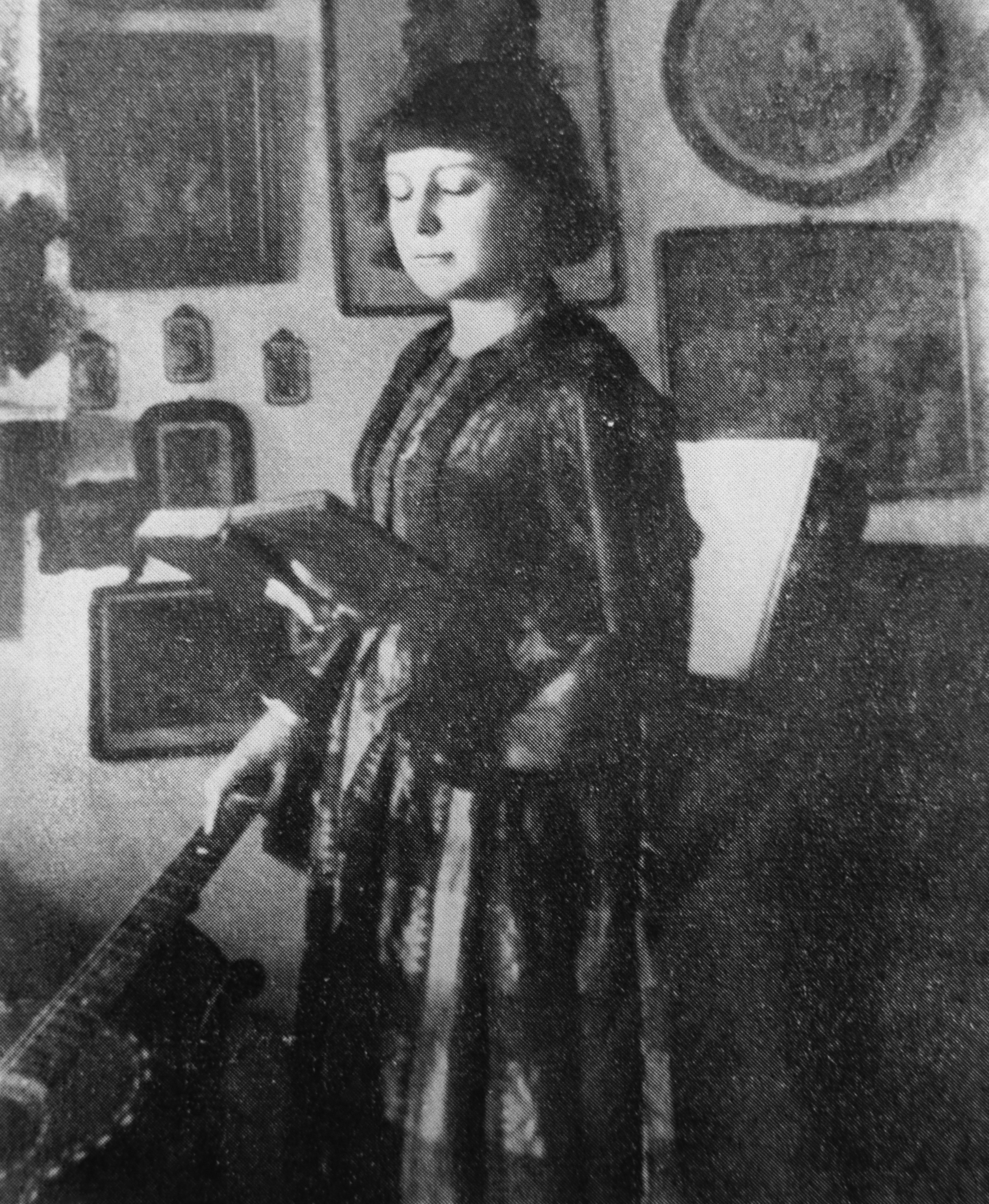
The first love captured both at once and completely. Efron and Tsvetaeva got married in 1912. The ceremony took place at the Church of the Nativity in Bolshoy Palashevsky Lane in Moscow. Soon, the couple had an eldest daughter, Ariadna, and five years later, in April 1917, the youngest, Irina.
The emigration of Marina Tsvetaeva
The First World War and the revolutionary events dramatically changed the family's life. Sergey Efron volunteered for the front. He served on an ambulance train, taking out the wounded. He devoted essays and short stories to this period, which were included in the collection "Notes of a Volunteer". Later, Efron joined the ranks of the White Guards and moved to Europe with the remnants of the defeated white army.
Tsvetaeva had heard rumors that her husband was dead. She stayed in Moscow with her two daughters, with whom she lived in a cold house in Borisoglebsky Lane. His life was spent in conditions of terrible hunger, poverty and civil war. Trying to survive, Tsvetaeva sawed furniture for firewood and sold things. At the end of 1919, due to her desperate situation, she sent the girls to the Kuntsevo orphanage, where three-year-old Irina died of starvation in February 1920.
A year later, a message from Efron came from abroad, and Tsvetaeva decided to go to him. In May 1922, the couple met in Berlin, which in the early 1920s was the publishing mecca of Russian emigration. Thus began Tsvetaeva's 17-year period of emigration.
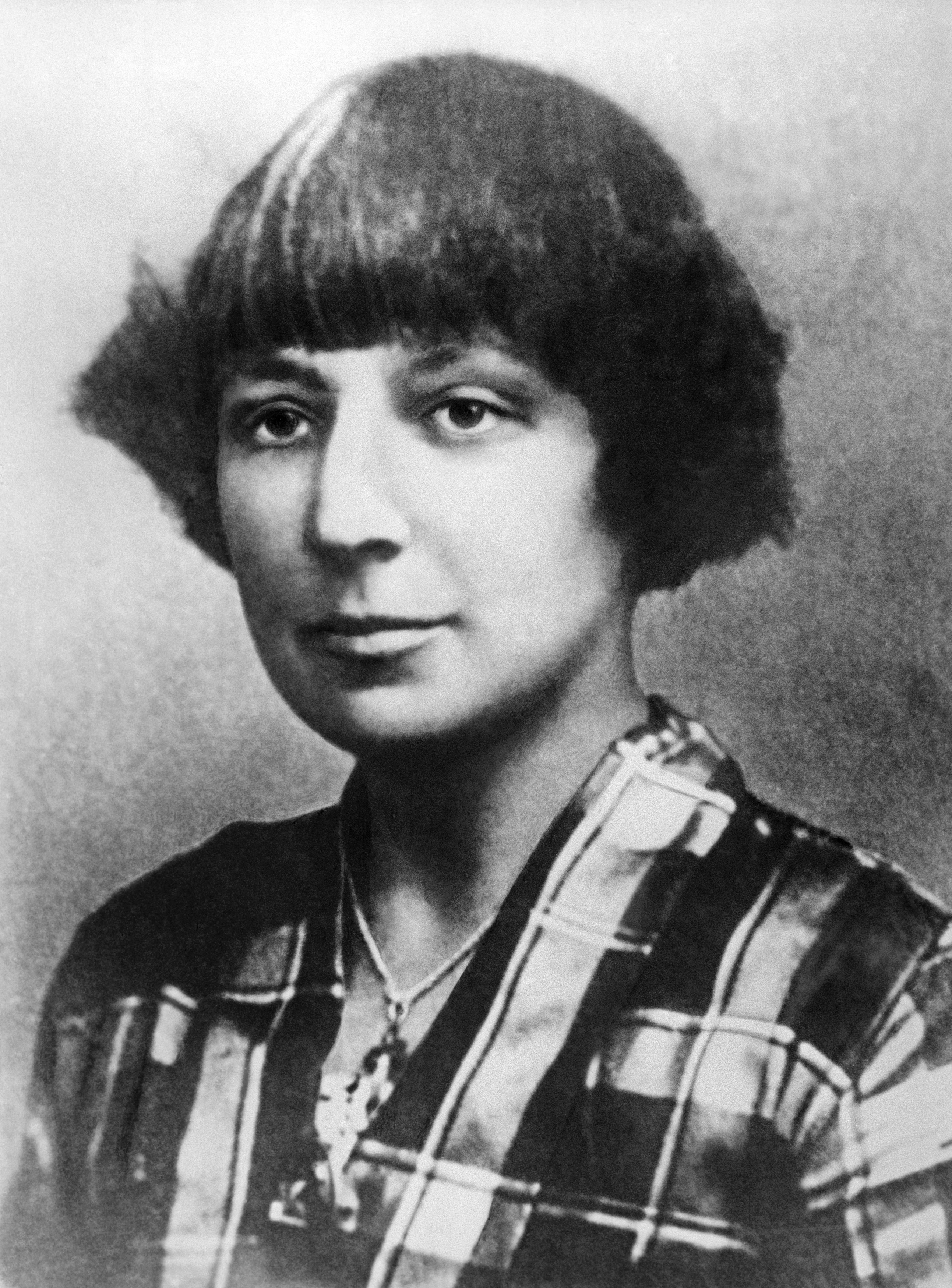
The family lived in Berlin for about a year, then moved to Prague, where Efron enrolled in the Charles University Faculty of Philosophy. The Poem of the Mountain and The Poem of the End, as well as other significant works by Tsvetaeva, were created here. During her emigration, the poetess began a long-term correspondence with Boris Pasternak, which became one of the most famous literary correspondences of the 20th century.
In 1925, the family, together with their son George, who was born in exile, moved to Paris, which became home to many Russian poets — Dmitry Merezhkovsky, Zinaida Gippius, Vladislav Khodasevich, Ivan Bunin. Tsvetaeva's poetry evenings were a success, her poems were published, but it did not bring much money.
The family often changed cheap apartments in the suburbs and on the outskirts of Paris. Sergei Efron suffered from tuberculosis and could not work all the time, and later became involved in political activities, which led to a break with part of the emigration. Tsvetaeva lived in constant need, earning only by literary work, performances and rare translations.

Personal life of the poetess
Despite the romances that happened in Tsvetaeva's life, the main man in her life was Sergey Efron. She considered their relationship karmic. According to the poet's memoirs, while still in Koktebel, she wished that she would marry a man who would find and give her her favorite stone, carnelian. Efron found a carnelian bead on the seashore the same day and gave it to her, which she took as a sign of fate.
Tsvetaeva later dedicated to her husband a collection of poems, The Magic Lantern, published in early 1912. In the same year, Sergei Efron's collection Childhood was published in their home printing house Ole-Lukoye. The books were dedicated to each other. Meanwhile, the marriage was not cloudless. The events that broke into the family's life, as well as the long separations, became a serious test for them.

Tsvetaeva's first serious hobby was connected with Osip Mandelstam, whose work the poetess appreciated more than others. She said of him, "If there is a God of poetry, then Mandelstam is his messenger." For the poet himself, this meeting became a creative impulse — it was from the "Tsvetaevsky" period that his love lyrics began. Their story left a vivid mark in the poetry of the Silver Age.
Tsvetaeva also had a long-term friendship with Boris Pasternak. They found kindred spirits in each other and corresponded until 1935. Tsvetaeva called Pasternak a brother in the fifth season, the sixth sense, and the fourth dimension. The friendship never developed into a romantic relationship, remaining an affair in letters.
In Prague, the poetess began an affair with Konstantin Rodzevich, an emigrant, former officer of the White army, to whom Tsvetaeva dedicated two poems. The relationship lasted only three months. When the affair became known, the poet's husband suggested that she leave. After long and painful reflections, Tsvetaeva decided to save the marriage and return to her husband.
The poetess's return to the USSR and the last years of her life
In the late 1930s, Tsvetaeva's family decided to return to the USSR. In 1937, Ariadne was the first to arrive in Moscow, followed shortly by Sergei Efron. Even during his emigration, he joined the Union of Homecoming and applied for a Soviet passport.
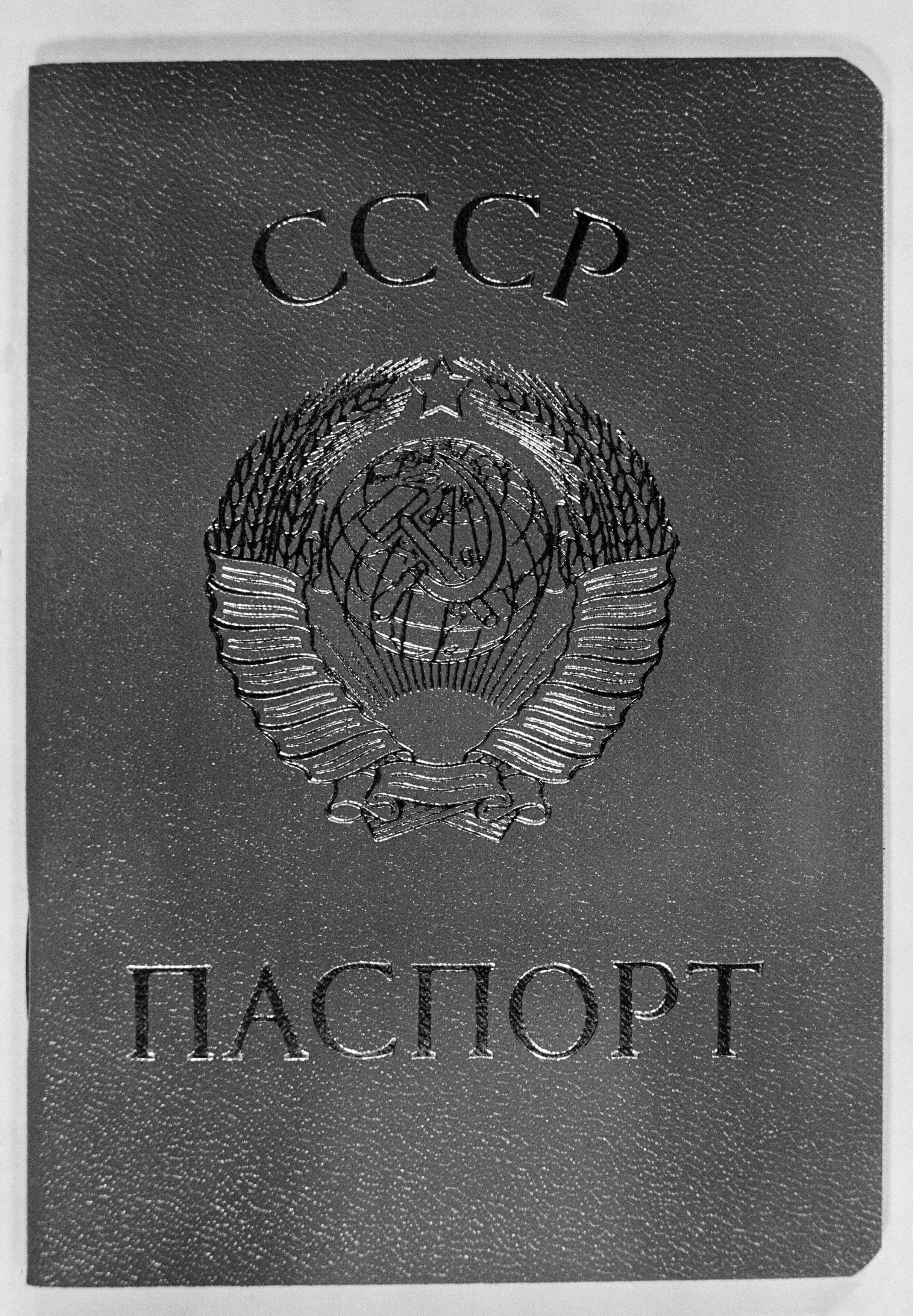
Marina Tsvetaeva did not share her husband's decision, but in June 1939 she nevertheless came home with her son George to be with her family. The decision proved fatal. In August of the same year, Ariadna was arrested, convicted of espionage, and sentenced to eight years in prison camps. In October, Sergei Efron was arrested and charged with treason.
Tsvetaeva tried to help her arrested husband and daughter, but was unable to secure their release. She lived with relatives and acquaintances, having practically no conditions for literary work. Her own works were not published, and the literary community was wary of her. Her main source of income was money transfers.
With the outbreak of the Great Patriotic War, Tsvetaeva, along with Georgy, was evacuated to Yelabuga. It was extremely difficult for her to find a job and a livelihood in the city. Finding herself alone with her son in an unfamiliar city, Tsvetaeva felt a sense of impasse and hopelessness, which, according to her, she did not know in "alien Europe."

Sculpture "Boris Pasternak and Marina Tsvetaeva" at the Zurab Tsereteli Art Gallery
On the eve of her departure to Yelabuga, Boris Pasternak, helping her pack her things, tied one of the suitcases with a rope and jokingly said: "The rope will hold everything, even if you hang yourself." It is this rope, as is commonly believed, that Tsvetaeva used to take her own life.
The poetess died on August 31, 1941. Later, the writer Konstantin Paustovsky, who was closely acquainted with Pasternak, recalled that the poet was grieving over what had happened and for many years could not get rid of the guilt for his fatal joke.
In her suicide note, the poetess asked to take care of her son. At that time, she did not know that her husband had already been sentenced to death — Sergei Efron was shot in October 1941. In 1944, George also died. He was mortally wounded in a battle near the village of Druika near Vitebsk.

The house where the Russian poet Marina Tsvetaeva spent her last days of life
Subsequently, Sergey Efron was rehabilitated posthumously. It happened on January 22, 1956. A year earlier, in March 1955, Ariadne was rehabilitated. After her release in 1947, she taught graphics at an art college in Ryazan, died in 1975 at the age of 62.
The mystery of Marina Tsvetaeva's grave
Marina Tsvetaeva was buried on September 2, 1941 at the Peter and Paul Cemetery in Yelabuga. However, the exact place of her burial is still a mystery. Immediately after the burial, a simple wooden cross was placed on the grave, but by winter it had disappeared. According to one version, it was stolen for heating during the harsh war years, according to another, it was destroyed by NKVD officers, since Tsvetaeva was considered the wife of an enemy of the people, according to the third, the believers removed the cross, since Tsvetaeva died voluntarily.
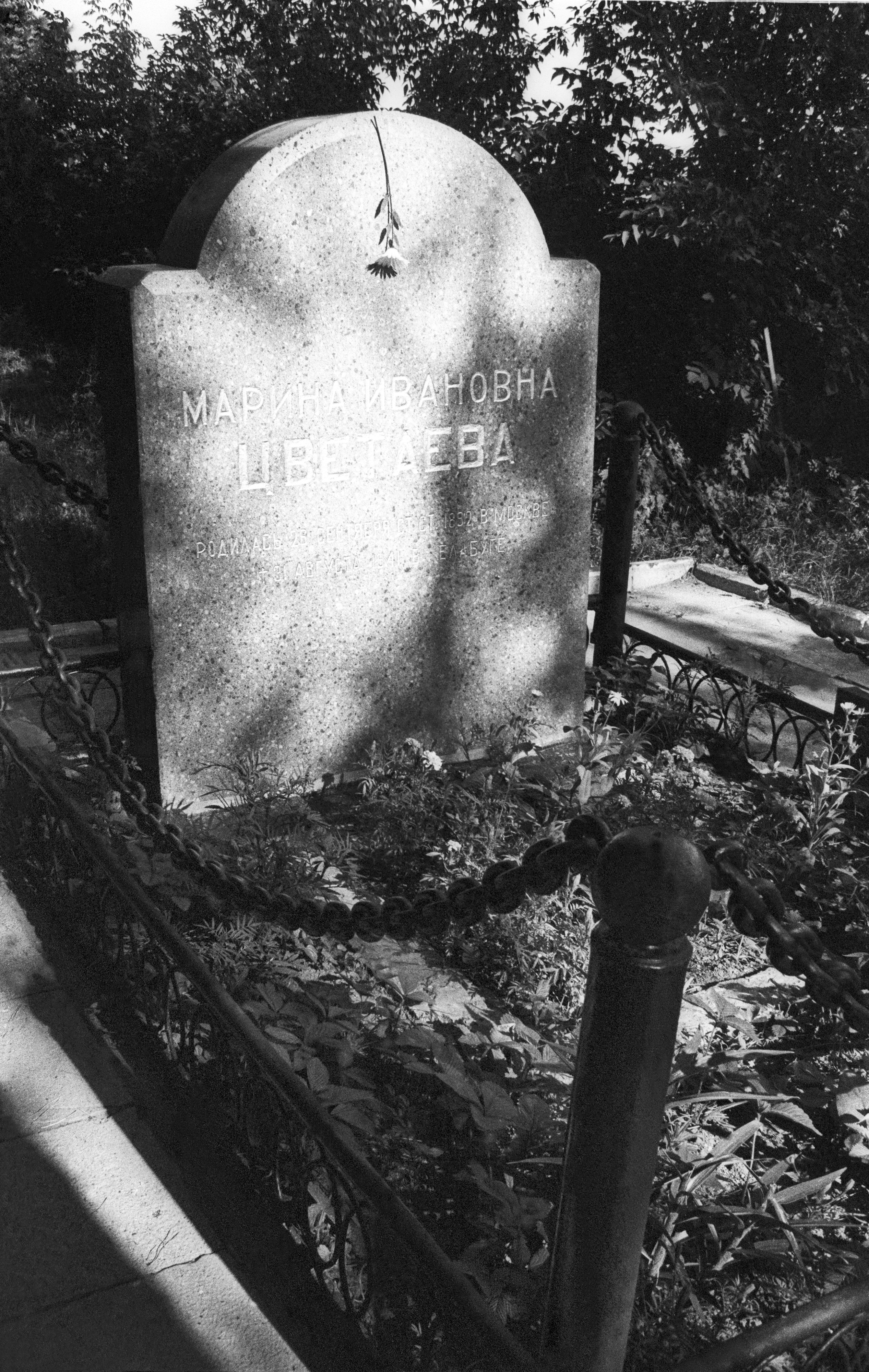
In 1960, Anastasia Tsvetaeva, the poet's sister, arrived in Yelabuga and tried to find the poet's burial place. The cemetery caretaker pointed out to her several unkempt graves near the southern wall, and near one of them there was a forked pine tree. Anastasia remembered how, as a child, she and Marina often climbed such a tree and talked for a long time, sitting on different branches. Seeing this as a sign, she put up a cross here with the inscription: "Marina Ivanovna Tsvetaeva is buried in this side of the cemetery."
In 1970, a granite tombstone was erected at this place, and since the early 2000s, by decision of the Tatarstan Writers' Union, it has been referred to as the official grave of the poetess. At the same time, the exposition of the Memorial Complex of M.I. Tsvetaeva in Yelabuga presents maps indicating all possible places of her burial.
The most famous works of Marina Tsvetaeva
Marina Tsvetaeva left behind a multifaceted literary legacy, which includes poems, poems, dramatic works, prose, memoirs, essays and translations. Her early work is represented by the collections "Evening Album", "Magic Lantern" and "From two books". During the revolution and the Civil War, Tsvetaeva created the Swan Camp cycle, dedicated to the white movement and the tragic events of the era.
A significant part of the works appeared in exile. The collections Psyche and Craft were published in Berlin in 1923, and The Poem of the Mountain and The Poem of the End were written in the Czech Republic. In 1928, her book "After Russia" was published in Paris, the last collection published during her lifetime. After Tsvetaeva, she did not publish a single new book of poetry, although she continued to work actively.

Monument to the poet Marina Tsvetaeva on the banks of the Oka River
In the 1930s, Tsvetaeva increasingly turned to prose. Among her most famous works of this period are "The House at the Old Pimen", "My Pushkin", "Alive about Alive", "Art in the Light of Conscience" and "The Tale of Sonechka". In these texts, she turned to memories of childhood, loved ones and contemporaries, reflected on literature and the poet's purpose.
Her prose became a kind of continuation of poetry, allowing Tsvetaeva to directly comprehend her own life and the dramatic events of her time.
Interesting facts about Marina Tsvetaeva and her literary heritage
Marina Tsvetaeva was born at the end of September – October 8 in a new style. However, she celebrated her birthday on October 9, the feast day of St. John the Theologian. She attached special importance to this date, associating it with her purpose in literature.
Tsvetaeva believed in the signs of fate and saw a special meaning in coincidences. She wanted to think that bells were ringing all over Russia on her birthday, as if welcoming the birth of a new poet. At the same time, she did not like the word "poetess" and preferred to call herself simply a poet.
After returning to the USSR, her work remained practically inaccessible to the general reader for a long time and was published mainly in the emigrant press. The first major edition of her works appeared only in 1961. It was a collection of "Favorites", released by the publishing house of fiction in a circulation of 25 thousand copies.

The mass publication of Tsvetaeva's works began already during the period of perestroika. In 1994, the complete works of Tsvetaeva were published in Moscow in seven volumes. It was accompanied by two additional volumes, which included previously unpublished letters, diaries and notebooks.
Today, Tsvetaeva's poetry and prose have been translated into English, German, French, Italian, Czech, Polish and other languages. Numerous books, scientific studies and documentaries are devoted to her life and work. Monuments to the poetess have been erected in Moscow, Tarusa and French Saint-Gilles-Croix-de-Vie. The monument in France was unveiled on June 16, 2012, to mark the 120th anniversary of Tsvetaeva's birth.
A special place in the history of the memory of the poetess is occupied by the Church of the Ascension of the Lord at the Nikitsky Gate in Moscow. On August 31, 1991, 50 years after Tsvetaeva's death, a memorial service for her was held here for the first time, despite the church's ban on funeral services for suicides. Permission for the prayer commemoration was given by Patriarch Alexy II after the petition of Protodeacon Andrey Kuraev. Since then, the temple has become one of the memorable places associated with her name.
Переведено сервисом «Яндекс Переводчик»
