And "It" is: Bill Skarsgard has become Pennywise the clown again.


The first episode of the horror series "It: Welcome to Derry" was released on HBO streaming, which gave us "Game of Thrones", "True Detective", "Chernobyl" and "World of the Wild West". The director of the full-length dilogy "It" Andy Muschetti is again responsible for the production, this is his debut in the series. Bill Skarsgrad returned to the image of Ono/Pennywise. The events of the series unfold 27 years before the events of the films and, consequently, the novel by Stephen King, although it is said that the King of Horror personally authorized the fanfiction based on one of his most famous works. About how the film adaptation turned out and what it has in common with Stanley Kubrick, see the Izvestia article.
What happens in the pilot episode "It: Welcome to Derry"
The first episode of the series "It: Welcome to Derry" under the unexpected title "Pilot" opens the prehistory of the horror dilogy and takes the viewer back to 1962, the era of the American dream. From the first minutes it becomes clear that Derry was a cursed place before the events of the novel, but now fear takes on a different, more everyday and at the same time socially colored face.
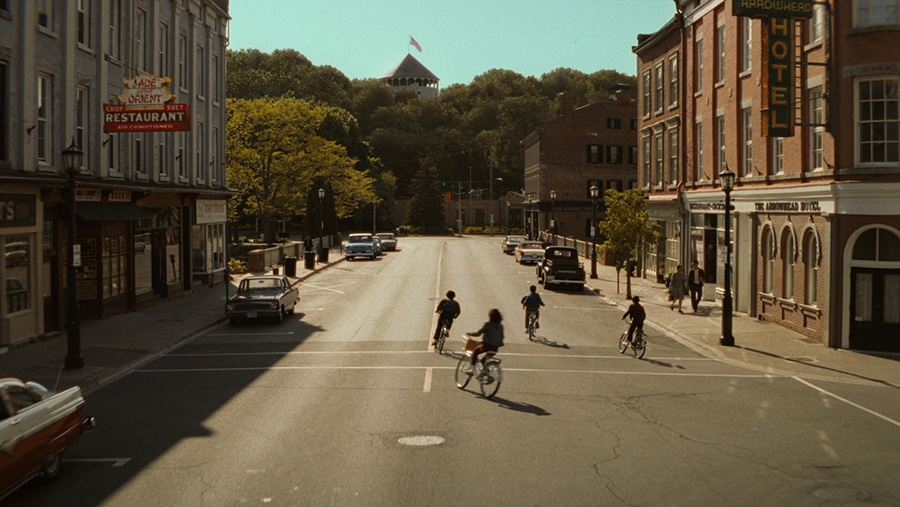
A black family moves to a seemingly quiet small town in Maine to start a new life. Their arrival coincides with a series of strange incidents: children disappear, adults notice mysterious flashes of light, voices are heard in the sewers. Against the background of growing racial tension and distrust of neighbors, clouds are gathering over the city again — and the viewer gradually realizes that the evil that haunts Derry is not dying, but only sleeping, waiting for the right moment to awaken.
The opening scene immediately sets the tone for the entire series. A boy named Matty Clements runs away from home and catches a car with a seemingly friendly family who offers him a ride to Portland. But the trip takes a frightening turn: the woman in the back seat suddenly gives birth to a monstrous creature, and the road leads not to salvation, but back to Derry. This nightmarish episode, shot in the spirit of Muschetti's best scenes, combines the mundane with the infernal and serves as a prologue to the story of how fear takes the form of familiar people.
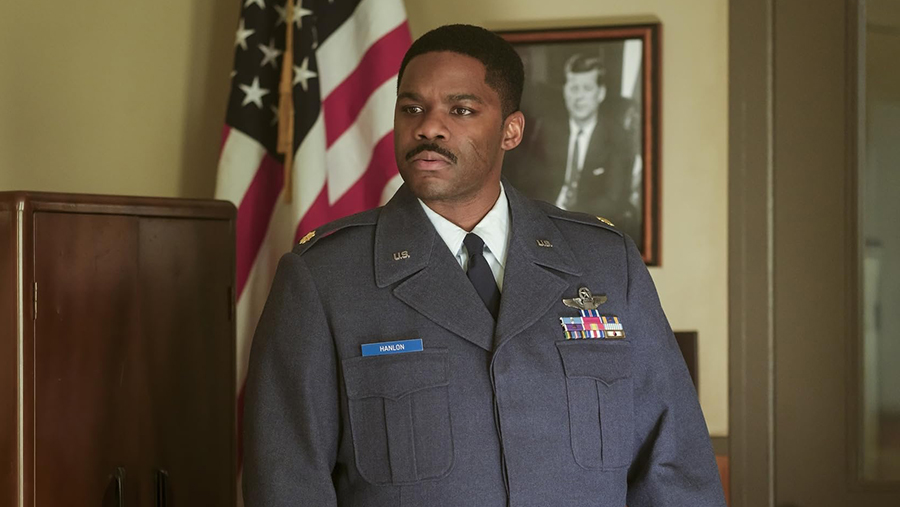
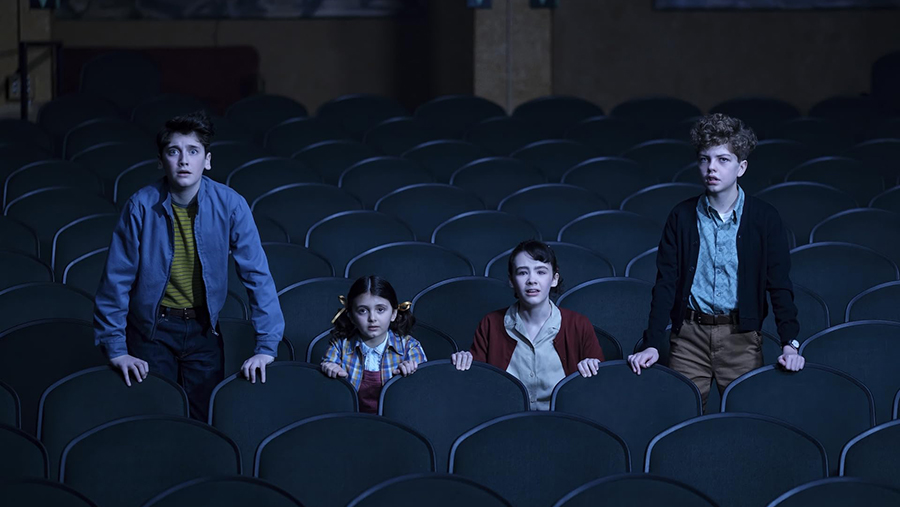
The plot then focuses on a group of teenagers — Lily, Teddy, and Phil — who encounter a series of unexplained events and begin their own investigation. Matti's disappearance becomes a starting point for them, and gradually they realize that there is something ancient, faceless and comprehensive behind all this. In parallel, the line of military officer Leroy Hanlon, who serves at an airbase near the city, is developing. His presence gives the series an additional social dimension: through this lens, it shows how fear and prejudice feed off each other, turning everyday life into a field of inner terror.

Muschetti's direction is designed in the spirit of his film work: an atmosphere of constant tension, a visual play of light and shadow, a sense of hidden movement somewhere behind the scenes. Instead of the open appearance of Pennywise, the viewer is offered a slow build-up of anxiety: drops of water from the tap, glances from children, empty streets, which seem to be watched by someone. Bill Skarsgard appears only for a moment, but it's enough to understand that evil is here, it's just waiting. The script by Jason Fuchs and Brad Kane combines horror with social drama, emphasizing that fear lies not only in the supernatural, but also in human indifference.
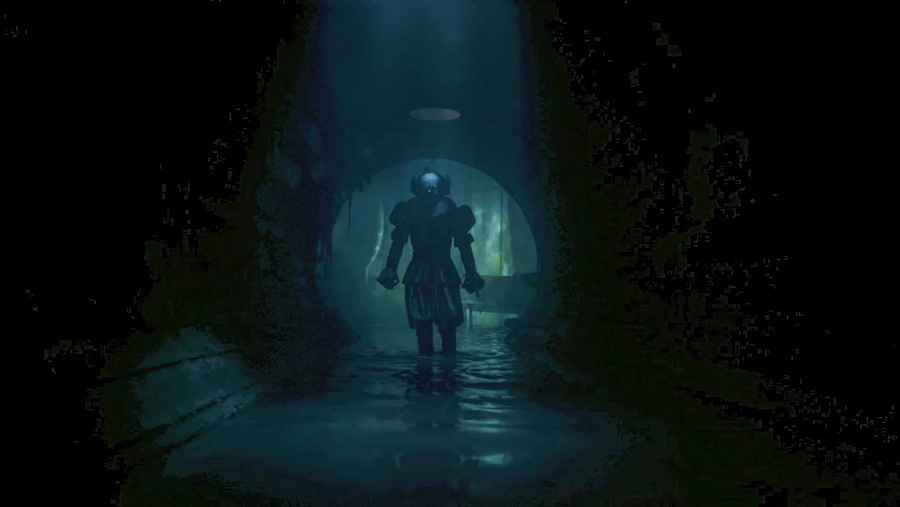
Special attention is paid to the 1960s as a time of change: the Cold War, the civil rights movement, and the conflict between the illusion of well-being and the internal rot of small communities. Derry becomes a metaphor for America of those years, a place where evil seethes under the facade of normality, which people themselves help to survive.
A Guide to Strange Phobias
This is Stephen King's third film adaptation of the year, after "The Monkey" and "The Long Walk," but each of the three works feels distinctive, and there is no sense of a conveyor belt into which almost all of the horror fiction classic's early work has been "loaded." At the same time, the director was able to fit one of King's favorite characters, psychic Dick Halloran, into this "multiverse". Most viewers remember him from Kubrick's The Shining, but here the hero has a much more significant role, which is hinted at in the first episode. And even the actor, as it turned out, was chosen with an eye on the great Scatman Crothers, a close friend of Jack Nicholson.
For the first episode, Muschetti chose the key very well — it is bold, fresh, and at the same time nostalgic. The viewer constantly has a vibe of the TV series "Very Strange Cases": a group of children investigate a paranormal situation that begins with the fingers of a dead man sticking out of the bathroom drain, and ends with a mutant baby with killer instincts flying around the hall. Color correction, terms, costumes, and the zeitgeist all combine to create the feeling of a vintage cinematic backdrop.
Perhaps the main advantage of directing is the way it conveys the chosen era, 1962. The action takes place 27 years before the events of the main film. Many people still remember the 1990 miniseries about Pennywise's past, where he was shown in the 60s. Muschetti did not touch on this period in his dilogy, but now he decided to tell in the prequel format about the formation of a killer clown. Moreover, the story will be presented in three time periods: following 1962, the film crew of "It: Welcome to Derry" explores the years 1935 and 1908 in the second and third seasons, the second season is already in pre-production. The filming of the prequel was personally blessed by King, thereby legitimizing the original fan work, almost none of the characters in the series were in the book.
Critics rightly write that the pilot series creates a rich in meaning and visually saturated universe in which fear, memory and history are intertwined. At the same time, the series does not try to repeat the structure of "It", but builds its own pace — slower, more lingering, almost detective. This provides an opportunity to reveal the characters more deeply and show how evil grows in everyday life.
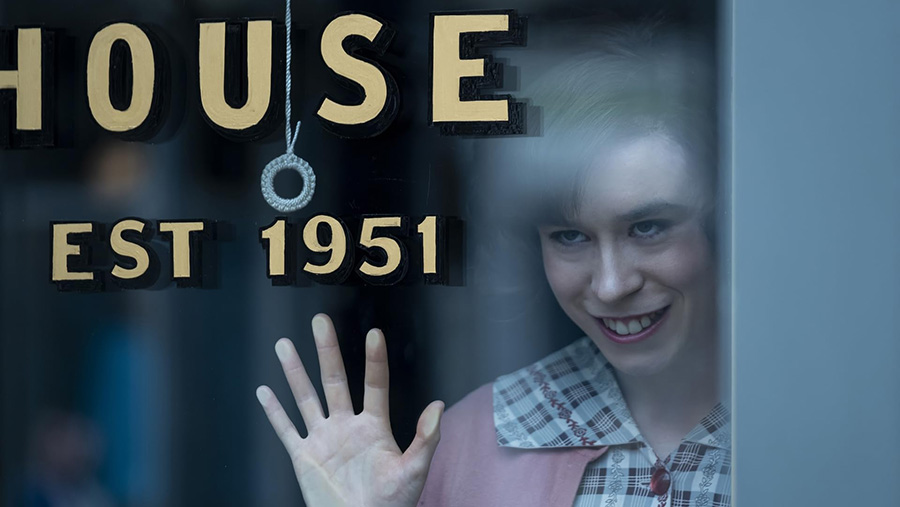
There are also weaknesses: due to the multitude of storylines - from family drama to teenage investigations and military intrigues — the episode sometimes loses focus, and horror scenes alternate with social episodes not always smoothly. However, it is precisely in this layering that the potential of the series lies. Muschetti and screenwriter Jason Fuchs clearly seek not just to tell where Pennywise came from, but to explore the very nature of evil, its connection with human fears and historical cycles. And it's not for nothing that one of the main characters experiences an episode related to Buchenwald, because his rabbi father lost his temper and told him the horrors of life in concentration camps.

As a result, "Pilot" is perceived not as the beginning of a standard horror, but as an immersion in the mythology of the city of Derry, Maine, which does not know how to forget. The characters don't realize yet that they've become part of an old story that repeats itself every twenty-seven years. But the viewer feels it from the very beginning — in the sound of the wind, in the darkening windows of houses, in the silence of people who pretend that nothing is happening. "Welcome to Derry" is not just a greeting, but a warning.: Once you get here, you'll never get out the same.
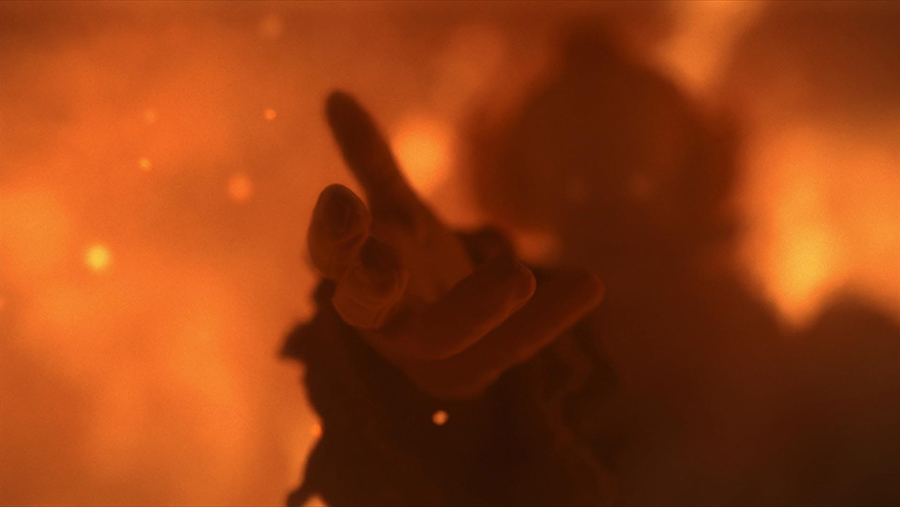
The first episode promises that the series will become not just the prehistory of "It", but an independent and perhaps the darkest statement about fear, guilt and human nature within the Stephen King universe.
Переведено сервисом «Яндекс Переводчик»
